


More news on this day
An Air India flight from Bengaluru to London Heathrow diverted to Vienna after a fresh air traffic control systems issue triggered disruption at the UK hub, adding to the long list of recent operational snags affecting services into one of Europe’s busiest airports.
Get the latest news straight to your inbox!
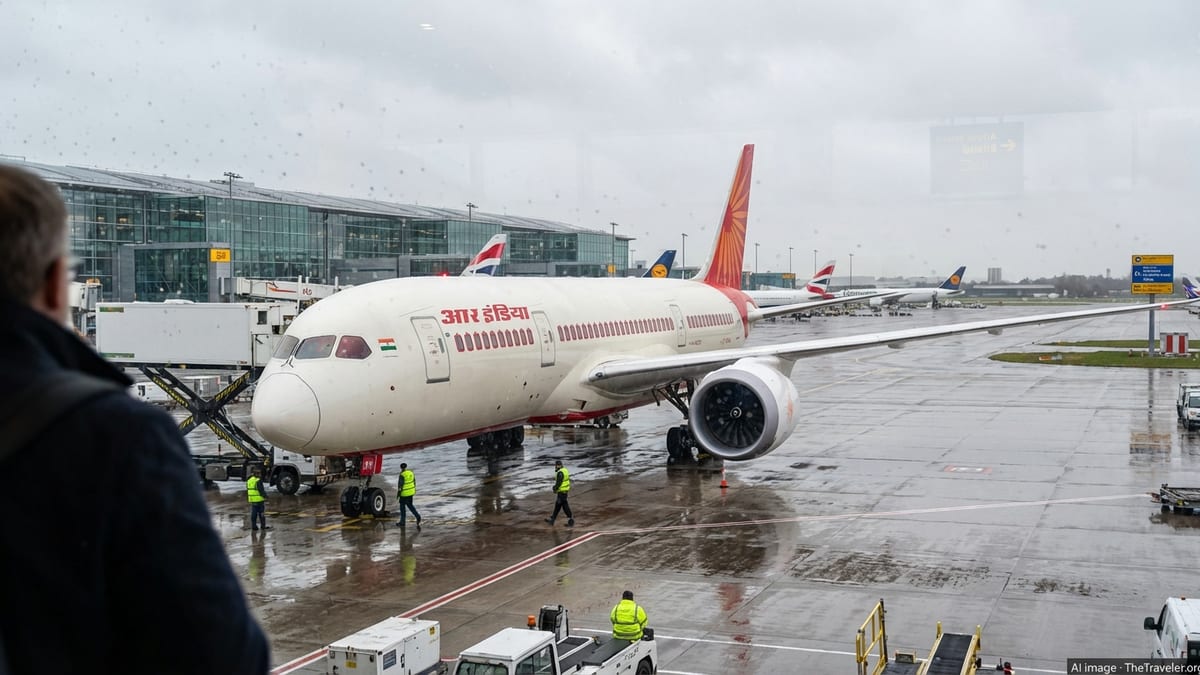
Flight AI133 Diverts En Route to Heathrow
Flight tracking data indicates that Air India service AI133, scheduled to operate from Kempegowda International Airport, Bengaluru to London Heathrow on 8 September 2026, diverted to Vienna en route to its original destination. Records show the Boeing 787-8 departed Bengaluru in the afternoon local time and landed at Vienna International Airport after roughly nine hours of flight, with the routing annotated as diverted rather than completed to Heathrow.
Publicly available flight histories for AI133 on that date list Vienna as the arrival airport while retaining London Heathrow as the intended destination, a typical notation when a flight is forced to terminate at an alternate airport. The aircraft is shown arriving in Vienna in the evening Central European Time, consistent with a mid-route diversion in European airspace rather than a scheduled stop.
At the time of the diversion, operations at Heathrow were experiencing knock-on disruption following a technical issue affecting the UK’s air traffic control infrastructure. Airport advisories described a period of constrained capacity as aircraft and crews were repositioned, with passengers urged to check directly with airlines before travelling to the airport, a signal that conditions remained unstable for long-haul arrivals.
While Air India had not posted a detailed breakdown of the Bengaluru service by the time of writing, earlier communications from the airline during similar events have typically referenced diversions and delays to and from Heathrow when wider UK systems are affected, alongside efforts to re-accommodate passengers and arrange onward travel once conditions stabilize.
UK Air Traffic Control Systems Under Scrutiny
The diversion of the Bengaluru–London service occurred against a backdrop of renewed attention on the resilience of the UK’s air traffic control systems. National Air Traffic Services, which manages much of the country’s en‑route airspace, has experienced several high-profile technical failures in recent years, including the widely reported flight planning system outage of 28 August 2023.
An independent review commissioned by the UK Civil Aviation Authority into the 2023 event found that a single anomalous but valid flight plan triggered a shutdown of a core part of the flight planning system. The failure forced restrictions on flight movements for hours, ultimately disrupting travel for more than 700,000 passengers and leaving airlines to manage widespread delays, diversions, and crew dislocation.
Follow-up reports highlighted a series of recommended improvements, from more robust contingency planning and engineering support to better communication with airlines and airports when system capacity is reduced. Subsequent technical issues, even when shorter in duration, have revived debate over how quickly traffic levels should be ramped back up and how capacity constraints are shared among carriers during recovery phases.
The latest glitch affecting Heathrow operations again underscores how even temporary reductions in UK airspace capacity can cascade into long-haul networks. Flights from South Asia, North America, and the Middle East often reach UK airspace after many hours in the air, leaving limited flexibility to absorb fresh slot or runway restrictions without resorting to holding patterns or diversions.
Why Vienna Emerges as an Alternate for Long-Haul Flights
Vienna International Airport has increasingly appeared in diversion logs as an alternate for long-haul flights bound for busy Western European hubs when constraints arise. Its central location, available widebody-capable stands, and established ground handling for major carriers make it a practical choice when weather, runway closures, or air traffic control issues disrupt operations at primary destinations such as London Heathrow.
When a long-haul aircraft nears European airspace and updated information confirms significant congestion or holding near Heathrow, flight planners may opt to divert rather than risk extended holds that could strain fuel reserves and crew duty limits. Diversions to an airport like Vienna can allow refuelling, crew rest adjustments, and rebooking of passengers onto later flights or alternate routings once the air traffic situation improves.
Public summaries of recent UK disruptions show that Heathrow, Gatwick, Manchester, and other major airports have all seen arrivals and departures curtailed during technical incidents. In such conditions, alternates across continental Europe, including Vienna, Zurich, Amsterdam, and Frankfurt, absorb unscheduled long-haul arrivals until the UK network is able to normalize. For affected travellers, this can translate into overnight stays, missed connections, and reissued tickets as airlines work through backlogs.
Aviation observers note that each major disruption adds operational complexity that can take days to unwind, particularly on routes like India–UK where aircraft are tightly scheduled. Diversions not only affect one sector but can also displace aircraft and crews needed for subsequent flights, causing schedule changes across entire regional networks.
Air India’s Bengaluru–London Link and Recent Headwinds
The Bengaluru–London corridor has been a priority long-haul market for Air India, with the airline gradually strengthening its presence over the past two years. In October 2024 Air India shifted its Bengaluru service from London Gatwick to London Heathrow and increased frequency on the route to a daily non-stop operation, using Boeing 787-8 aircraft configured with business and economy cabins.
According to the airline’s published schedules, the move to Heathrow connected Bengaluru more directly with Air India’s existing London hub operations, which include multiple daily services from Delhi and Mumbai. The adjustment was positioned as a capacity boost, with thousands of additional weekly seats into Heathrow to better serve business and leisure demand between southern India and the UK capital.
However, that same period has seen a series of broader challenges for Air India’s international program. After a serious incident involving another long-haul service in June 2025, the airline temporarily cut frequencies on several international routes, including a reduction in weekly Bengaluru–London Heathrow flights. In parallel, technical issues affecting particular Boeing 787 aircraft prompted additional inspections and operational caution, leading to further ad hoc schedule adjustments.
These internal factors have intersected with external shocks such as UK air traffic control glitches and adverse weather events, which have prompted further diversions and delays on India–UK sectors across the industry. The diversion of the latest Bengaluru–London flight to Vienna sits within this pattern of operational volatility that has tested airlines’ ability to maintain reliable long-haul schedules to Heathrow.
Passenger Impact and What Travellers Can Expect
For passengers on the diverted Bengaluru–London flight, the immediate impact has likely included an unplanned arrival in Austria, additional time on the ground in Vienna, and revised onward travel plans to reach London or other final destinations. During similar events, publicly available information from airlines shows that typical responses include arranging hotel accommodation where needed, providing meal vouchers, and rebooking travellers on later services once destination airports clear their backlogs.
Heathrow’s own updates during the latest disruption have advised travellers to confirm the status of their flights before leaving for the airport and warned of ongoing irregular operations as aircraft and crews are repositioned. This reflects the reality that even after the root technical issue is resolved, slot limitations and crew duty constraints can continue to affect arrivals and departures for several cycles.
Travel specialists commonly recommend that passengers on long-haul routes into congested hubs build in additional buffer time when planning onward rail or short-haul connections, particularly during seasons prone to weather-related restrictions or when infrastructure providers are under review for previous system failures. Flexible tickets and comprehensive travel insurance can also provide a financial cushion when diversions or lengthy delays occur outside an airline’s direct control.
In the wake of the latest Heathrow disruption, industry attention is likely to remain focused on how quickly the UK’s air traffic control network can restore full resilience and on how airlines such as Air India adjust their contingency planning for key long-haul markets like Bengaluru–London. For now, the diversion of AI133 to Vienna serves as another reminder of how interconnected technical systems and congested airspace can disrupt even well-established routes.
Sources: FlightAware AI133 history | Air India Bengaluru–London Heathrow schedule | UK Civil Aviation Authority review of 2023 NATS failure | Heathrow operational update on NATS technical issue