


More news on this day
Updated UK travel advice for Qatar and the United Arab Emirates is injecting fresh uncertainty into Formula 1’s planned season-ending races in the Gulf, with analysts suggesting the warning could give the sport a contractual route to cancel the events if regional tensions escalate further.
Get the latest news straight to your inbox!
New UK Guidance Highlights Unpredictable Gulf Security Picture
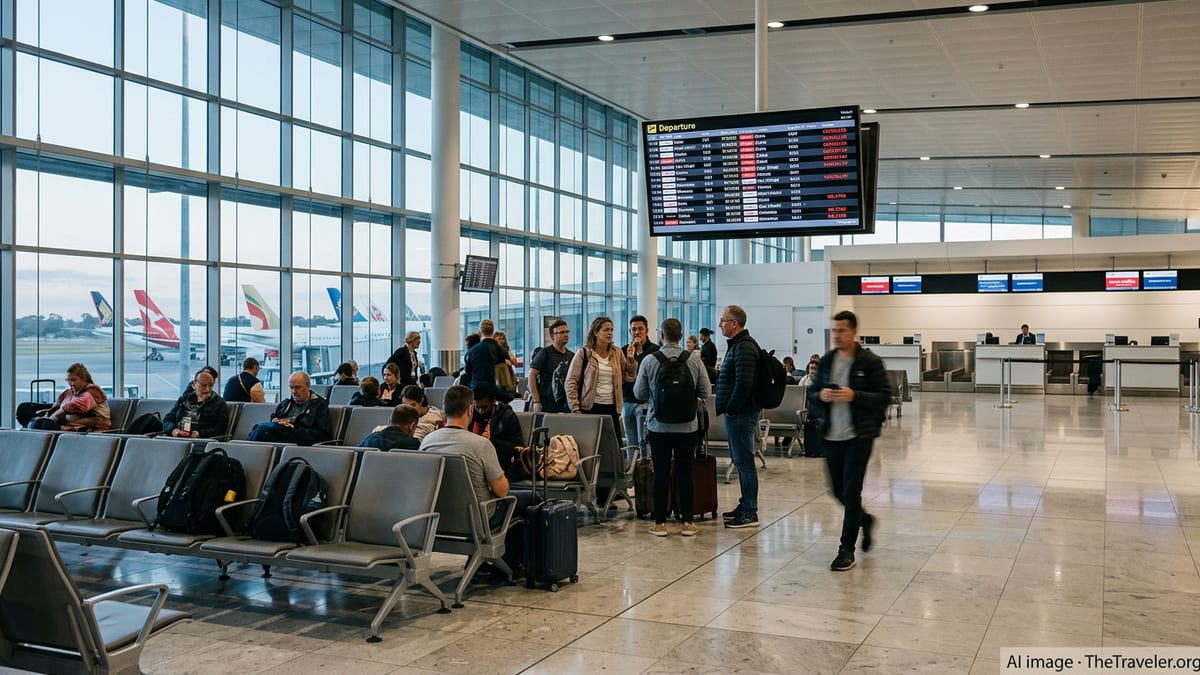
Britain’s Foreign, Commonwealth and Development Office has revised its travel advice for both Qatar and the United Arab Emirates, warning that the wider Middle East situation is “deeply unpredictable” and that the risk of sudden escalation is high. The guidance urges British nationals to be prepared for possible flight cancellations, periodic airspace closures and wider travel disruption affecting the region.
The updated language follows months of volatility across the Gulf and Red Sea, where missile and drone incidents, as well as tit-for-tat strikes involving regional and external powers, have periodically affected civil aviation. Publicly available information on recent advisories notes that travellers could face short-notice changes to flight schedules and even temporary closures of key hubs, including Doha and Abu Dhabi, which normally function as major transit points for Europe–Asia routes.
Travel bodies in the United Kingdom have responded by directing customers to consult government advisories before committing to trips through the region. Guidance for people “travelling to or through the Gulf” stresses that advice is being updated frequently for Qatar, the UAE, Saudi Arabia and Bahrain, and highlights that, as of mid-October 2026, the UK already advises against all but essential travel to Saudi Arabia due to regional conflict risks.
For Formula 1, which relies on the Gulf’s aviation infrastructure to move cars, freight and personnel, any airspace restrictions or changes to insurance coverage tied to official travel warnings could have immediate operational consequences for the calendar’s final rounds.
How a UK Travel Warning Could Unlock a Gulf F1 Cancellation
Specialist Formula 1 coverage has reported that the strengthened UK travel advice may hand the sport’s commercial rights holder, Liberty Media, a powerful tool in negotiations with Gulf promoters. A widely circulated analysis from European motorsport outlets argues that an explicit government warning, particularly from a country that hosts multiple teams and a large share of paddock personnel, could help Formula 1 invoke force majeure clauses in its race contracts.
According to this interpretation, if a major government formally advises against non-essential travel or highlights a credible risk of airspace closure and widespread disruption, Formula 1 could potentially cancel events in Qatar and Abu Dhabi without incurring substantial financial penalties. Such clauses typically hinge on unforeseeable external events that make it impossible or unsafe to fulfil contractual obligations, and official travel guidance is often cited in insurance and legal assessments of risk.
Reports in Italian and British sports media note that senior commentators now view the UK advisory as the signal Formula 1’s leadership had been waiting for before making a final call on the Gulf rounds. Public commentary suggests that if the situation deteriorates further, the combination of government advice, airline risk assessments and corporate duty-of-care obligations towards staff could make it very difficult for teams and partners to justify travel, regardless of whether local organizers insist that conditions are acceptable.
At the same time, observers point out that government advice is not itself a sporting decision. While it may change the legal and insurance landscape, any cancellation or relocation would ultimately be a choice for Formula 1 and the Fédération Internationale de l’Automobile, taking into account logistics, safety analysis and the competitive integrity of the championship.
Qatar and Abu Dhabi Grand Prix Dates, Alternatives and Fan Impact
On the current 2026 calendar, the Qatar Grand Prix is scheduled for 29 November, with the Abu Dhabi Grand Prix a week later on 6 December. Both races are designed to close a long season that, by that point, will already have passed through North and South America and a relocated Bahrain round at Sepang in Malaysia earlier in the year.
Motorsport coverage indicates that Imola, in Italy, has been quietly preparing as a potential stand-in venue should one or both Gulf events be removed from the calendar. Local organizers there have reportedly continued grandstand and infrastructure preparations on the basis that a short-notice replacement race may be needed, though no formal change to the schedule has been announced.
Any cancellation of Qatar and Abu Dhabi would carry significant consequences for the championship battle. Some analyses suggest that if both races were dropped and only one European replacement added, current points leader Kimi Antonelli could secure the world title earlier than expected, with the loss of two high-scoring events shrinking the mathematical pathways for rivals to catch up.
For travelling fans, uncertainty is already having an effect. Travel agents report that some customers are holding off booking flights and accommodation for the Gulf races until there is greater clarity. Those who have already paid for packages are being advised to purchase flexible airfares where possible and to monitor airline policies on rebooking in the event of government-advised disruption or event cancellation.
Travel Risks, Insurance and What British Spectators Should Watch
The UK government’s travel advice does more than flag abstract geopolitical risk; it can directly influence whether insurers will cover trips. Industry commentary following earlier changes to guidance for Bahrain and Saudi Arabia noted that when the Foreign Office advises against all or all but essential travel, many standard travel insurance policies either exclude cover or apply significant limitations to medical, cancellation and disruption claims.
While Qatar and the UAE are not currently subject to the UK’s strictest warning levels, the language about unpredictability and potential airspace disruption is a signal that conditions are being closely watched. Travel associations are urging British visitors to read policy documents carefully, checking how any future escalation in official advice would affect cover for trip cancellations, missed events or emergency medical care.
Prospective spectators are also being encouraged to plan itineraries with additional resilience. That includes allowing extra time for flight connections, considering routing options that do not rely solely on Gulf hubs and maintaining up-to-date contact details with airlines and tour operators so that last-minute changes can be communicated quickly.
Those combining race attendance with longer itineraries through the region are being told to track multiple advisories, since some neighbouring states already carry stronger warnings. The UK currently advises against all but essential travel to parts of the broader Gulf due to conflict and security concerns, and shifts in one country’s risk profile can have knock-on effects on routes, overflight permissions and regional airport operations.
Human Rights Scrutiny Grows Alongside Security Concerns
The travel warning comes against a backdrop of intensified debate over Formula 1’s ties to Gulf states with contested human rights records. Earlier in 2026, Human Rights Watch urged Formula 1 and the FIA to address the risk of governments using upcoming races in Bahrain, Saudi Arabia and other venues to improve international images while ongoing abuses are documented by rights organizations.
International groups have long criticised the use of high-profile sporting events as a form of “sportswashing” and have singled out Gulf grands prix as examples. Previous reports have documented detentions in Bahrain around race weekends, restrictions on peaceful protest and limits on free expression in several host countries, raising questions among campaigners about whether the sport’s human rights policy is being meaningfully applied.
These concerns are intersecting with the current security debate. Critics argue that the same regional dynamics that have led governments to strengthen travel warnings also underscore the fragility of relying on politically sensitive venues for key championship rounds. They contend that Formula 1, as a largely UK- and Europe-based enterprise owned by a United States company, faces growing reputational and ethical pressure when its calendar is heavily concentrated in states facing rights and security scrutiny.
For fans, teams and sponsors, the result is a complex picture. Supporters planning to travel to the Gulf races must weigh not only personal safety and financial risk but also their own views on human rights and the role of global sport. With the UK travel warning now formally on the record and regional tensions unresolved, attention is likely to intensify on Formula 1’s next move and on how it balances contractual commitments with the expectations of a global audience.