


More news on this day
The UK Foreign, Commonwealth & Development Office has rewritten travel advice for 16 countries in and around the Middle East, warning that heightened regional tensions could trigger sudden escalation, airspace restrictions and disruption for travellers transiting through the region.
Get the latest news straight to your inbox!
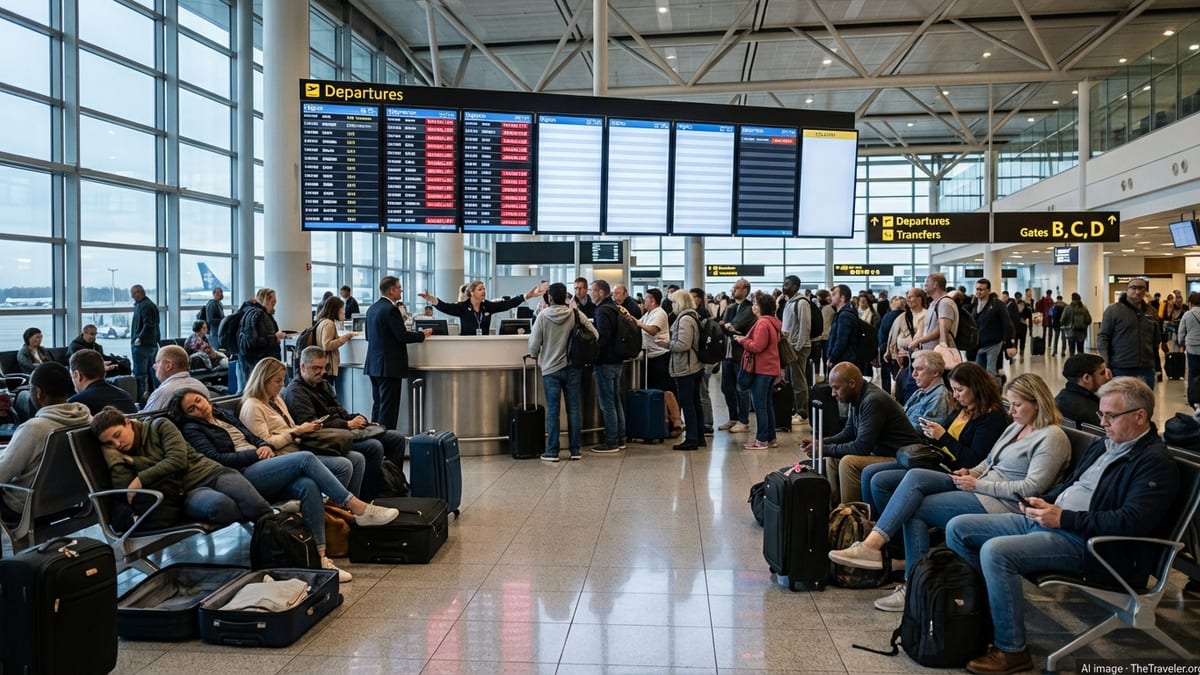
Expanded warning covers 16 destinations across the region
According to recent public updates to official UK travel advice, the revised wording was added on 27 October 2026 across 16 country pages linked to the Middle East conflict and its spillover effects. The list includes Turkey, Egypt, the United Arab Emirates, Oman, Qatar, Bahrain, Jordan, Saudi Arabia, Kuwait and Pakistan, alongside Israel, the Palestinian territories, Iran, Iraq, Syria and Yemen.
Coverage of the change indicates that on many of these pages the FCDO has inserted almost identical language describing the regional context as deeply unpredictable and highlighting a high risk of sudden escalation. The updated text points to the possibility that new incidents could lead to rapid changes in threat levels, restrictions on movement and short notice disruption for travellers.
Separate monitoring of FCDO updates shows that some of the affected destinations also carry more specific restrictions. Current advice includes “against all travel” or “against all but essential travel” notices for parts of the region, particularly in relation to ongoing conflict zones, cross‑border tensions and recent attacks on infrastructure. Travellers are advised to check country‑specific pages carefully, as the level of warning can differ within a single state.
Transit passengers warned about knock‑on disruption
Analysis of the revised wording published on 27 and 28 October shows that the Middle East warning has been extended on most of the 16 pages to cover not only those staying in the region but also people passing through its airports. In practice, this means passengers using major hubs in the Gulf or in Turkey may be exposed to disruption even if their final destination lies elsewhere.
Travel trade bulletins and specialist risk briefings note that potential impacts include short notice flight cancellations, diversions to alternative routings that avoid affected airspace and delays caused by enhanced security procedures. Where airlines are required to reroute around closed or restricted corridors, longer flight times and missed connections are cited as realistic possibilities.
Industry guidance reviewed in late October highlights that major hubs in the United Arab Emirates, Qatar and Turkey remain operational but are considered vulnerable to wider regional developments. Travellers with itineraries involving Dubai, Abu Dhabi, Doha or Istanbul are being urged by tour operators and corporate travel managers to leave longer connection windows and to monitor airline notifications closely in the days before departure.
Heightened security and changing risk levels
The FCDO’s broader Middle East narrative sits against a backdrop of conflict involving Iran, Israel and allied forces, with airstrikes, missile activity and attacks on critical infrastructure reported at various points during 2026. Publicly available security assessments emphasise that the pattern of incidents has been uneven, with periods of relative calm punctuated by sudden spikes in activity that in turn have prompted rapid changes to travel advice.
Independent risk consultancies tracking the October update note that Saudi Arabia, Israel, the Palestinian territories, Iraq, Syria, Yemen and parts of Iran currently appear among the highest‑risk locations in the FCDO listings. For some of these destinations, advice against all travel or all but essential travel remains in place due to a combination of conflict, terrorism concerns and threats to aviation and border areas.
Elsewhere on the 16‑country list, such as in the United Arab Emirates, Qatar, Bahrain, Oman and Turkey, the principal concerns highlighted in public guidance relate to the potential for regional escalation, cyber or drone activity and the impact of any retaliatory strikes. While many popular resort areas and city centres remain open for visitors, the official assessment points to an elevated baseline risk that could affect travel plans at short notice.
Implications for holidaymakers and business travellers
For leisure travellers, one of the most immediate implications of the latest FCDO move is the potential effect on travel insurance. Industry practice in the UK typically links cover to the level of official advice in place on the day of travel. Where the FCDO advises against all travel, many standard policies withdraw cover for new trips, while “all but essential travel” warnings can trigger similar exclusions unless a traveller has a specialist or bespoke policy.
Recent commentary from travel trade publications suggests that package holiday providers are reviewing itineraries that route customers through higher‑risk hubs, and in some cases offering alternatives to avoid airports viewed as more exposed to regional tensions. Travellers who booked before the latest advisory change are being encouraged to check both their policy documents and the terms and conditions of their tour operator or airline to understand their options if disruption occurs.
Business travel managers are also reassessing duty of care obligations for employees scheduled to visit the affected countries. Corporate risk briefings recommend updated threat assessments, scenario planning for sudden airspace closures and clear internal approval processes for any journeys into or through locations where the FCDO has strengthened its language.
Practical steps for those with upcoming trips
Publicly available guidance from travel industry bodies and consular services sets out several practical steps for people with imminent travel involving the Middle East. Travellers are advised to check the FCDO country page for each stop on their itinerary, sign up for update alerts where available, and reconfirm flights directly with airlines 24 to 48 hours before departure.
Given the potential for knock‑on disruption, travellers with tight connections in regional hubs may wish to speak with airlines or agents about rebooking to longer layovers or alternative routes. Some carriers have already introduced flexible change policies on itineraries that touch the Middle East, and travel agents are reporting increased demand for routings that bypass the region altogether.
Those who decide to proceed with their journeys are being urged by travel risk specialists to maintain a higher level of situational awareness once in transit, pay close attention to airport announcements and carry contingency funds in case of overnight delays. For trips to destinations where the FCDO advice has moved to “against all travel” or “against all but essential travel,” travellers are being encouraged to evaluate carefully whether their plans remain necessary in the current environment and to document any risk assessments that support proceeding.