


More news on this day
UK holidaymakers are being urged to plan for possible flight cancellations and sudden route changes after the Foreign, Commonwealth and Development Office (FCDO) rewrote its Middle East travel guidance for 16 countries, warning that the regional situation remains "deeply unpredictable" with a high risk of sudden escalation.
Get the latest news straight to your inbox!
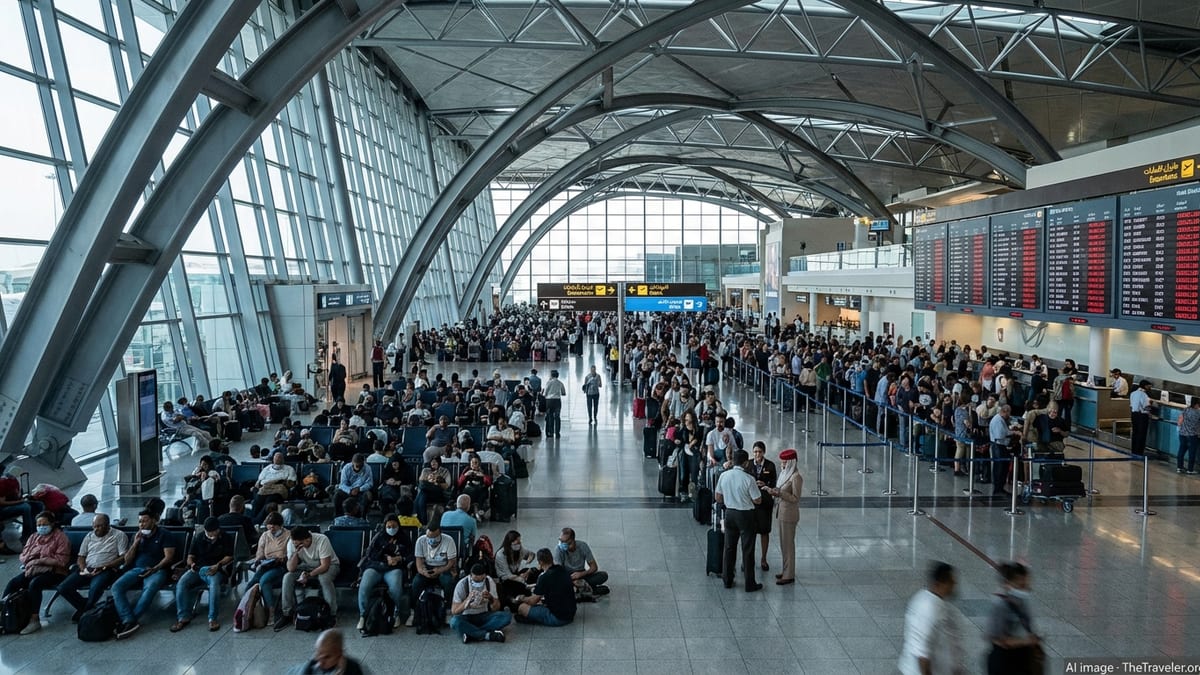
Fresh wording across 16 FCDO country pages
According to publicly available travel advisories and industry reporting, the FCDO republished guidance on 27 October 2026 for 16 destinations linked to the Middle East conflict: Saudi Arabia, Turkey, Yemen, Jordan, Iraq, Bahrain, Kuwait, Palestine, Israel, Pakistan, Syria, Iran, Egypt, the United Arab Emirates (UAE), Qatar and Oman. The wording highlights regional tensions and the possibility of rapid deterioration.
Coverage of the update indicates that each of the 16 country pages now contains new text stressing that the context in the Middle East is highly volatile and that the risk of sudden escalation is considered high. On most pages, the advice is directed not only at visitors to those countries but also at people transiting through major hubs in the region.
The step follows months of heightened concern over spillover from the conflict, with multiple governments describing the security environment as unpredictable and warning that airspace closures, missile strikes and other incidents could disrupt civil aviation at short notice.
The FCDO continues to draw distinctions between levels of risk within the region. For example, separate UK guidance for Iraq and parts of Saudi Arabia advises against all or all but essential travel, while other destinations such as the UAE and Qatar remain open to tourism but with strengthened language around vigilance and contingency planning.
What the new disruption warning means for travellers
The revised FCDO text does not automatically mean that flights to the 16 countries are suspended, and scheduled services from the UK into hubs such as Dubai, Abu Dhabi, Doha and Istanbul are largely operating. However, the warning signals that services could be curtailed or rerouted with minimal notice if the security picture worsens or airspace is restricted.
Publicly available information from travel risk firms and national advisory portals notes that airlines in the region have already made periodic adjustments in 2026, including thinning frequencies, using alternative routings to avoid sensitive airspace and, on occasion, cancelling individual rotations. Passengers can find that journeys which looked straightforward at the time of booking become more complex closer to departure.
The FCDO’s reminder that the situation is “deeply unpredictable” is particularly relevant for trips built around tight connections. Travellers using Gulf or Turkish hubs to reach destinations in Asia, Africa or Australasia face a higher chance of missed onward connections if earlier sectors are delayed, and may have limited alternative routing options during busy periods.
Importantly for UK residents, FCDO advice can also affect contractual rights. Many UK travel insurance policies restrict or exclude cover when travellers go to areas where the government advises against all or all but essential travel. Tour operators and employers often reference the same guidance when deciding whether to run trips or request staff travel into a higher-risk location.
Middle East air routes under pressure from regional tensions
The latest UK warning comes against a backdrop of broader disruption across the Middle East’s transport network during 2026. Maritime and aviation risk assessments describe a significant reduction in commercial traffic through key chokepoints, and some long-haul airlines have publicly confirmed re-routings to avoid sensitive corridors.
Advisories issued by Australia, New Zealand and other governments in recent weeks similarly describe the regional security environment as unpredictable and caution that conflict could trigger global knock-on effects, even for travellers whose final destination lies outside the Middle East. Some notices highlight the possibility of diverted or stranded aircraft, alongside temporary closures of airports or entire national airspaces.
For travellers, this means that itineraries involving the wider region may be affected even if their specific destination is considered lower risk. Travellers heading to South or Southeast Asia, for instance, could experience disruption if their airline typically operates via Gulf or Levantine hubs that later come under tighter restrictions.
Industry association guidance also notes that when airspace closures concentrate traffic into fewer corridors, congestion can increase flying times and lead to further schedule knock-on effects. Travellers may see last-minute changes to departure times, aircraft types or intermediate stops as carriers work around constraints.
Practical steps: insurance, flexibility and monitoring
Travel organisations and government advisories consistently urge passengers to check the latest official travel advice for both their destination and any transit points immediately before departure. Signing up for email alerts or push notifications can help travellers track sudden shifts in risk level, as advisories for some Middle Eastern countries have been updated several times during 2026.
Insurance is another critical consideration. Publicly available policy wordings from mainstream UK and international insurers often exclude disruption linked to war, armed conflict or declared government travel warnings. Travellers are encouraged by consumer groups to read conflict and “government advice” clauses carefully, confirm whether cover remains valid under the current FCDO guidance, and consider specialist policies if visiting or transiting higher-risk areas.
Flexible booking options have become more valuable as uncertainty persists. Some airlines serving the region continue to offer fee-free date or route changes when advisories tighten or operational changes are imposed, while several major tour operators have introduced rebooking options for customers unwilling to travel after a change in government advice. The availability and generosity of these measures vary, so passengers are advised to check terms at the time of purchase rather than assuming free changes will be offered later.
For travellers already in the region, international advisory sites recommend maintaining a buffer of essential supplies, keeping travel documents accessible and staying in close contact with airlines or agents for updates on flight status. Itineraries that involve internal transfers by air or sea may be particularly vulnerable if a local airport or port faces temporary closure.
Outlook for winter 2026 travel through the region
With the UK and other governments stating that the risk of sudden escalation remains elevated, travel analysts expect a cautious approach from airlines as the busy late-2026 and early-2027 holiday periods approach. Capacity plans are being adjusted to reflect both demand and operational risk, with a bias toward routes and routings seen as more resilient to regional shocks.
Published commentary from risk consultancies suggests that as long as key Gulf and Turkish hubs remain open, many long-haul journeys will continue to rely on them, albeit with more conservative scheduling and contingency planning. However, a further deterioration in the security environment could quickly lead to wider schedule cuts, diversions over longer routings and higher operating costs, some of which may be passed on through fares.
Travellers considering new bookings that route via the Middle East in late 2026 are therefore weighing the convenience and price advantages of using regional hubs against the possibility of last-minute change. Some are opting for itineraries that remain within Europe or North America, or that use alternative hubs, even at a premium, in order to reduce exposure to disruption risk.
For now, the FCDO’s updated wording underlines that the Middle East remains open but volatile for travel. Holidaymakers and business travellers are being asked to stay informed, build more flexibility into their plans and be prepared for the possibility that journeys touching the region could change with little warning.