


More news on this day
Around 200 passengers who bought long term “residency” on the Villa Vie Odyssey have been left scrambling for accommodation and flights in Cambodia after the company halted its three year world cruise, with one passenger describing “red flags all along” before the program abruptly unraveled.
Get the latest news straight to your inbox!
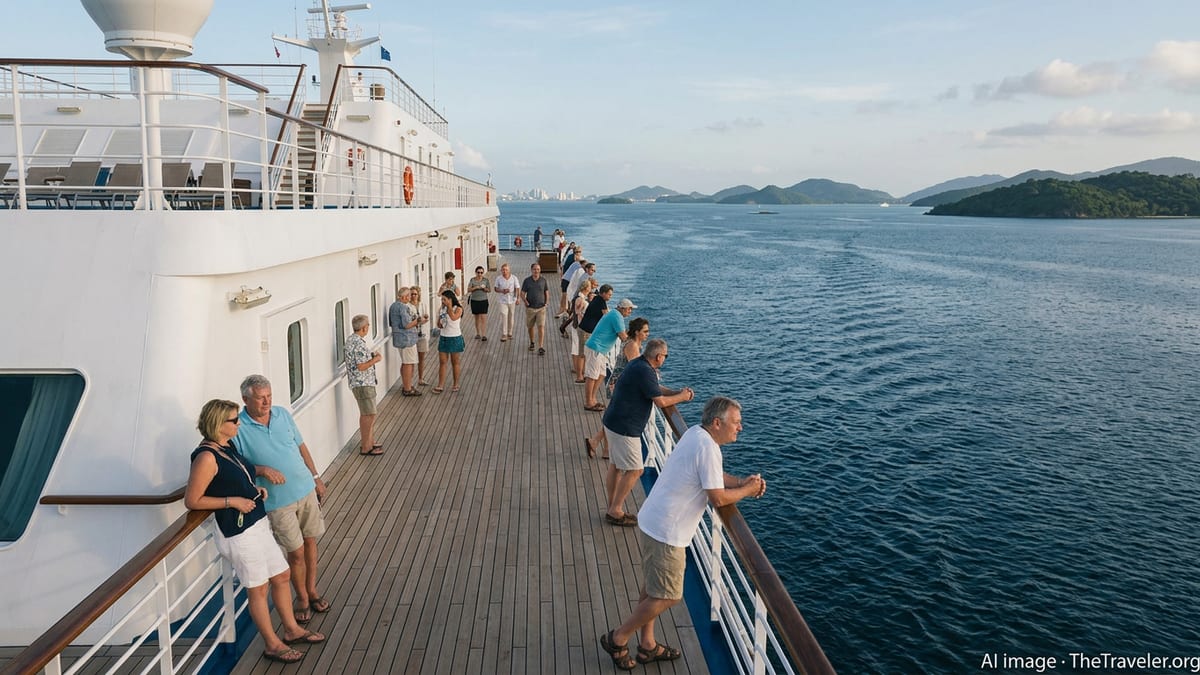
Three year ‘live at sea’ voyage stalls in Sihanoukville
Publicly available information shows that Villa Vie Residences launched the Odyssey in late 2024 as a continuous around the world voyage marketed as a way to live at sea in privately owned cabins for up to 15 years. The ship, a former traditional cruise vessel, was refitted so buyers could treat cabins as long term homes, paying an upfront purchase price plus ongoing monthly fees.
The itinerary was designed to circle the globe every three and a half years, with marketing materials highlighting the ability to work remotely, access onboard services and follow temperate seasons indefinitely. The concept attracted retirees, digital professionals and couples who sold or rented out land based homes in order to relocate to the ship.
Reports indicate that when the Odyssey arrived in the Cambodian port of Sihanoukville in late October 2026, passengers were informed that operations were being suspended and that they would need to disembark within hours. Coverage of the events describes a “ghost town” atmosphere on board as residents packed up cabins they had expected to occupy for years.
According to published coverage cited in a NewsNation segment with legal analyst Jesse Weber, the ship was carrying about 203 passengers and 156 crew at the time, significantly below its stated capacity of roughly 650 residents. That shortfall in occupancy became critical once operating costs began to rise.
Soaring fuel costs and a business model under pressure
Villa Vie executives have linked the decision to suspend the voyage to a surge in marine fuel prices, which they attribute in part to disruption in global energy markets following conflict involving Iran. Company statements and subsequent reporting describe fuel for the Odyssey rising from around 700 dollars per metric ton before the latest instability to between 2,000 and 3,000 dollars per ton on some routes.
Because the ship was marketed as a residential vessel rather than a traditional cruise, the economic model depended on spreading those costs across cabin owners paying predictable monthly assessments. Passengers quoted in recent coverage say average monthly fuel charges per cabin climbed from approximately 1,800 dollars earlier in the voyage to as much as 6,000 to 8,000 dollars while the ship was sailing in parts of Asia.
In August, several weeks before the shutdown in Cambodia, Villa Vie asked residents to make what it termed a fuel contribution in order to help keep the itinerary running. Reports indicate that not all cabin owners agreed to pay the additional amount, leaving a funding gap even as bills mounted. The company has said it was “unable to continue carrying the resulting operating losses” once these increases were taken into account.
Legal commentary aired by NewsNation notes that the operator now plans to seek Chapter 11 bankruptcy protection in the United States, a move that would shift disputes with residents into a restructuring process. Passengers are examining contracts to determine what protections they may have for funds already paid, including large upfront cabin purchases.
‘Red flags all along’: residents question earlier warning signs
Among the most prominent voices in the unfolding story is passenger and cabin owner Barbara Cassingham, who appeared on Jesse Weber’s NewsNation program to describe her experience. According to the segment and related summaries, Cassingham and her husband paid between 370,000 and 380,000 dollars for their cabin, plus about 7,000 dollars a month in expenses, and had planned to live on board for many years.
In her televised remarks, Cassingham said she believed there had been “red flags all along,” pointing in particular to the fuel contribution request and to what she viewed as growing signs of financial strain. She described having a “growing sense” that the end of the voyage could be approaching and had already started packing before the shutdown order in Sihanoukville.
Published accounts based on her comments state that residents were told they had until early afternoon on the day of the suspension to leave the ship, a deadline that triggered a rush to find hotel rooms and last minute flights from a city not accustomed to handling large numbers of international passengers at once. Cassingham has publicly disputed company suggestions that passenger expenses were being covered, saying she and others were paying for their own food and lodging ashore.
Other residents cited in international coverage have expressed concern for older passengers and for crew members, some of whom reportedly had not been paid in full for recent work. The sudden halt left people who considered the Odyssey their primary home facing immediate questions about medical access, visas, and the logistics of retrieving possessions left on board.
Bankruptcy plans and uncertain paths for stranded travelers
Statements from Villa Vie’s leadership indicate that the company intends to use a 60 day window to explore restructuring and recapitalization options while the Odyssey remains in or near Southeast Asia. Public documents and press reports describe plans to refuel the vessel in Cambodia and have it sail onward without residents, although the precise timeline and future deployment remain unclear.
For passengers, the legal landscape is complex. Many buyers entered into multi year or 15 year agreements that bundled real estate style rights to a cabin with service contracts for hospitality, maintenance and travel. Consumer law specialists interviewed in media coverage note that depending on how those contracts are written and which jurisdiction they fall under, residents may be treated as unsecured creditors seeking to recover funds in a U.S. bankruptcy court.
Several reports reference a list of recommended hotels and charter flight options circulated to residents after the shutdown. However, passengers who have spoken publicly say these offers came only after many had already booked their own arrangements, often at premium prices given the short notice and limited capacity in and out of Sihanoukville.
The incident has also prompted questions about insurance. Some residents reportedly purchased travel or specialty policies, but it is not yet clear how many travelers are covered for a scenario in which a cruise marketed as a multi year residence ceases operations mid itinerary because of operating costs rather than a defined natural disaster or mechanical failure.
What the collapse means for the ‘residential cruise’ trend
The suspension of the Villa Vie Odyssey has reverberated across the growing niche of residential cruising, where companies sell cabins or apartments on board vessels that travel continuously rather than operating traditional weeklong itineraries. For years, operators have promoted these products as a way to downsize from a land based home while maintaining a stable community and predictable expenses.
Analysts following the sector say the events in Cambodia underscore how sensitive such models can be to fuel prices, occupancy rates and access to financing. With smaller customer bases than mainstream cruise lines, residential ships have less ability to offset sudden cost spikes by shifting vessels, shortening routes or rapidly repricing short term tickets.
Travel industry observers also point to the importance of transparency around financial health. Requests for extraordinary “contributions,” changing payment schedules or repeated alterations to published itineraries may give residents clues about underlying pressures. In the Villa Vie case, passengers who have spoken to news outlets say they now view several developments earlier in 2026, including the fuel appeal and itinerary adjustments, as early signs of distress.
Despite the turmoil, interest in ocean based living has not disappeared. However, prospective buyers are watching the Villa Vie situation closely and asking more detailed questions about reserves, fuel hedging strategies and what recourse they would have if a long duration voyage ended ahead of schedule. For the travelers unexpectedly deposited in Sihanoukville, the focus is more immediate: finding a place to live on land after believing they had already set sail on a floating home.