


Just a short ferry ride from Dubrovnik, Koločep Island feels much farther away than the 30 to 40 minutes it takes to get there. With no cars, two sleepy villages, forested paths and sheltered coves, it is one of the easiest places on the Elafiti Islands to swap Old Town crowds for Adriatic stillness. This guide walks you through Donje Čelo and Gornje Čelo, the best swimming spots and walking routes, how to reach the island on the local ferry, and how to fold Koločep into a Blue Cave or wider Elafiti boat day.
Get the latest updates straight to your inbox!
Why Koločep Works So Well as a Quiet-Island Escape
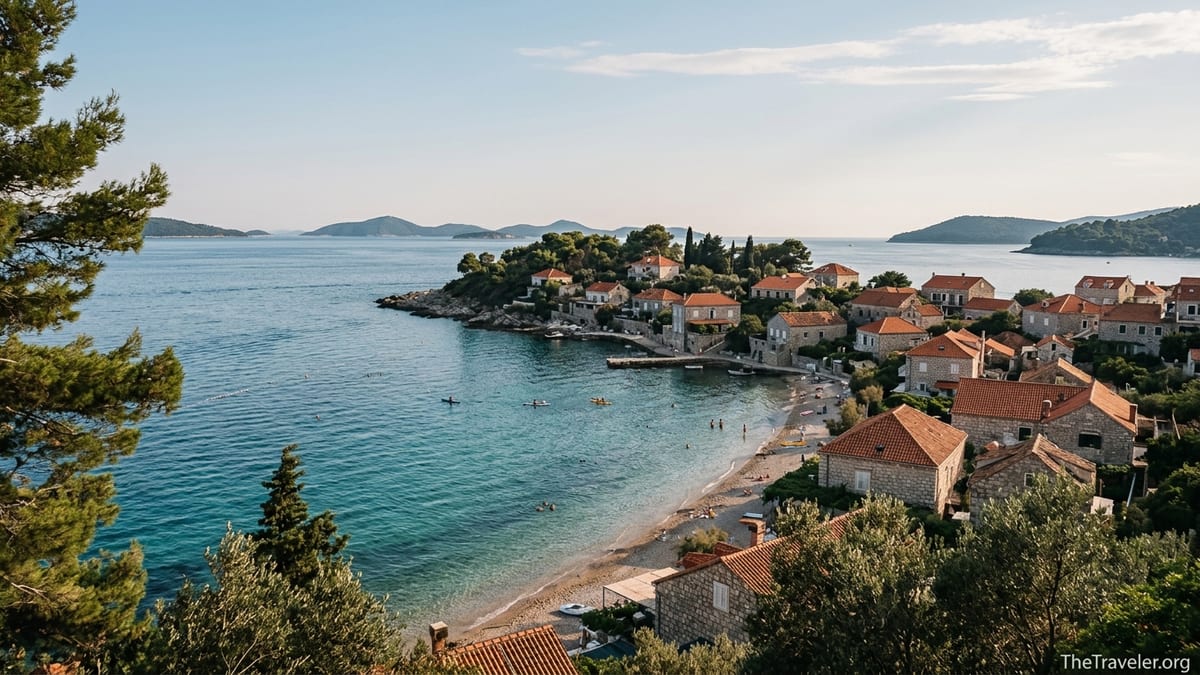
Koločep, sometimes called Kalamota, is the closest of the Elafiti Islands to Dubrovnik, sitting roughly two nautical miles northwest of the mainland. The island has only two settlements, Donje Čelo on the north side and Gornje Čelo on the south-western side, linked by woodland paths and a single narrow road used mainly by electric carts and service vehicles. There are no private cars, which immediately changes the rhythm of a visit compared with busier Dalmatian islands.
For travelers staying in Dubrovnik, Koločep is one of the simplest low-stress day trips. You do not need to negotiate private skippers or complex connections. The public ferry that runs the Suđurađ–Lopud–Koločep–Dubrovnik route calls multiple times per day in high season, and tickets are typically priced in the same bracket as a city bus fare plus a supplement, keeping the total well under what you would pay for a full-day organized excursion. You step off in Donje Čelo and within a few minutes can be barefoot on the beach.
Koločep also works as a base for people who prefer silence at night but still want straightforward access to Dubrovnik. Some visitors book small guesthouses or apartments in Donje Čelo or Gornje Čelo for three or four nights, spending the day swimming, kayaking, or walking through pine forest, then using the early or late ferries to fit in an afternoon or evening in Dubrovnik. Compared with staying in Old Town, prices for simple rooms and apartments on Koločep are generally lower, especially outside July and August.
Because the island is small and largely undeveloped inland, the main activities here are simple: swimming, sunbathing on low-key beaches, renting a kayak or paddleboard, and walking from cove to cove. That limited menu is exactly what many visitors are looking for after a day of city walls and cruise ships in Dubrovnik.
Donje Čelo: Sandy Strip, Harbourfront Cafés and Easy Arrivals
Donje Čelo is the island’s main arrival point and its most developed settlement. The Jadrolinija ferry lands at a small concrete quay backed by terracotta-roofed houses, a few cafés and konobas, and a narrow belt of beach that curves around the bay. Guidebooks and recent first-hand accounts consistently describe Donje Čelo’s beach as one of the more family-friendly spots in the Elafiti group, thanks to its shallow entry and a patchy but real stretch of sand mixed with pebbles rather than only rock slabs.
In practical terms, Donje Čelo is where you will find the island basics. In high season there is usually at least one small market stocking cold drinks, fruit, bread, cheese, sunscreen and simple picnic supplies, along with a bakery delivery or counter early in the morning. Several restaurants sit directly on the seafront, offering grilled fish, seafood risotto, salads and pasta. Prices are a little below central Dubrovnik levels, but still very much aligned with a popular holiday region. Expect a main course to cost similarly to what you would pay in other mid-range Croatian coastal restaurants, with a glass of local wine adding a modest supplement.
The beach itself is split into zones. In front of certain properties there may be rows of rented loungers and umbrellas, which are convenient if you want shade and service. You can also move away from the center of the bay to find more open public stretches, often used by local families. The water deepens gradually and is usually calm, sheltered by the arms of the bay, making it a straightforward place for children or nervous swimmers to get comfortable.
If you are here only for a few hours, you can comfortably spend your time within a few hundred meters of the pier, alternating between swims, coffee, and a walk to the edges of the bay. For a fuller experience of the island, however, plan at least one inland or coastal walk towards Gornje Čelo or one of the western coves.
Gornje Čelo: Quieter Bays, Western Views and a Sleepy Village
Gornje Čelo stands on the more exposed western side of Koločep and feels noticeably quieter than Donje Čelo. You reach it either by walking inland through pine and olive groves or by following coastal paths that trace the edge of the island. The village has a small harbor, a handful of houses and holiday apartments, and a couple of places to eat, but tourism feels more low-key and residential.
The coastline around Gornje Čelo is more rugged, with rocky platforms dropping into deep, clear water. This is the side of the island to seek out if you prefer jumping from rocks rather than wading in from sand. Several coves and swimming spots lie within a short walk of the village, and in calm conditions the water is exceptionally transparent. Snorkelers often report seeing shoals of small fish, sea urchins clinging to rocks, and patches of sea grass in the deeper areas.
Because of its orientation, Gornje Čelo benefits from wide sea views and dramatic light in the later part of the day. If you are staying overnight on Koločep, an evening swim or drink here can deliver sunset views back towards Lopud and Šipan, or out into the open Adriatic. The atmosphere remains quiet even in high summer, so you should not expect beach clubs or nightlife, just the sound of waves and the occasional passing boat.
Accommodation in Gornje Čelo tends to be in the form of private rooms and apartments rather than hotels. Many are tucked into stepped gardens above the shore, often with simple terraces facing the sea. Guests typically self-cater breakfast and some dinners using the small local shops or by bringing supplies on the ferry, then rely on the tavern-style restaurants for at least one meal per day.
Car-Free Paths, Forest Walks and Crossing the Island on Foot
One of Koločep’s biggest appeals is the ability to walk almost everywhere without encountering traffic. There is a single lane that functions as the island’s main road, used occasionally by utility vehicles and small electric carts, but most visitors spend their time on footpaths cutting through pine forest and low Mediterranean scrub. The central ridge of the island is only modestly elevated, so most routes are accessible to anyone of average fitness wearing decent footwear.
The most common walk is from Donje Čelo to Gornje Čelo. Depending on which path you take, this crossing can be a straightforward 25 to 40 minutes each way. Inland, a shaded route passes stone walls, small orchards, and pockets of maquis vegetation. Coastal paths on the western side are rougher underfoot but reward you with views down into clear coves and across to neighboring islands. In mid-summer, start early in the morning or later in the afternoon to avoid walking during the hottest hours.
Smaller spur paths drop down to swimming spots and rocky ledges. It is common for visitors to combine walking and swimming by treating coves as rest points. For example, you might leave Donje Čelo after breakfast, walk across to a western cove for a late-morning swim, then continue into Gornje Čelo for lunch. After a break there, you can either retrace your steps via a different path or follow the road back for an easier, quicker traverse.
There are also short loops from each village that do not require crossing the island. From Donje Čelo you can head north-east along the shoreline to find quieter corners with fewer people. From Gornje Čelo, following the coast towards the southern tip reveals more exposed rock platforms that feel wild even though they are only a short walk from houses. None of these trails are technically demanding, but surfaces are often uneven and can become slippery with pine needles, so simple walking shoes or sturdy sandals are preferable to thin beach flip-flops.
Swimming Coves, Beaches and Kayaking the Coastline
Koločep’s coastline alternates between small sandy or shingle bays and longer stretches of broken rock. Donje Čelo Bay, with its sandy entrance and family-friendly shallows, is the obvious and most popular choice, especially for day-trippers who want facilities close at hand. Sunbeds and umbrellas are often available for daily rental near the center of the beach, with prices in line with other Adriatic resort areas per lounger and umbrella set in high season.
Beyond the main bay, the island rewards those who are willing to carry their towel a little farther. On the western and southern shores you will find small coves accessed by narrow paths or steps hewn into the rock. These spots rarely have services, but in exchange you get quieter water and more space. The sea here is typically deep from the edge, so these are better suited to confident swimmers and snorkelers. Many independent travelers mention bringing reef shoes or sturdy sandals for easier entry and exit across rocks and pebbles.
Kayaking is one of the best ways to link these coves into a single outing. In high season, several local operators and guesthouses on Koločep and in Dubrovnik rent sit-on-top kayaks by the hour or for half-day use. Rates are usually similar to what you will find in other Croatian coastal destinations for comparable equipment. From Donje Čelo, an easy paddle runs along the northern coast, while more experienced paddlers head west and south towards cave-pocked cliffs. On calm mornings, the sea can be flat and glassy, ideal for longer explorations and photography.
If you do not want to organize a kayak on the island itself, many Dubrovnik-based kayaking tours include Koločep as a destination or a coastal waypoint on longer Elafiti itineraries. These tours often combine paddling with time for snorkeling in coves or near small caves around the island, and they usually provide basic equipment such as masks and snorkels.
Blue Cave-Style Boat Stops and Elafiti Day Trips via Koločep
Koločep is closely associated with the Blue Cave experiences marketed in Dubrovnik. Many half-day boat tours list a visit to a blue-lit sea cave on Koločep as their headline stop, often combined with snorkeling at nearby “Green Caves” and free time at Šunj Beach on Lopud. Boats typically depart from Dubrovnik’s Gruž harbor or the Old Town port, and reach the Koločep cave area in around 20 minutes on a small speedboat, depending on sea conditions.
The cave on Koločep is smaller than the famous Blue Grotto on Biševo Island in central Dalmatia, but conditions can still be magical when the sun is high and the sea is calm. Light enters through an underwater opening and refracts, turning the interior water an intense blue when you swim inside. On group tours, passengers usually enter by jumping into the sea and swimming or floating through the low entrance. Private charters sometimes carry smaller auxiliary boats or inflatables to make access easier, but entry is always dependent on safety and swell levels.
Several Dubrovnik tour companies run essentially similar itineraries that include Koločep’s caves, short snorkeling stops, and a beach break on Lopud. As of the 2026 season, group prices for four-hour Blue Cave and Elafiti combination tours typically sit in a mid-range bracket per person, while private half-day charters for a small speedboat start from a few hundred euros per boat, varying with vessel size, fuel, and inclusions. Inclusions usually cover snorkeling gear, soft drinks, and sometimes beer or wine.
If you are already staying on Koločep, it is worth speaking directly with local skippers in the harbor about short private outings to the cave area at quieter times of day. Many are willing to arrange one to two-hour trips outside peak midday windows, either early in the morning or towards late afternoon, which can mean fewer boats at the cave and softer light. Always confirm in advance what is included, how long you will have for swimming, and what happens if sea conditions make cave entry impossible that day.
Ferry Access from Dubrovnik and Moving Between the Elafiti Islands
The backbone of practical access to Koločep is the public ferry on the Suđurađ–Lopud–Koločep–Dubrovnik route, currently operated by Jadrolinija under the line number 807. The timetable changes slightly each year, but in typical summer seasons there are several departures a day from Dubrovnik’s Gruž harbor heading out to Koločep and onward to Lopud and Šipan, with corresponding returns in the afternoon and evening. Crossing time between Gruž and Koločep is generally around 30 to 40 minutes depending on intermediate stops.
Tickets for the 807 ferry are sold at the Jadrolinija office and kiosks in Gruž and are priced on the same scale as other short coastal routes in Croatia. Even with seasonal adjustments, the cost remains modest compared with organized excursions. To avoid disappointment in July and August, it is sensible to purchase your ticket earlier in the day, especially if you want a specific departure time. Queues can form before popular sailings, particularly early morning boats that allow day-trippers to maximize time on the islands.
If you plan to hop between the Elafiti Islands independently, Koločep fits naturally as either a first or last stop. One simple pattern is to take the morning ferry from Dubrovnik to Šipan, spend late morning there, continue back towards Lopud for an afternoon at Šunj Beach, then use a later ferry to reach Koločep for an evening swim and dinner before returning on the final sailing to Dubrovnik. This kind of triangle requires close reading of the timetable and some flexibility, but it avoids the crowds and fixed schedules of big three-island tour boats.
For visitors basing themselves on Koločep overnight, the same ferry provides reliable access to Dubrovnik for city visits. In peak season, early departures allow you to reach the mainland in time for standard check-in or tours, while late returns make it possible to enjoy the cooler evening hours in the Old Town before heading back to the island to sleep. Outside high summer, schedules may be reduced, so always double-check current times shortly before travel.
The Takeaway
Koločep offers one of the easiest and gentlest ways to escape Dubrovnik’s summer crowds without committing to a complex island itinerary. The combination of car-free paths, two distinct but equally relaxed villages, family-friendly swimming in Donje Čelo, and rugged coves around Gornje Čelo gives the island more variety than its small size suggests. Add in straightforward ferry access and the option to join or sidestep the popular Blue Cave circuits, and Koločep becomes a flexible addition to almost any Dalmatian itinerary.
For day-trippers, the island works best as a low-pressure day of swimming, walking, and simple meals by the sea. For those staying longer, Koločep turns into a quiet base where the sounds of Dubrovnik’s nightlife are replaced by cicadas and boat engines in the distance. In both cases, it rewards people who are content with modest infrastructure and natural pleasures: clear water, shade from pines, and the ability to walk along the coast without ever hearing a car.
FAQ
Q1. How long does the ferry from Dubrovnik to Koločep take?
The public ferry from Dubrovnik’s Gruž harbor to Koločep generally takes around 30 to 40 minutes each way, depending on intermediate stops at Lopud or Šipan.
Q2. Do I need to book the Koločep ferry in advance?
In high season it is wise to buy tickets earlier in the day, especially for morning and late-afternoon departures, as popular sailings can become crowded, but formal reservations are usually not required for foot passengers.
Q3. Is Koločep suitable for a day trip with children?
Yes, Koločep is well suited to families, particularly Donje Čelo, where the main bay has a gentle, shallow entry and a mix of sand and small pebbles, plus cafés and toilets nearby.
Q4. Are there cars or taxis on Koločep?
Koločep is effectively car-free, with only occasional service or utility vehicles. Visitors move around on foot or by small boat, which keeps the island quiet and relaxed.
Q5. Can I visit the Blue Cave on Koločep without a tour?
Reaching the cave safely requires a boat, so most visitors join a small group tour or arrange a local skipper. Strong swimmers in kayaks sometimes visit independently, but only in calm conditions and with suitable experience.
Q6. What should I bring for a day on Koločep?
Bring swimwear, a towel, reef shoes or sturdy sandals for rocky entries, sunscreen, water, and some cash for cafés and sunbed rentals, as not every place accepts cards.
Q7. Are there shops and ATMs on the island?
There are usually small mini-markets in at least one of the villages selling essentials, but services are limited and ATMs are not guaranteed, so withdraw cash in Dubrovnik before you travel.
Q8. Is it easy to walk from Donje Čelo to Gornje Čelo?
Yes, the walk between the two villages typically takes 25 to 40 minutes each way on forest and village paths, with modest gradients suitable for most reasonably fit visitors.
Q9. When is the best time of year to visit Koločep?
Late May, June, September and early October usually offer warm sea temperatures and pleasant weather with fewer crowds than peak July and August, though ferry schedules can be slightly lighter.
Q10. Can I stay overnight on Koločep?
Yes, there are small guesthouses and private apartments in both Donje Čelo and Gornje Čelo, which you can book through major accommodation platforms or directly with local owners.