


More news on this day
Confusion is mounting in Alderney over when work will actually begin on the island’s long‑promised £24 million runway and airport upgrade, with public debate swinging between confidence in the project and concern that further delays are quietly taking hold.
Get the latest news straight to your inbox!
A flagship upgrade with a shifting timeline
The £24 million scheme to overhaul Alderney Airport has been presented as a critical investment in the island’s long‑term connectivity. Public documents and business‑case papers describe a project that would resurface and extend the existing runway, deliver a new terminal and fire station, and modernise key safety infrastructure to meet regulatory standards.
The upgrade has been several years in the making. Political backing was first secured in principle in Guernsey in 2019 for a more modest rehabilitation, before a broader “Option C+” package, costed at just over £24 million, emerged as the preferred solution. Since then, the programme has moved through design work, impact assessments and tender preparations, with island groups highlighting it as the option they believe offers the best value over the medium to long term.
Despite this, islanders say the calendar for construction has been hard to pin down. Earlier expectations that work might start by the middle of the decade have repeatedly bumped up against cost pressures, procurement challenges and competing priorities across Guernsey’s capital programme, leaving residents unsure whether the latest dates discussed publicly remain realistic.
That uncertainty has created space for a flurry of commentary about “quiet shelving” or fresh postponements, even as official documentation still points to the £24 million scheme as the baseline plan.
Speculation, stalled tenders and budget questions
Much of the current debate stems from the project’s complex tender history. An earlier attempt to move ahead with runway works reportedly attracted only a single bid that significantly exceeded the approved budget, prompting a rethink of how and when to proceed. That setback was followed by further technical studies and a renewed focus on ensuring the final design could attract competitive pricing from contractors.
Revised information sheets produced for local business groups explain that the preferred longer‑runway option carries capital costs far above the original rehabilitation sum agreed in 2019. Those figures have had to be weighed against rising construction costs, inflation and the tight fiscal environment facing both Guernsey and Alderney. As these pressures build, each new reference to “value for money” or “re‑profiling” of spending has fed speculation that timelines could slip again.
Island media and community forums have reported repeated rumours that the project might be scaled back or pushed further into the future. Some commentators suggest the plan could be pared down to essential resurfacing, while others argue that anything short of the full upgrade would miss a rare chance to transform Alderney’s air links. In the absence of clear, dated milestones for ground‑breaking or contractor appointment, residents are left to interpret a mix of cautious statements, technical briefings and political debate.
At the same time, there has been little public indication that the £24 million outline has been abandoned altogether. Official papers still present the expanded runway as the preferred option, leaving observers to distinguish between formal policy and what many describe as “runway gossip.”
Islanders weigh safety, economics and everyday disruption
For people living and working on Alderney, the runway dispute is not an abstract capital project but a question of day‑to‑day resilience. The current surface, last fully resurfaced in the late 1990s, has undergone multiple patch repairs. Business networks and campaigners argue that without a comprehensive upgrade, there is a risk of more intrusive restrictions in future, with knock‑on effects for medical evacuations, tourism and investment.
That concern has already spilled into public campaigns. Previous petitions have warned that continued inaction could threaten the airport’s reliability and even its certification, citing the importance of secure air links for emergency medical transfers and the wider economy. Organisers have urged decision‑makers to commit not only to the principle of the project but to a clear start date for works on the ground.
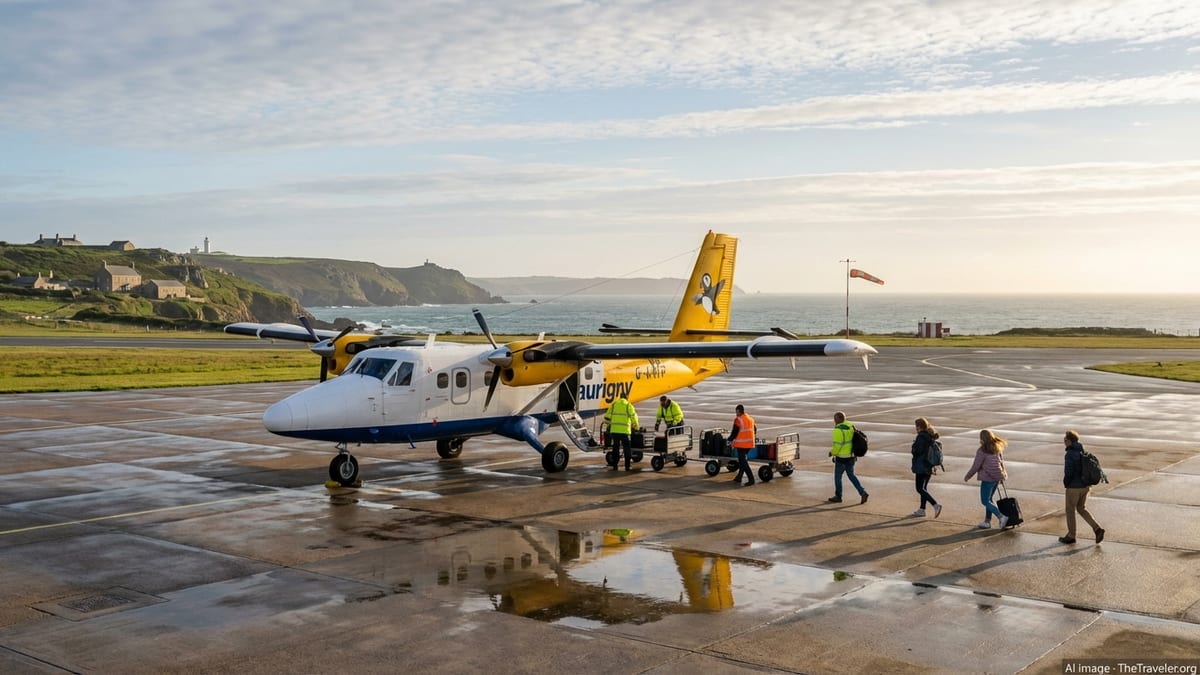
The debate unfolds against a backdrop of persistent reliability worries on Alderney’s lifeline routes. The island has seen waves of disruption linked to weather, pilot availability and aircraft changes, prompting protests at the airport and formal complaints from local authorities about service levels. Although the recent arrival of a second Twin Otter aircraft has been presented as a step toward more robust air links, many residents see infrastructure renewal as the more fundamental fix.
With each new episode of flight disruption, scrutiny of the runway plan intensifies. For some, every delay in publishing a detailed construction timetable reinforces the sense that the project is slipping; for others, the capacity challenges faced by airlines underline why the longer‑term upgrade is essential, even if it takes time to reach the starting line.
Balancing long‑term vision with immediate practicalities
Supporters of the full £24 million scheme frame it as a rare opportunity to future‑proof Alderney’s airfield. Business‑case material circulated locally argues that a longer, stronger runway could allow a wider mix of aircraft, improve operational flexibility in adverse conditions and support higher passenger volumes over a 15‑year horizon. Proponents say these benefits, taken together, justify the higher up‑front cost compared with a basic resurfacing.
Critics, however, point to the financial burden and the risks of cost overruns. Some residents question whether demand will ever justify a significantly expanded operation, especially as regional aviation grapples with staffing shortages, environmental pressures and changing travel habits. Others worry that prolonged construction work might itself disrupt vital services, at least temporarily, and want detailed assurances on how emergency and scheduled flights would be maintained during any closure or phased works.
This tension between long‑term ambition and short‑term practicality lies at the heart of today’s speculation. Each delay in setting out a clear construction phasing plan can look, to anxious islanders, like evidence that the project is losing momentum. Yet published planning material continues to treat the runway extension and associated facilities as the preferred path, leaving a gap between formal policy and public perception.
Observers note that bridging that gap may depend less on new technical studies and more on consistent, dated communication about what will happen when. Without that, the £24 million figure risks becoming a symbol of promise deferred, rather than a concrete plan with an agreed start on site.
Speculation versus fact: what is known so far
Separating rumour from reality in Alderney’s runway saga is challenging, not least because the project sits at the intersection of two governments, multiple regulators and a commercial aviation sector in flux. What is clear from publicly available documentation is that the extended runway and new terminal remain the reference option in strategic planning, even if the precise timetable for delivery has yet to be locked in.
It is equally clear from petitions, local radio debates and regional news coverage that patience on the island is wearing thin. Residents who rely on dependable medevac capacity and stable passenger services want firm dates, not just assurances that the project represents good long‑term value. Community groups are increasingly vocal in pressing for transparency on whether earlier target dates have slipped and what a realistic window for construction might now be.
Against this backdrop, talk of “pure speculation” reflects frustration at the rumour mill surrounding Alderney’s airport, while those warning of fresh delays point to the long history of studies, cost reviews and political wrangling. For now, the facts sit somewhere in between: a £24 million flagship project still formally on the table, but with a start date that remains open to question and an island community determined to keep the pressure on for clarity.