


More news on this day
In Japan’s far north, the samurai stronghold of Aizuwakamatsu is quietly reinventing itself as a living classroom of feudal history, offering castle ramparts, clan schools and immersive experiences that remain largely untouched by the crowds converging on Kyoto and Tokyo.
Get the latest news straight to your inbox!
A Samurai Capital Hiding in Plain Sight
Set in the mountains of western Fukushima Prefecture, Aizuwakamatsu promotes itself domestically as “Samurai City,” yet still sees a fraction of the international traffic drawn to more famous heritage hubs. Publicly available tourism data and recent travel coverage indicate that visitors are beginning to look beyond classic golden routes in search of less congested destinations, putting slow but growing attention on Aizu’s battle-scarred castle town and surrounding countryside.
At the center of this story is Tsuruga Castle, the reconstructed stronghold that served as the political and military heart of the Aizu domain during the late Edo period. The fortress became one of the last major holdouts against imperial forces during the Boshin War in the 1860s, and museum exhibits inside the tower now frame that conflict as a turning point between the age of samurai rule and modern Japan. Observation decks at the top provide wide views over the old castle town grid and out toward the mountains that once shielded the isolated domain.
Today the castle complex has been refashioned as a compact heritage park, with landscaped bailey walls, a tea house and seasonal illuminations designed to draw domestic travelers throughout the year. Reports from recent visitors describe a setting where it is still possible to walk defensive ramparts and pause in galleries about the Aizu war without the shoulder-to-shoulder congestion now common at larger urban castles further south.
The wider city plan preserves traces of the castle town that grew up around Tsuruga’s moat. Streets leading away from the keep still follow feudal lines between warrior compounds, temple districts and merchant quarters, helping visitors place the fortress within a living urban landscape rather than as an isolated monument.
Nisshinkan: Inside the Aizu Samurai School
Several kilometers from the castle, the Aizu Clan School Nisshinkan has emerged as one of the region’s most distinctive draws. Established in 1803 as the official school of the domain, it was reserved for the sons of samurai families and quickly gained a reputation as one of the leading han schools in Japan. Historical summaries describe a rigorous curriculum that blended Confucian ethics, literary study and martial disciplines, reflecting the ideal of the warrior-scholar official.
The original Nisshinkan was destroyed in the fighting that engulfed the Aizu domain in the late 1860s. In the 1980s, local authorities reconstructed the campus on a new site at full scale, using surviving plans and records to recreate lecture halls, tatami-floored classrooms, archery ranges and a dojo. The complex now functions as an open-air educational facility, giving visitors a rare chance to walk through an entire samurai school rather than encountering its history only through glass cases.
One of Nisshinkan’s most remarked-upon features is what guides and official materials describe as one of Japan’s oldest school swimming pools, an outdoor facility framed in stone where boys once trained in water skills considered vital for battlefield survival. Nearby stands an astronomical observatory platform that has been recognized in the catalog of Japan’s astronomical heritage, underscoring how scientific study was woven into the domain’s elite education.
Interpretive displays explain the “Rules for Samurai Children,” a moral code read aloud to students and distributed to families. These instructions emphasized loyalty, frugality and self-discipline from a young age, and they are now highlighted as a key to understanding why the Aizu warriors became known for their strict sense of duty in the final years of the shogunate.
A Living Portrait of Samurai Life Beyond the Battlefield
Aizu’s appeal for historically minded travelers lies in how its sites fit together. Nisshinkan offers the institutional side of samurai upbringing, while attractions such as the Aizu Bukeyashiki, a reconstructed residence of a high-ranking retainer, add the domestic layer of daily life. Visitors can walk through reception rooms, gardens and storerooms that illustrate how an elite household functioned, from weapon storage to rice management.
Local tourism campaigns increasingly package these locations alongside the castle and temple complexes as a cohesive route through samurai society. Recent guide material presents suggested circuits that start at Tsuruga Castle, continue to the clan school and residences, and extend to hilltop temples and the grave sites of the Matsudaira family that once ruled Aizu. This route gives context to the political struggles that led to war, the educational system that produced loyal retainers and the personal spaces where that ethos was lived.
Travel reports over the past two years point out that, even in peak seasons, Aizuwakamatsu’s samurai sites seldom feel overwhelmed. Many visitors describe encountering mostly domestic tour groups and independent travelers rather than the large international crowds seen in Kyoto, suggesting that Aizu remains at an earlier stage of global discovery. For overseas visitors willing to invest several hours of rail travel from Tokyo, that relative quiet translates into more contemplative time with exhibits and staff demonstrations.
The city has also leaned into experiential tourism at its samurai venues. At Nisshinkan, for example, visitors can sign up on-site for hands-on activities such as archery practice, traditional target shooting and calligraphy, framed as introductions to the disciplines that once structured a young warrior’s day. Such offerings position the complex somewhere between a museum and an activity center, reflecting a broader trend in regional Japan to keep heritage sites financially sustainable.
Off-the-Beaten-Path Access in Northern Japan
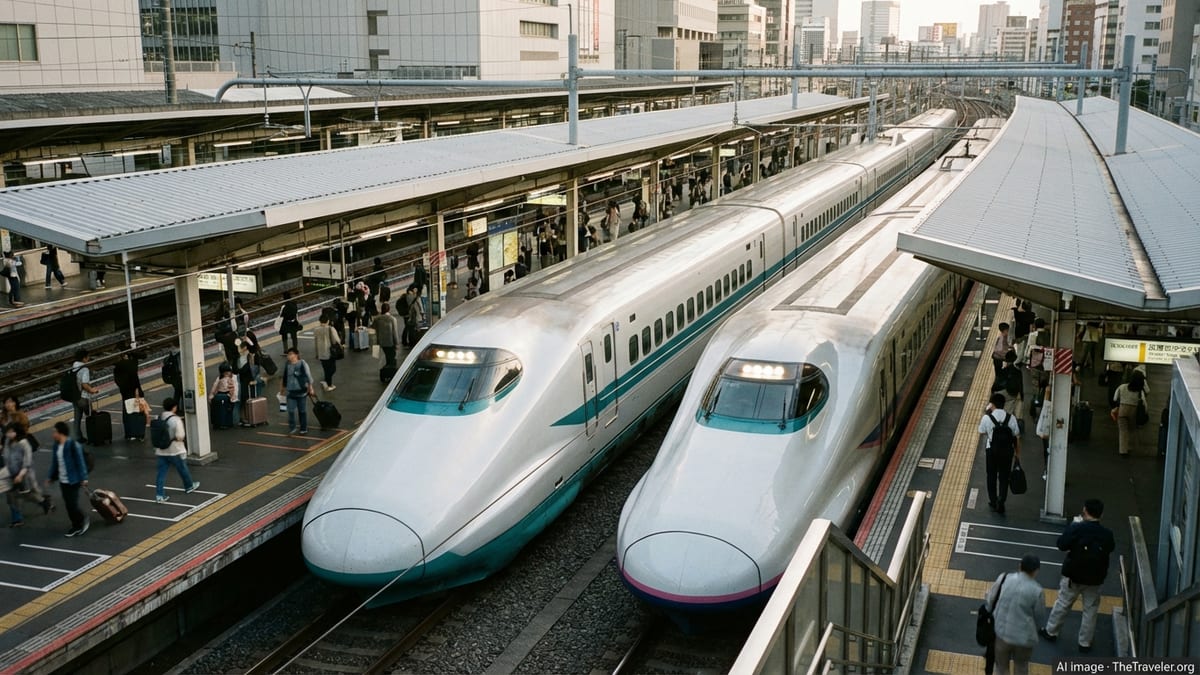
Reaching Aizuwakamatsu typically involves a combination of shinkansen and regional rail or highway bus from Tokyo, taking around three hours depending on the route. Travel planners note that the journey places the city within feasible reach for an overnight side trip, yet just far enough to discourage the quickest of day trippers. That distance, local advocates argue in public-facing materials, is part of why the destination has avoided the intense strains of overtourism seen in other historic quarters.
Within the city, a loop bus connects Tsuruga Castle, Nisshinkan, the samurai residence district and key temples, making it relatively straightforward to cover the main samurai-related sites over one or two days without private transport. Regional marketing materials highlight this network as a selling point for independent travelers, who can move at their own pace between outdoor fortifications, indoor exhibits and hillside viewpoints.
Beyond the core samurai circuit, the Aizu region folds into a wider Tohoku itinerary that might include the Bandai highlands, onsen towns and historic post settlements such as Ouchi-juku. Tourism board publications suggest combining Aizu’s feudal history with outdoor activities and rural stays, positioning the area as a slower alternative to densely scheduled urban sightseeing elsewhere in Japan.
While Aizuwakamatsu and its Nisshinkan school have long been familiar names among domestic history enthusiasts, recent English-language features and travel reports suggest they are now starting to reach a broader global audience. For travelers intent on encountering Japan’s samurai legacy in a setting that still feels closely tied to the land and community that produced it, Aizu’s stronghold and its clan school are emerging as a compelling choice to visit before word fully spreads.