


Yaverland Beach on the Isle of Wight is one of the best places in Britain for a beginner to go fossil hunting. Backed by soft orange and white cliffs and just a short stroll from Dinosaur Isle Museum, this stretch of coast offers an accessible introduction to the island’s dinosaur-rich geology. For first-time visitors, it combines family-friendly facilities with a genuine chance of finding pieces of ancient plant material, reptile bones or fragments of dinosaur-age wood on the foreshore. This guide sets out everything you need to know before you go, from when to visit and what to bring to how to stay safe and collect responsibly.
Why Yaverland Is Ideal for First-Time Fossil Hunters
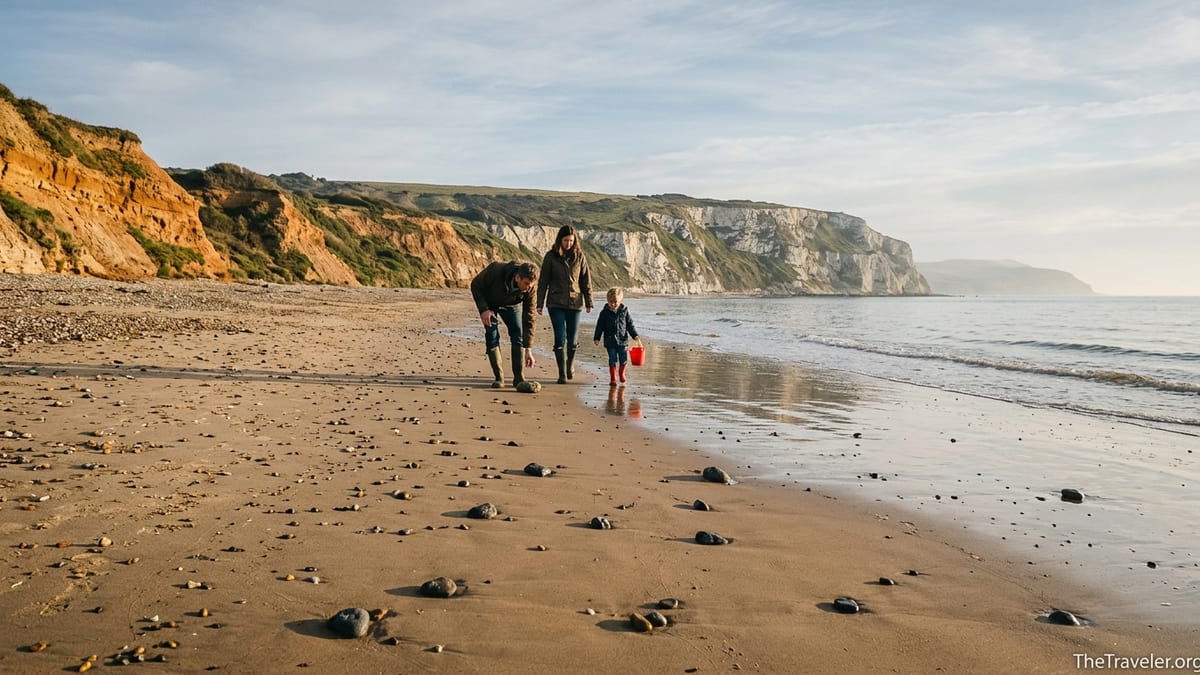
Yaverland sits at the eastern end of Sandown Bay on the Isle of Wight’s southeast coast, within easy reach of the resorts of Sandown and Shanklin. The beach is backed by gradually rising sandstone cliffs that merge into the white chalk of Culver Cliff, creating a dramatic backdrop that is also rich in fossils. The geology here includes layers from the Wessex and Vectis formations, which have yielded internationally important dinosaur material. For a first-time visitor, that means you are walking on a shoreline where new discoveries are still made and sent to local museums for study.
The bay is known for its broad, gently sloping sandy foreshore. When the tide goes out, it exposes wide areas of compact sand and shingle that are easy to walk on, even for younger children and older visitors. This makes it far more approachable than some of the rockier fossil sites on the island that demand sure footing and scrambling skills. Recent local accessibility information highlights that the sand here is fairly hard and compact, which also helps visitors with limited mobility to reach the lower shore more easily.
Yaverland’s fossil reputation is not just local folklore. The nearby Dinosaur Isle Museum holds thousands of specimens from the surrounding coastline, including the only known specimen of the small dinosaur Yaverlandia, named after this very headland. The cliffs and foreshore continue to produce dinosaur bones, reptile remains and plant fossils, as documented by geoconservation surveys and enthusiast reports. While a first-time visitor should not expect to uncover a new species, there is a realistic chance of spotting small pieces of ancient material, especially after rough weather has washed fresh material onto the beach.
For new fossil hunters, another major advantage is the presence of guided fossil walks led by Dinosaur Isle. These structured outings, usually lasting around two hours, focus on nearby beaches such as Yaverland and Shanklin. They provide clear explanations about the local rocks, what you might find and how to collect in a way that protects both you and the coastline. For many first-time visitors, joining one of these walks turns what might feel like a confusing scavenger hunt into an engaging field lesson where every odd-looking stone is a conversation starter.
Planning Your Visit: Getting There, Parking and Facilities
Reaching Yaverland is straightforward. By car, most visitors approach along Culver Parade from Sandown, following the seafront road until it curves past Dinosaur Isle Museum and the Isle of Wight Zoo. Just beyond the museum, a large seafront car park serves Yaverland Beach. Current visitor information lists this as a pay-and-display site; charges vary by season, but day tickets are typically in the range that UK coastal visitors would expect for a popular family beach. Machines usually accept coins and contactless payment, so carrying a bank card solves most issues.
Bus users can travel on Southern Vectis routes that serve Sandown. From Sandown town centre or the seafront stops near Dinosaur Isle, it is roughly a 10 to 15 minute level walk along Culver Parade to the Yaverland beach access point. This makes fossil hunting at Yaverland viable even for visitors staying in other parts of the island without a car, such as Newport or Ryde, as long as they are prepared for a short seafront stroll carrying their day packs.
Facilities near the beach are a key part of what makes Yaverland beginner-friendly. Public toilets are located by the car park, and in the main season there is usually a snack kiosk or café-style outlet nearby selling hot drinks, ice creams and simple food. Sandown itself, a short walk or drive away, has supermarkets, takeaways and seafront cafés where you can stock up on drinks and snacks before heading out onto the sand. The combination of close car parking, toilets and refreshments reduces the need to carry heavy supplies down the beach.
Beach access is via a wide ramp from the car park to the sand, providing a smoother route than long staircases found at some other fossil sites around the island. Locals frequently note that the compact sand allows many wheelchair users and parents with buggies to move around more easily at lower tides, though soft patches and shingle still occur. For visitors with limited mobility, Dinosaur Isle promotes the hire of Landeez all-terrain wheelchairs, which can be used on suitable beaches and even during accessible fossil walks when arranged in advance.
Understanding the Geology and What You Might Find
Yaverland lies on the boundary between two distinct rock types: the older, rust-coloured sandstones and mudstones of the Lower Cretaceous Wealden Group and the younger, dazzling white chalk of Culver Cliff. Inland, the rock layers are tilted, so as you walk along the beach you are in effect walking through time. Specialist geoscience guides describe this stretch as an important supplementary site for the same dinosaur fauna seen on the island’s southwest coast, but with easier access and more stable slopes.
For a first-time fossil hunter, it is helpful to know that most casual finds at Yaverland come from the beach rather than the cliff face. The sea erodes the soft cliffs and washes out fossils, which are then scattered along the foreshore. Typical beginner finds include pieces of fossilised wood, often dark brown or black with visible grain; fragments of plant material preserved in ironstone pebbles; and occasional bits of bone that may belong to marine reptiles or terrestrial dinosaurs washed into ancient river systems. Experienced collectors and museum staff also look for fish scales, crocodile teeth and other small vertebrate remains, but these can be challenging for newcomers to identify.
Dinosaur footprints are another highlight of the wider Sandown and Yaverland area. Local newsletters and geology reports note that trackways have been recorded on the beach here, sometimes appearing in newly exposed rock platforms after storms or coastal defence works. However, footprint exposures are sporadic and can be quickly worn away or covered by sand. A first-time visitor should treat clear trackways as a bonus rather than a guarantee and avoid attempting to remove or damage them. Photographs and careful observation are the appropriate way to enjoy such rare features.
While it can be tempting to imagine every irregular stone is a dinosaur bone, much of what washes up is simply weathered rock. One practical way to improve your eye is to begin at the high-tide line and walk slowly along the shingle, scanning for textures or colours that stand out. Pieces of fossil wood often have a fibrous or ringed interior that contrasts with the surrounding pebbles. Ironstone nodules containing plant impressions may show leaf ghosts or root traces when wet. On a guided walk, leaders often pass around examples so that newcomers can compare what they see in their hands with what lies at their feet on the beach.
When to Go: Tides, Seasons and Weather
Timing is central to a successful first fossil hunt at Yaverland. All official guidance and organised walks are scheduled around low tide, because this is when the maximum area of beach and rock platform is exposed. As a rule of thumb, the best hunting is often in the two hours before and after low water. Before you travel, check a reliable local tide table for Sandown Bay and plan to arrive at Yaverland so that you are on the beach as the tide is falling rather than rising.
Seasonally, fossil hunting at Yaverland can be productive year-round, but conditions vary. Winter and early spring storms do the most work in eroding the cliffs and washing out new material, so keen collectors often favour the months from November through March. However, these periods come with stronger winds, colder temperatures and increased risk from cliff falls. For a first-time visitor, a calmer day in late spring or early autumn often provides a more comfortable introduction, even if the volume of new material on the beach is slightly lower.
Summer remains a good choice for families combining fossil hunting with a classic beach holiday. On a warm July afternoon with light onshore winds, you can spend a few hours searching for fossils, then retreat to the drier sand closer to the car park for paddling and picnics as the tide comes back in. Just remember that on hot, dry days the cliffs can still shed blocks without warning as water evaporates from the clay layers. Whether in midwinter or peak summer, you should never sit directly beneath the cliff face or allow children to play at its base.
Weather also affects how easy it is to see fossils. After rain, wet stones often show textures and colours more clearly than dry ones, making plant impressions and wood grain stand out. Conversely, strong onshore winds and heavy rain can quickly tire beginners and make them less observant. If you are travelling from the mainland for a day trip, consider building some flexibility into your plans so you can choose the better of two consecutive days based on the short-term forecast.
How to Hunt Safely and Responsibly
Safety on the beach begins with respecting the cliffs and the sea. Yaverland’s soft sandstone and clay cliffs are constantly eroding, and local coastal management newsletters regularly highlight both their geological value and the risks of rockfalls. Keep a clear distance from the base of the cliffs, especially after heavy rain or freeze-thaw weather when overhangs can break away without warning. Avoid climbing the clay slopes or scrambling up loose debris. Any interesting material in freshly fallen cliff sections should be left to more experienced collectors or reported to Dinosaur Isle staff.
Equally important is awareness of the tide. The coastline curves toward Culver Cliff and the Yaverland headland, creating areas where the sea can encircle unwary walkers who have wandered too far along the base of the cliff as the tide turns. Before heading east toward the headland, look at the latest tide time and give yourself a generous margin to walk back. A practical approach for first-time visitors is to stay within comfortable sight of the main beach access ramp and lifeguarded areas, particularly if travelling with children.
Responsible collecting is a cornerstone of fossil hunting on the Isle of Wight. While a new island-wide code of conduct is under development, existing guidance from councils and geodiversity groups in southern England gives a clear sense of good practice. Beginners are encouraged to collect only loose fossils found on the beach or in fallen debris, never to hammer the cliff face or bedrock, and to take home just a modest number of specimens for personal enjoyment rather than filling bags for sale. If you find something that appears unusually large or scientifically important, such as a substantial bone or a clear dinosaur footprint slab, you should photograph it in place and contact Dinosaur Isle for advice rather than attempting to remove it yourself.
Ethical fossil hunting also means leaving the beach in good condition for others and for wildlife. Do not dig large pits in the sand or disturb nesting birds at the base of the cliffs. Take litter home, and consider carrying a small rubbish bag to collect stray items you encounter. Many first-time hunters find that picking up plastic and line alongside fossils gives children a positive conservation focus and underlines that the island’s geological heritage and its modern coastal environment are closely linked.
What to Bring: Clothing, Tools and Essentials
One of Yaverland’s attractions for beginners is that you need very little specialist equipment to have a rewarding day. Dinosaur Isle’s own fossil walk guidelines explicitly state that tools are not required for their excursions, and that if you cannot safely pick something up, you should leave it where it is. For a first visit, comfortable walking shoes or wellington boots, weather-appropriate clothing and a small backpack are usually enough. On cooler days, a windproof jacket and thin gloves will help you stay warm while standing still to examine stones.
A simple way to prepare is to pack as you would for a normal British seaside walk, then add a few fossil-specific extras. These might include a sturdy reusable bag or small plastic box lined with tissue paper for any finds, so that delicate pieces of wood or bone are not chipped by harder stones. Many families bring a child’s beach bucket, which doubles as a collecting container and a toy once the serious searching is over. A soft brush or old toothbrush can be handy for gently removing sand from potential fossils back at your accommodation rather than on the beach itself.
Because identification is a key part of the fun, consider carrying a pocket-sized field guide to Isle of Wight fossils or at least a notebook and pen so you can jot down where and when each specimen was found. If you are comfortable using your phone, take photographs of finds in situ before moving them, including something for scale such as a coin or your hand. Back at your hotel, you can compare these images with books or online resources, or show them to museum staff for feedback. Keeping a record also helps you remember which parts of the beach were most productive, which is useful if you return the next day after an overnight tide.
Do not forget the usual coastal essentials: drinking water, snacks, sun protection and, if rain is expected, a lightweight waterproof. Mobile reception around Sandown Bay is generally good, but it is still wise to let someone know your plans and approximate return time if you are exploring farther afield. For families, a change of clothes or at least dry socks in the car can transform a damp, tired child into a contented one at the end of the day.
Joining a Guided Fossil Walk
For many first-time visitors to Yaverland, the most rewarding way to experience fossil hunting is as part of an organised walk run by Dinosaur Isle Museum. These guided trips are scheduled during school holidays and other peak periods, and are carefully timed to low tide at locations such as Yaverland and Shanklin. Walks typically last around two hours and are led by staff with years of experience in local geology and palaeontology. Participants receive a safety briefing at the start, followed by practical instruction on what to look for and how to handle potential finds.
Recent information from the museum notes that public fossil walks in 2026 include multiple Yaverland dates across late May, July and August. Start times vary from late morning to mid-afternoon depending on the tide. Ticket prices for these walks currently sit in a family-friendly range: adults are charged a modest fee, children aged 5 to 15 pay a reduced rate and under-5s join for free. Family group tickets bring down the cost for parents with two or three children, and concessions are available for students and pensioners. Payment is usually taken at the time of booking, which can be done by phone or in person at the museum shop.
On the day of a guided walk, you will normally meet outside Dinosaur Isle on Culver Parade, a short walk from Yaverland Beach. From there, the group moves together to the collecting area. The leader will often point out geological features along the way, such as the change from sand to shingle or the way certain layers in the cliff correspond to particular types of fossils. During the walk, staff members circulate among participants, examining finds, confirming whether they are fossils or simply interesting rocks, and occasionally highlighting particularly significant pieces for donation to the museum collection.
Because guided walks are popular and places are limited, especially in school holidays, advance booking is strongly recommended. If bad weather or unsafe conditions force a cancellation, the museum’s current policy is to offer either an alternative date or a refund. For families travelling from the mainland, it can be wise to plan your ferry crossings and overnight stays around a pre-booked walk date, then leave additional time on nearby days for independent exploring should conditions permit.
Combining Fossil Hunting with Nearby Attractions
Yaverland’s location on Culver Parade makes it easy to build a full day or weekend around your first fossil hunting experience. Dinosaur Isle Museum itself is an obvious first stop, particularly if you are new to the island’s prehistoric story. Inside the pterosaur-shaped building, displays take you through 120 million years of local history, from Ice Age mammals to the dinosaurs that roamed the floodplains represented in the cliffs outside. Seeing complete skeletons, reconstructed skulls and detailed information panels makes it much easier to visualise the fragmentary remains you may pick up on the beach later.
Immediately next door is a wildlife park that occupies the site of the old island zoo, offering another option for families who want to mix prehistoric and modern animal encounters. Further along the bay, Sandown’s seafront features traditional amusements, cafés and a long sandy beach where younger children can simply enjoy paddling and sandcastle-building once their fossil-hunting concentration wavers. Many visitors choose to spend the low-tide window at Yaverland looking for fossils, then relocate closer to Sandown Pier for late afternoon swimming and ice creams.
If you are staying on the Isle of Wight for several days and have caught the fossil bug, you may also want to explore other classic collecting sites, such as the beaches near Compton Bay on the southwest coast, which are renowned for dinosaur footprints and bones. However, these locations often involve steeper access paths and more uneven terrain. For first-time hunters, especially those with younger children or limited mobility, basing yourself in Sandown or Shanklin and returning to Yaverland on different tides can provide plenty of variety without adding logistical complications.
Accommodation options in the area range from seafront hotels and guesthouses in Sandown to self-catering cottages in the surrounding countryside. Many places are used to hosting visitors with a keen interest in fossils and may offer early breakfast times or packed lunches for those heading out at first light to catch a particularly good low tide. Local tourism brochures also highlight the island’s status as part of a UNESCO Biosphere Reserve, encouraging guests to enjoy its ancient geology in ways that support long-term conservation.
The Takeaway
For a first-time visitor, Yaverland offers a rare combination: a genuinely important fossil site that remains approachable, family-friendly and well supported by local expertise. The wide sandy beach, accessible ramp and nearby facilities take much of the stress out of a day by the sea, while the presence of Dinosaur Isle Museum and its guided walks provides a built-in support network for beginners. You do not need specialist tools or training to enjoy the hunt; curiosity, patience and a little preparation go a long way.
If you plan your visit around the tides, keep a safe distance from the cliffs and focus on collecting only loose material from the beach, you will be following the same responsible practices used by experienced hunters. Even if your finds are modest, the experience of searching for traces of ancient life beneath the chalk cliffs of Culver is memorable in its own right. And if you are lucky enough to spot something unusual, the island’s palaeontologists are close at hand to help you understand its significance.
Ultimately, Yaverland is not just a place to pick up souvenirs from deep time. It is a living, changing coastline where new pages of Earth’s story are revealed after every storm and low tide. Approached with respect and a sense of wonder, it can be the perfect starting point for a lifelong interest in fossils, geology and the fragile beauty of coastal landscapes.
FAQ
Q1. Do I need special permission to collect fossils at Yaverland?
For casual beachcombing, you do not usually need special permission to pick up loose fossils from the foreshore at Yaverland, as long as you collect responsibly and in small quantities for personal use. You should never hammer the cliffs or remove large blocks of rock, and anything that appears scientifically important should be reported to Dinosaur Isle rather than taken home.
Q2. What is the best time of day to go fossil hunting on Yaverland Beach?
The most productive time is around low tide, when the maximum area of beach and rock platform is exposed. Aim to be on the foreshore in the two hours before and after low water, and always check local tide tables for Sandown Bay before setting out so you are not caught by a rising tide.
Q3. Is Yaverland suitable for young children and beginners?
Yes. Yaverland is widely regarded as one of the most accessible fossil beaches on the Isle of Wight, with a ramped access from the car park, relatively firm sand at low tide and nearby facilities. Many families with young children visit on guided walks, and the gentle terrain makes it easier for beginners to focus on searching rather than scrambling over rocks.
Q4. What should I wear and bring for a first fossil hunt at Yaverland?
Wear sturdy shoes or wellington boots with good grip, layered clothing suited to changeable coastal weather and a windproof jacket. Bring drinking water, snacks, sun protection, a small bag or box for finds and perhaps a notebook or phone to record where you discovered each specimen. Specialist tools are not necessary and are generally discouraged for beginners.
Q5. Can I see real dinosaur fossils nearby?
Yes. Dinosaur Isle Museum, located a short walk from Yaverland Beach along Culver Parade, displays a large collection of dinosaur bones, footprints and other fossils from the Isle of Wight coast. Visiting the museum before or after your beach hunt can help you understand what you are looking for and how small fragments on the sand relate to complete skeletons and trackways.
Q6. How do I book a guided fossil walk at Yaverland?
Dinosaur Isle organises guided fossil walks during school holidays and other times, including several at Yaverland each year. You can check current dates and availability through the museum’s visitor information channels and book by phone or in person at the museum shop. Advance booking is recommended because walks are popular and places are limited.
Q7. What happens if I find something that looks rare or important?
If you discover a fossil that appears particularly large, unusual or well preserved, take clear photographs of it in place and note its location, then contact Dinosaur Isle for advice. Staff can help assess its significance and, if needed, arrange for safe collection. Avoid trying to extract large or fragile specimens yourself, as this can damage both the fossil and the surrounding rock.
Q8. Are there any safety risks I should be aware of?
The main risks are cliff falls and rising tides. Keep a safe distance from the cliff base at all times, especially after heavy rain or storms, and never climb the slopes or sit directly beneath overhangs. Plan your visit around the tide so you are moving back toward the main access ramp before the sea turns, and supervise children closely near the water and the cliffs.
Q9. Is Yaverland accessible for visitors with limited mobility?
Access conditions are relatively favourable compared with many fossil sites. There is a ramp from the car park to the beach and, at low tide, the sand can be reasonably firm. Dinosaur Isle promotes the use of all-terrain Landeez wheelchairs, which can be hired in advance for suitable outings. However, beach surfaces are still uneven, so visitors with mobility concerns should plan carefully and may wish to join an organised walk that takes accessibility into account.
Q10. Can I combine fossil hunting at Yaverland with other activities?
Definitely. Many visitors pair a low-tide fossil hunt at Yaverland with a visit to Dinosaur Isle Museum, time at the neighbouring wildlife park or a more traditional beach afternoon in Sandown. Over a longer stay, you can explore other fossil beaches on the island, coastal walking routes and inland attractions, using Yaverland as your starting point for understanding the Isle of Wight’s rich prehistoric landscape.