


More news on this day
United Airlines is confronting new operational headwinds at its critical Chicago O’Hare hub as fresh federal scheduling limits and airfield construction threaten the carrier’s recent gains in on-time performance.
Get the latest news straight to your inbox!
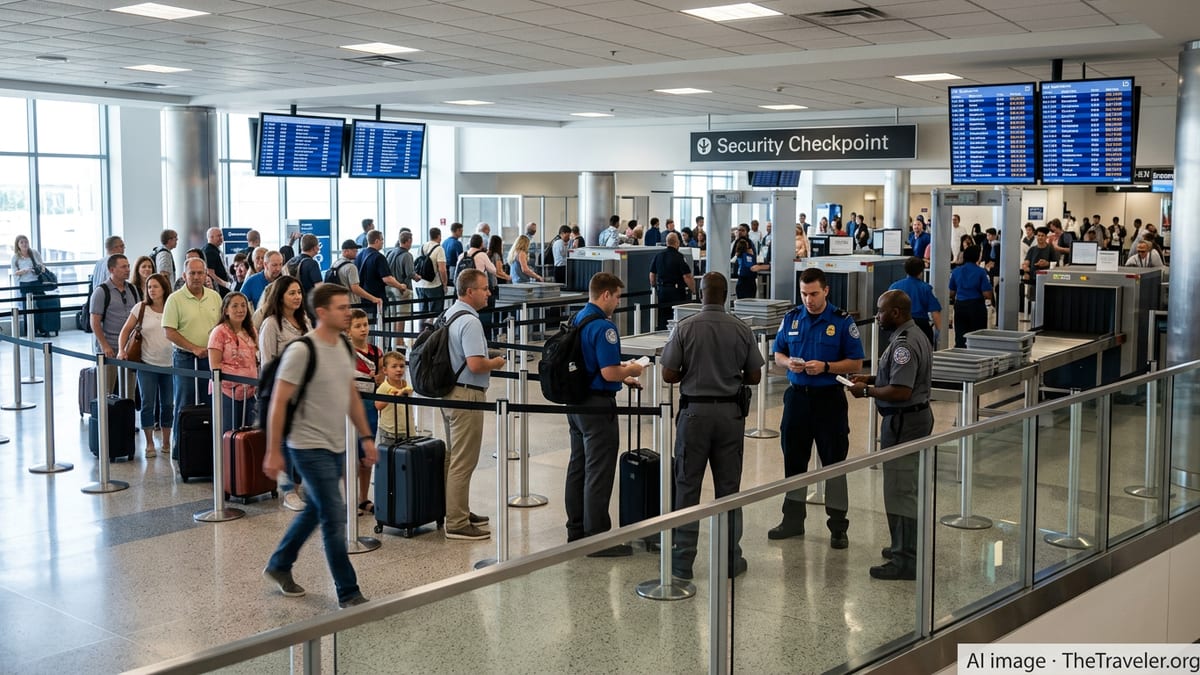
FAA Scheduling Caps Put Chicago O’Hare Under the Microscope
A new Federal Aviation Administration order for Chicago O’Hare International Airport is emerging as a major test of United Airlines’ ability to maintain a strong on-time record during the peak 2026 summer travel season. The order, finalized in April 2026, sets temporary limits on the number of daily operations after regulators concluded that planned flight volumes exceeded the airport’s demonstrated capacity amid extensive airfield work.
The cap, which runs from mid-May through late October, restricts total scheduled operations at O’Hare to just over 2,700 flights per day, using the 2025 summer schedule as a baseline. Publicly available documents show that the move followed months of concern about growing delays tied to runway and taxiway construction and increasingly aggressive scheduling by the airport’s largest carriers.
Legal and industry analyses of the order indicate that carriers, including United, participated in the comment process and raised concerns about how the caps were calibrated. United has previously argued in public filings that any limits should reflect updated gate assignments and infrastructure investments rather than older scheduling patterns.
The temporary ceilings are designed to prevent a repeat of the cascading delays seen at highly congested hubs when airfield construction, summer thunderstorms, and tight turn times converge. For United, which relies heavily on hub connectivity at O’Hare, the order effectively forces a recalibration of bank structures, peak-hour flight waves, and the buffer time built into its schedules.
Runway and Taxiway Work Tighten the Operational Squeeze
The FAA order is closely tied to a multiyear modernization effort on O’Hare’s airfield, where runway and taxiway projects are reshaping how aircraft move on the ground. Public airport and federal reports describe extensive construction affecting key taxi routes, runway crossings, and intersection points that can reduce usable capacity even when all primary runways remain technically open.
Construction-related bottlenecks can lengthen taxi times, limit the number of simultaneous arrival and departure streams, and make it harder for air traffic controllers to recover when weather or traffic management initiatives disrupt normal flow. Federal benchmarking data have long pointed to runway projects as a significant driver of air traffic delay trends at major U.S. hubs, and O’Hare’s current work fits that pattern.
In Chicago, the challenge is amplified by the airport’s role in United’s network. O’Hare is one of the carrier’s largest hubs, handling a high concentration of connecting passengers. Any reduction in departure slots or slowdown in arrival rates can ripple across the system, affecting everything from crew rotations to aircraft utilization and customer connections throughout North America and beyond.
Local aviation coverage indicates that recent thunderstorms have already triggered ground delay programs at O’Hare, underscoring how quickly capacity can erode under stress. With portions of the airfield constrained by work zones, even routine summer weather can translate into longer queues and missed departure windows for carriers attempting to keep tight schedules intact.
United’s On-Time Record Faces a High-Season Stress Test
United has spent recent years emphasizing reliability and operational performance, with on-time metrics at several hubs improving as the carrier adjusted schedules, added staffing, and incorporated new technology. Government on-time statistics and independent analytics sites show that United’s performance has generally tracked broader system gains in punctuality at core airports since the pandemic-era disruptions eased.
The 2026 summer season at O’Hare is now shaping up as a pivotal assessment of whether those gains can withstand renewed pressure from airspace constraints and construction. With FAA-imposed caps and narrower peak periods at Chicago, United must decide which flights to thin, retime, or route through alternative hubs while trying to protect high-yield connections and business markets.
Public data on airline schedules indicate that United has already made adjustments to its O’Hare timetable in anticipation of the limitations, trimming some peak-hour frequencies and distributing flying more evenly throughout the day. These moves can help reduce chokepoints but may also lengthen connection times and shift traditional “bank” structures that customers have come to expect.
Analysts note that maintaining a strong on-time record under these circumstances often requires trading maximum capacity for resilience. For United, that means weighing the short-term revenue impact of fewer peak flights against the longer-term value of a reputation for reliability, especially as corporate travel demand continues to recover.
FAA Delay Programs Add Another Layer of Complexity
Beyond the structural caps at O’Hare, United must also navigate intermittent FAA traffic management initiatives that can quickly upend daily operations. The agency’s national airspace status reports show how ground delay programs and ground stops are deployed at major hubs when weather, staffing constraints, or equipment outages limit capacity in key sectors.
Recent examples at other United hubs, such as Newark Liberty International Airport, highlight how runway work and air traffic control staffing issues can trigger rolling delays that cascade through a carrier’s schedule. In Newark’s case, previous ground delay programs were linked to runway construction and technology issues at nearby facilities, underscoring how infrastructure and personnel challenges can intersect.
At O’Hare this summer, similar traffic management tools are likely to be used more frequently whenever thunderstorms, low visibility, or construction-related constraints tighten the arrival and departure rates. Each program forces airlines to hold departures at origin airports, re-slot arrivals, or cancel flights outright, often with limited notice.
For United, which operates large connecting banks in Chicago, these measures can disrupt carefully sequenced inbound and outbound waves, leading to missed connections and out-of-position aircraft. The carrier’s operations teams must balance strategic schedule changes with day-of adjustments, including rerouting flights through other hubs and proactively rebooking customers when delay programs are announced.
Passengers Face a Summer of Tight Margins at a Key Hub
For travelers, the combined effect of FAA scheduling caps, runway and taxiway construction, and periodic delay programs means that itineraries touching Chicago O’Hare may be more vulnerable to disruption during the 2026 summer peak. Publicly available performance data suggest that while national on-time rates have largely met federal targets in recent years, pockets of congestion at major hubs can still drive outsized delay.
Consumer travel guidance emerging around the O’Hare caps recommends allowing longer connection windows, especially for itineraries involving late-afternoon or evening departures when thunderstorms are more common. Passengers with time-sensitive plans are also being encouraged by travel advisors to consider earlier flights in the day, when schedules may have more slack to absorb disruptions.
United, for its part, has promoted digital tools that allow customers to track incoming aircraft, receive real-time rebooking options, and adjust travel plans when delays loom. While these features can soften the impact of operational turbulence, they do not eliminate the underlying constraints imposed by construction and federal traffic management decisions.
As the O’Hare order plays out over the coming months, industry observers will be watching closely to see whether United can sustain its recent reliability gains at one of the most complex airfields in the country. The outcome may shape how regulators, airports, and airlines approach future capacity planning as infrastructure projects and growing demand continue to intersect at the nation’s busiest hubs.