


More news on this day
A Japan Airlines domestic flight from Tokyo Haneda to Kagoshima made an emergency landing at Narita Airport on May 29 after a suspected tire malfunction, disrupting traffic at both Tokyo airports and prompting a technical safety investigation.
Get the latest news straight to your inbox!
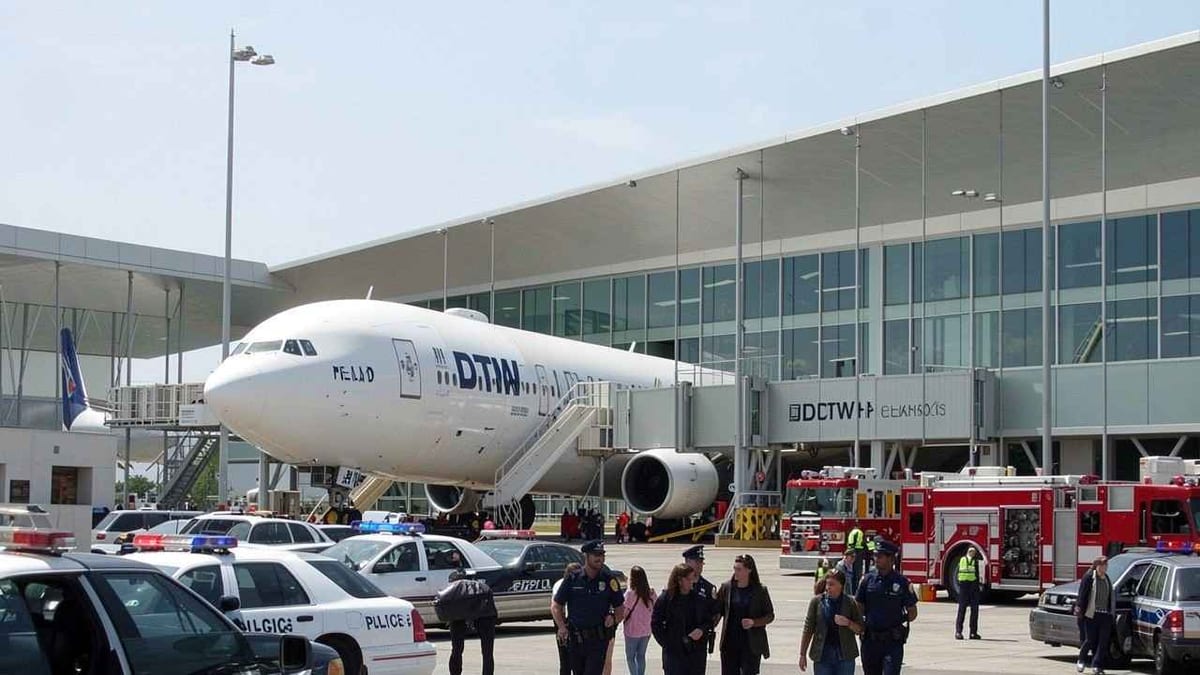
Emergency Diversion From Routine Domestic Hop
According to publicly available flight data and Japanese media reports, Japan Airlines flight 645 departed Tokyo’s Haneda Airport on the morning of May 29 bound for Kagoshima in southern Japan. The aircraft, operating a regularly scheduled domestic service, carried more than 220 people on board, including passengers and crew.
Shortly before midday, reports indicate that the cockpit received an alert suggesting possible damage to one of the aircraft’s tires, believed to be on the main landing gear. Around 11 a.m. local time, the crew declared an emergency and requested priority handling while options were assessed for a safe landing.
Initial plans reportedly involved returning to Haneda. However, the flight subsequently diverted to Narita, Tokyo’s primary international gateway, where operational conditions were considered more favorable for an emergency arrival and post-landing inspection.
The aircraft touched down at Narita shortly before noon. Local coverage notes that the jet came to a controlled stop, but was unable to taxi on its own because of suspected tire damage, and was towed away from the runway for further checks.
Passengers Safe After Tense Approach
Japan’s domestic media describe a tense but orderly atmosphere in the cabin as the aircraft prepared for its emergency landing. Coverage of passenger accounts indicates that cabin crew conducted additional safety briefings and ensured that seat belts were fastened and cabin items were secured ahead of the approach into Narita.
Despite the concerns over the landing gear, the touchdown was reported as smooth, with no injuries among the 200-plus people on board. Japanese television outlets and wire services consistently state that all occupants were able to disembark safely after the aircraft was secured and towed.
Some passengers quoted in domestic coverage described visible emergency vehicles positioned along the runway and taxiways as the aircraft landed, underscoring the elevated alert level surrounding the arrival. However, there are no indications that fire or smoke occurred, and there have been no reports of structural damage to the aircraft beyond the affected wheel assembly.
Travelers were later transferred to alternative flights or arrangements, with reports indicating that the airline initiated support measures for disrupted itineraries once the immediate safety situation had stabilized.
Runway Debris at Haneda Triggers Wider Flight Delays
The incident did not only affect those on board. Earlier in the day at Haneda, fragments suspected to be pieces of aircraft tire were discovered scattered across part of the D runway used for departures. Japanese broadcast outlets report that these fragments were linked to the Japan Airlines flight after its takeoff roll.
As a precaution, the runway at Haneda was temporarily closed while inspection and debris removal were carried out. This closure prompted delays and some diversions for other departing and arriving services, adding to the ripple effect of the JAL645 incident on the busy Tokyo air corridor.
At Narita, where the emergency landing ultimately took place, operations were briefly adjusted to prioritize the inbound aircraft and subsequent towing. While the overall impact at Narita appears more limited, travelers using both of Tokyo’s airports on May 29 experienced schedule changes ranging from minor delays to missed connections, based on airline and airport status boards.
Published flight-tracking information for the route between Haneda and Kagoshima on May 29 reflects irregularities around the time of the event, highlighting how a single aircraft’s technical issue can quickly influence broader network punctuality in a tightly scheduled domestic market.
Safety Investigation and Focus on Landing Gear Integrity
Publicly available reports indicate that Japan’s transport safety officials have begun examining the circumstances of the suspected tire failure. Early descriptions from domestic and regional news outlets suggest possible damage to the main landing gear assembly, but the precise cause remains under review.
Investigators are expected to analyze flight data, cockpit records, maintenance logs, and physical evidence from the damaged wheel and recovered tire fragments found on Haneda’s runway. Attention is likely to focus on whether the tire failure stemmed from a manufacturing defect, foreign object damage on the runway, maintenance issues, or a combination of factors.
Japan Airlines has previously emphasized investment in tire monitoring technologies and predictive maintenance tools for parts such as landing gear components. The outcome of the current review may influence future inspection intervals, replacement thresholds, or operational procedures around takeoff checks for domestic flights.
While technical failures involving aircraft tires are relatively rare for major carriers in Japan, they are treated with particular seriousness because of the crucial role landing gear plays in both takeoff and landing performance. Any confirmed fault can lead to updated guidance for airlines, airports, and maintenance providers.
Traveler Impact and Perceptions of Domestic Flight Safety
For travelers within Japan, the emergency landing adds to a series of recent aviation incidents globally that have drawn public attention to aircraft reliability and ground infrastructure. However, aviation safety specialists frequently note that emergency diversions such as this one demonstrate the effectiveness of established protocols designed to keep passengers safe when technical warnings arise.
Japan’s domestic aviation network is among the busiest in the world, and is generally regarded as having a strong safety record. Events like the JAL645 diversion are typically followed by detailed reviews, with findings often shared in summary form through official reports and industry briefings, helping to refine best practices across carriers.
In the short term, passengers using Haneda and Narita in the wake of the incident may face additional checks, minor operational adjustments, and occasional delays as inspections continue and investigators complete their initial assessments. Travelers are being advised through airline channels and airport information boards to allow extra time and to monitor flight status updates closely.
As more technical details emerge, attention is likely to center on how quickly the root cause is identified and what measures are adopted to prevent a recurrence. For many passengers, the knowledge that all 200-plus people on board JAL flight 645 walked away uninjured will remain the defining outcome of a day that saw a routine domestic hop turn briefly into a major operational test for Japan’s aviation system.