


More news on this day
United Airlines has postponed the launch of planned nonstop service between Tri-Cities Regional Airport in Tennessee and Chicago O’Hare International Airport, with publicly available information tying the decision to federal limits on the number of flights permitted at the busy Illinois hub.
Get the latest news straight to your inbox!
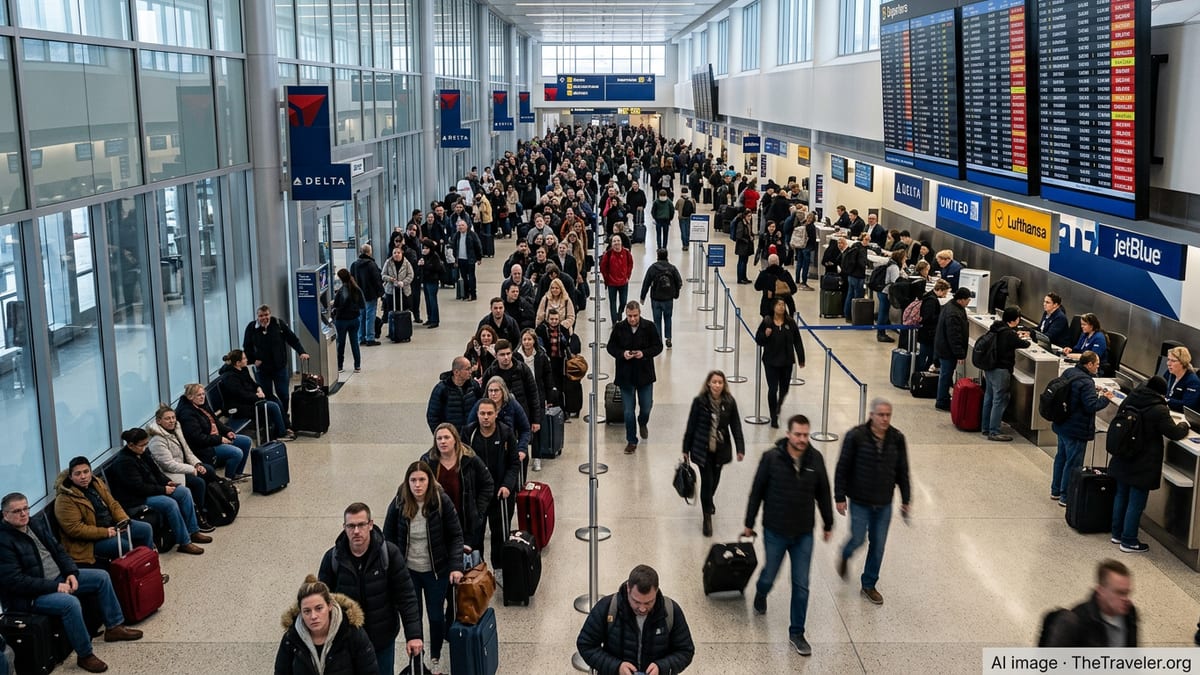
New Tri-Cities link caught in wider O’Hare squeeze
The Tri-Cities–Chicago route was announced as part of a broader push by United to deepen its domestic network from O’Hare, adding several new small and mid-sized markets across the Midwest and Appalachian regions. Planning documents and local coverage highlighted Tri-Cities Regional Airport, which serves the Kingsport, Johnson City and Bristol area, as a new destination for the carrier out of Chicago.
However, subsequent filings and schedule updates show that the launch of multiple regional routes from O’Hare has been pushed back or suspended in recent months. Reports focused on airports such as Rochester in Minnesota, Erie in Pennsylvania and other regional fields indicate that start dates initially targeted for late spring and summer 2026 have been delayed, in some cases as far out as October 2027, as United responds to capacity constraints at its Chicago hub.
Within that network reshuffle, the planned Tri-Cities service has not progressed to active ticket sales for the upcoming seasons, signaling that the new link has been effectively postponed rather than rolled out on the original timeline. Local stakeholders in other affected communities have pointed directly to the federal cap at O’Hare as the key limiting factor, and industry data suggest Tri-Cities finds itself in a similar position.
While official schedules for future seasons can continue to change, the pattern across multiple regional airports points to a strategic pause by United on new small-city Chicago routes until additional capacity becomes available at O’Hare.
FAA flight cap extends through 2027
The backdrop to the delay is a Federal Aviation Administration order that limits the number of daily operations at O’Hare during peak travel periods. The measure, introduced in response to congestion and air traffic control staffing concerns, is set to remain in place through at least late October 2027, according to regulatory filings and public summaries of the decision.
The cap effectively places a ceiling on how many takeoffs and landings airlines can schedule at the airport during defined hours. Network planners are therefore forced to make trade-offs, prioritizing routes with the highest demand or strategic importance and pushing back or trimming service in smaller markets that might otherwise have gained new connections.
Industry analysis of recent schedule changes shows that United has already reduced or deferred a range of regional flights from O’Hare for the busy summer 2026 season in order to stay within the FAA’s cap. Aviation scheduling specialists note that such limits often have a disproportionate impact on thinner regional routes that are still in the planning phase, since carriers tend to protect established trunk routes and international services first.
As long as the cap remains in force, any new route from O’Hare to a destination such as Tri-Cities must compete directly with existing services for limited slots, increasing the likelihood that proposed launches are delayed when operational headroom is tight.
Regional airports feel impact of postponed Chicago links
The delay of the Tri-Cities–Chicago route reflects a broader trend affecting regional airports that had been preparing for new or expanded United service to O’Hare. Cities including Rochester and Erie have reported multiple postponements of their planned United links, with launch dates shifting from 2026 deeper into the decade as the carrier adjusts to the FAA order.
For airports like Tri-Cities, a Chicago connection is particularly valuable because it links local travelers to a large domestic and international network. The prospect of new nonstop flights to O’Hare often underpins airport marketing campaigns, business recruitment efforts and expectations for increased tourism, so a delay can ripple through local planning calendars and budget projections.
Publicly available airport statements in affected communities have described the postponements as a response to capacity constraints rather than a lack of interest in the markets themselves. That framing suggests United continues to view these regional routes, including the proposed Tri-Cities link, as strategically attractive once additional operational room can be carved out at O’Hare.
In the meantime, travelers in the Tri-Cities region must continue to rely on existing connections through other hubs, often involving additional connections or longer total journey times to reach destinations that would have been served more directly via Chicago.
What the delay means for travelers and fares
The postponement of new O’Hare routes, including the Tri-Cities service, has implications for both convenience and competition. Without the added capacity that a new nonstop brings, passengers may face fewer scheduling options and longer connection times when traveling to or through Chicago. That can be especially challenging during peak periods when remaining flights are heavily booked.
From a fare standpoint, industry observers note that the absence of additional regional capacity out of O’Hare can help keep prices elevated on certain itineraries. New routes often introduce extra seats and more competition on overlapping city pairs, which can place downward pressure on average fares. By contrast, delaying these launches tends to preserve tighter supply, particularly on trips originating in smaller communities where alternative carriers and routings are limited.
Travelers in the Tri-Cities area who were anticipating a new option to reach Chicago and beyond may now need to monitor schedules more closely and book earlier to secure preferred itineraries. Consumer advocates generally advise passengers in such markets to compare routings through multiple hubs and consider nearby airports, since driving to a larger field with more competition can sometimes offset the lack of nonstop service at the local airport.
As network planners continue to fine-tune schedules in response to the cap, incremental adjustments are possible. However, the extended timeline of the FAA order suggests that a meaningful expansion of new regional routes at O’Hare, including any future Tri-Cities link, is unlikely until closer to the end of the current restriction period.
Outlook for the Tri-Cities–Chicago route
Despite the current delay, aviation industry coverage continues to list Tri-Cities among the regional markets that United has targeted for future connectivity from O’Hare. The inclusion of the route in earlier multi-city announcements indicates that underlying demand forecasts and strategic considerations remain favorable in the long term.
Much will depend on how United balances its overall O’Hare portfolio as the FAA cap period progresses. Carriers routinely adjust route networks based on performance, competitive moves and operational constraints, and the eventual introduction of the Tri-Cities service may hinge on the retirement of less productive flights or broader changes in Chicago’s traffic management.
For local officials, tourism groups and business leaders in the Tri-Cities region, the delay creates a longer runway for continued advocacy and planning. Public communications from other affected airports show that communities are using the intervening time to refine marketing campaigns, update passenger forecasts and coordinate with regional partners so they can move quickly should new launch dates be filed.
Until then, the new Tri-Cities–Chicago connection remains on hold, emblematic of how national airspace management decisions can reshape local air service plans far from the busiest hubs.