


More news on this day
A Republic Airways operated Embraer 175 flying as United Express flight RPA3594 from Louisville to the New York area diverted to Washington Dulles, according to live flight-tracking data, turning a routine regional hop into a mid-route diversion that reflects the strain of summer disruptions on the busy East Coast corridor.
Get the latest news straight to your inbox!
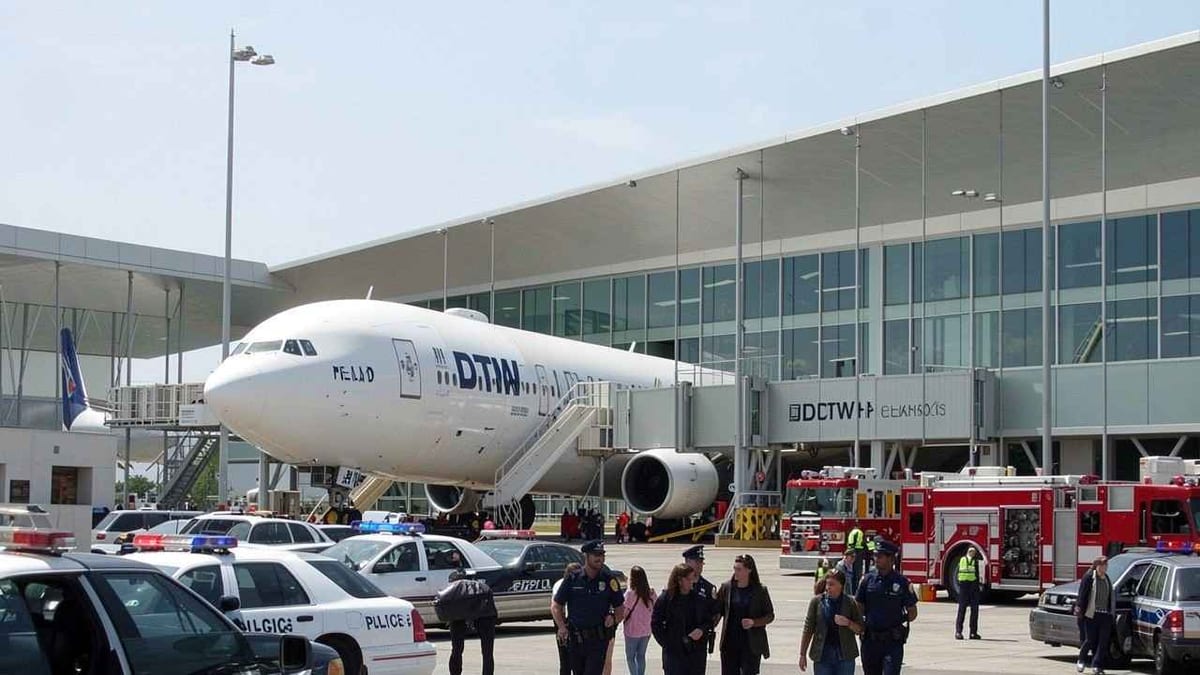
Regional United Express Service Encounters Midroute Disruption
Publicly available flight-tracking information shows the Embraer E175LR departed Louisville Muhammad Ali International Airport on a scheduled United Express service bound for Newark Liberty International Airport, marketed to passengers under a United Airlines flight number and operated by Republic Airways. The aircraft climbed normally out of Kentucky and tracked northeast toward the New York region before the flight plan changed and the jet was vectored toward Washington Dulles International Airport instead of continuing to its original destination.
Data from tracking platforms indicates the aircraft identified with a Republic Airways tail number commonly assigned to United Express services on the Louisville to Newark route. The flight was listed as operating with an Embraer 175, a workhorse of United’s regional network and a mainstay in Republic’s fleet, with a two-class cabin layout typically seating around 76 passengers.
The diversion unfolded over the Mid-Atlantic, where the aircraft’s route bent away from the direct track to Newark and aligned with an approach into Dulles. Flight status boards subsequently reflected the Louisville to Newark leg as disrupted, with some services on the same pattern marked as delayed or canceled, underscoring the operational complexity of real-time reroutings.
While the exact trigger for RPA3594’s diversion has not been formally detailed in public statements, the change of course fits a broader pattern of summer schedule volatility on regional routes feeding the New York metropolitan airports.
Weather and Airspace Constraints Shape Diversion Decisions
On the day of the incident, the Federal Aviation Administration’s air-traffic advisories showed a traffic management program in effect for arrivals into Washington Dulles due to thunderstorms in the region. Although Dulles was managing its own flow restrictions, East Coast convective weather has been a recurring factor in routing adjustments and airport selection for diversions, particularly in the congested airspace stretching from Washington to New York.
During such events, airlines and dispatchers weigh several constraints when deciding where to send a flight that cannot continue to its planned destination. Available runway capacity, ramp space, maintenance support, and the presence of existing operations by the same carrier or regional partner all influence whether an aircraft will be steered toward Dulles, another Washington area airport, or a different alternate field entirely.
Published coverage and historical diversion patterns indicate that Dulles frequently functions as a relief valve during New York-area disruptions. When conditions deteriorate around Newark, LaGuardia, or John F. Kennedy, carriers sometimes funnel aircraft into mid-Atlantic hubs where they maintain strong operational footprints and can more easily reposition aircraft and crews once constraints ease.
In this case, the decision to utilize Washington Dulles as an alternate for a Louisville to Newark service highlights the way in which Washington’s international hub can serve as an overflow option when the Northeast corridor reaches capacity, even if that adds significant distance to passengers’ ultimate ground or connecting journeys.
Republic Airways and the Embraer 175 on United’s Network
Republic Airways is one of the largest regional operators in the United States and a key partner for major carriers including United Airlines. According to company disclosures and industry references, Republic fields one of the world’s largest fleets of Embraer 170 and 175 aircraft, operating them under capacity-purchase agreements that place major airline branding and flight numbers on Republic-operated jets.
Under the United Express banner, Republic’s Embraer 175s connect secondary and mid-sized cities such as Louisville with hubs like Newark and Washington Dulles. These aircraft are configured with premium cabins and main-cabin seating, offering passengers a service level that closely resembles mainline jets while enabling airlines to economically serve thinner routes that would not support larger narrowbody aircraft.
The Embraer 175 platform is widely regarded in the industry as a flexible regional jet, with performance characteristics that allow operations into shorter runways and congested hubs while still offering a relatively comfortable cabin. Its popularity among regional affiliates means that any disruption involving an E175 can ripple through banked schedules, as the same airframe may be slated to continue onward to multiple destinations over the course of a day.
When a flight such as RPA3594 diverts, the aircraft’s subsequent rotations, crew pairings, and maintenance windows must often be rebuilt in real time. That can lead to knock-on delays or cancellations on later segments, particularly in afternoon and evening banks when aircraft and staff are already tightly scheduled.
Impact on Passengers and Network Operations
For travelers booked from Louisville to Newark and onward to other destinations, the diversion to Washington Dulles likely resulted in missed connections, extended travel times, and the need for rebooking on alternative services into the New York area. Publicly available flight information shows that airlines connect Washington and New York with frequent narrowbody and regional flights, but late-arriving diversions can still leave limited same-day options during periods of widespread weather disruption.
Passengers on board a diverted regional flight typically remain on the aircraft until it reaches the gate at the alternate airport, where ground teams and customer service staff coordinate onward arrangements. In some cases, travelers may be rebooked by air from the diversion point, while in others they may be offered ground transportation if distances and schedules make that practical.
On the operations side, a diversion of a single E175 can represent a significant challenge in a hub-and-spoke system structured around tight connections. Dispatchers must arrange fuel, gates, and crews at the diversion airport while ensuring regulatory compliance on crew duty times. Aircraft intended to operate later flights from Newark may suddenly be out of position in Washington, requiring schedule swaps or aircraft substitutions.
In the busy midsummer travel period, when load factors are high and spare capacity is limited, such disruptions can strain an airline’s ability to absorb irregular operations. Even when safety is never in question and diversions proceed routinely, the logistical consequences can extend far beyond a single flight number.
Growing Focus on Resilience in Regional Air Travel
The diversion of United Express flight RPA3594 underscores a larger conversation in U.S. aviation about how to build resilience into regional networks that are heavily exposed to weather and airspace constraints. The East Coast corridor, linking cities like Louisville to New York through hubs such as Newark and Washington, has seen repeated travel waivers and schedule adjustments during recent storm systems.
Industry analyses point to a combination of factors behind these pressures, including dense traffic volumes, constrained runway and terminal capacity at legacy hubs, and the sensitivity of regional jets to cascading delays. Carriers have responded with strategies such as trimming schedules, adding slack to connection times, and selectively consolidating flights, but irregular operations continue to test those measures.
For Republic Airways and its Embraer 175 fleet, maintaining reliability while flying under multiple mainline brands requires close coordination with partners on planning and day-of-operations decisions. When a diversion like the Louisville to Newark flight occurs, it becomes one more data point in the ongoing effort to calibrate contingency plans, aircraft deployment, and crew resources.
As airlines move deeper into the peak summer season, the experience of RPA3594 illustrates how even short-haul, everyday routes can be reshaped midflight by broader system forces, leaving both passengers and operators to navigate the resulting web of schedule changes across the regional network.