


More news on this day
United Airlines Flight 540, operating an Airbus A321-271NX from San Francisco to Denver, diverted to Grand Junction Regional Airport on Tuesday, leading to extended delays and missed connections for passengers on the busy transcontinental segment of the carrier’s multi-leg service.
Get the latest news straight to your inbox!
Routine San Francisco–Denver Flight Turns Into Unscheduled Stop
Publicly available flight-tracking data shows that United Airlines Flight 540 departed San Francisco International Airport on Tuesday afternoon, bound for Denver International Airport as part of its regular multi-leg routing within the United States. The service is scheduled to operate with an Airbus A321-271NX, United’s newest narrowbody type commonly used on high-demand domestic routes.
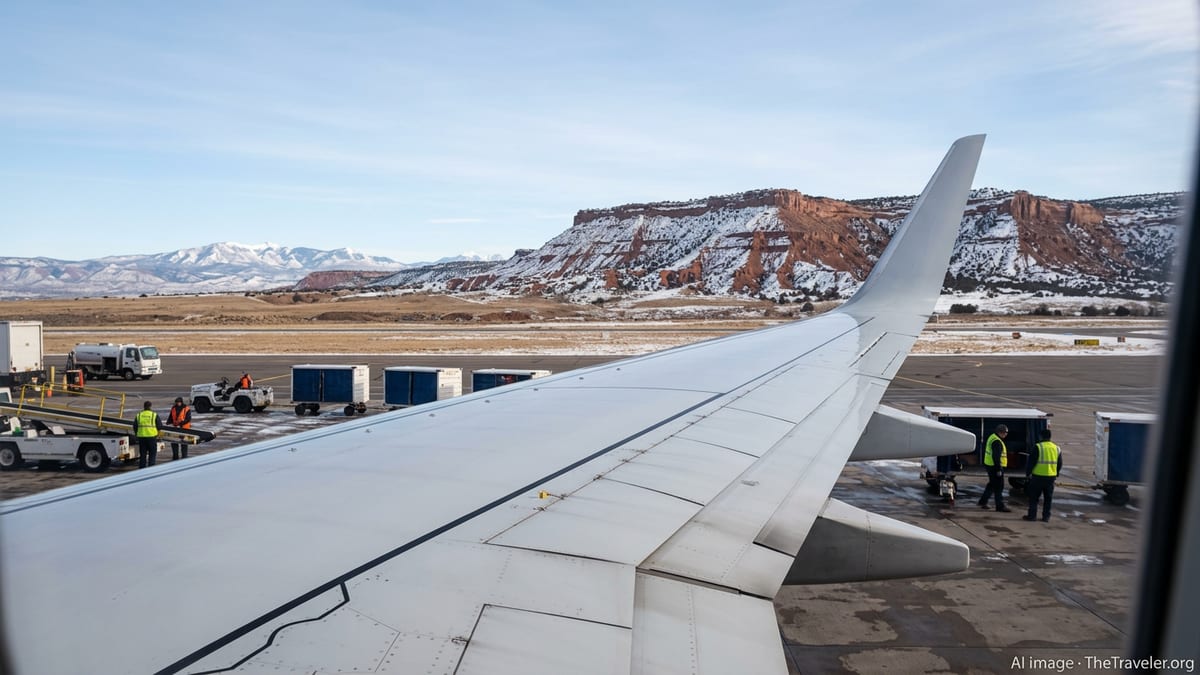
Shortly after crossing the Rocky Mountains, the flight changed course and began descending toward western Colorado, ultimately landing at Grand Junction Regional Airport. The unscheduled arrival meant passengers who expected a short hop into Denver instead faced an unexpected ground stop at a smaller regional facility.
While specific operational details have not been formally disclosed at the time of writing, diversions along the San Francisco–Denver corridor typically relate to a mix of weather disruptions in the Denver area, air traffic flow programs over the Rockies, or technical or medical considerations on board. Industry observers note that Grand Junction is a common alternate for flights transiting the central Rockies when Denver traffic or weather conditions deteriorate.
The Airbus A321-271NX, part of the Airbus A321neo family, is configured to serve hundreds of passengers on domestic sectors. A diversion with this aircraft type can place additional pressure on smaller regional airports in terms of ground handling, refueling, and accommodating a full load of travelers awaiting onward transportation.
Extended Delays and Connection Concerns for Passengers
Flight-status platforms tracking United Airlines Flight 540 indicate that the diversion resulted in a significant delay to the originally scheduled arrival time in Denver. The aircraft remained on the ground at Grand Junction for an extended period while new routing and crew duty-time considerations were assessed, according to publicly available operational timelines.
For travelers booked through Denver to other destinations, even a delay of a few hours can cascade into missed connections and overnight interruptions. Denver functions as a major hub in the carrier’s network, feeding a wide range of domestic and international services, so any disruption on a key inbound flight can ripple through afternoon and evening banked departures.
Reports from traveler forums and aviation monitoring communities suggest that some passengers faced uncertainty over whether they would arrive in Denver in time to make same-day onward flights. In similar diversion scenarios, rebooking options can include later departures that evening, rerouting through other hubs, or overnight accommodations when connections are no longer feasible.
Airlines typically prioritize rebooking for affected travelers once a revised arrival time at the intended destination becomes clearer. However, when a diverted flight is still on the ground at an alternate airport, options can remain fluid, adding to the frustration for passengers attempting to adjust hotel reservations, ground transport, or time-sensitive plans at their final destination.
Grand Junction Regional Airport’s Role as a Diversion Point
Grand Junction Regional Airport, located on Colorado’s Western Slope, plays a recurring role as an alternate landing point for flights crossing the Rockies. Airport reports and board documents highlight that diversions contribute periodically to passenger and aircraft movements, particularly during periods of volatile mountain weather or congestion at Denver.
The airport hosts scheduled services from several major carriers linking to larger hubs, including Denver. These regularly scheduled operations provide a foundation of facilities such as jet bridges, ground services, and fuel supplies that make it a viable diversion option for larger narrowbody aircraft like the Airbus A321-271NX.
However, the arrival of a heavily booked mainline aircraft on short notice can still pose logistical challenges. Local resources such as ramp space, catering, and passenger amenities may be stretched as airport and airline staff work to reposition equipment, refuel the aircraft, and coordinate with operations control centers to determine the next steps.
For travelers on Flight 540, Grand Junction served as both an unexpected waypoint and a waiting room. Some passengers remained on board during the initial stages of the diversion, while others may have been allowed into the terminal depending on the length of the delay and local operational decisions.
Managing Passenger Care and Communication During Irregular Operations
In diversion events such as that affecting United Airlines Flight 540, passenger care and communication become central concerns. Publicly available airline customer-service policies generally commit to providing regular updates, refreshments, and, when necessary, hotel accommodations if overnight delays are required due to controllable factors.
Travel industry analysis notes that the exact level of assistance can depend on the cause of the diversion, whether it is considered within the airline’s control, and how long passengers are delayed in reaching their ticketed destination. Weather-related events often bring more limited compensation, whereas technical or crew-related issues may trigger more comprehensive support such as meal vouchers or lodging.
Digital channels provide a lifeline for travelers in these situations. Many passengers rely on airline mobile apps and flight-tracking services for the earliest indications of diversions, gate changes, and revised departure times. In some recent irregular-operational cases, automated notifications have informed passengers of new departure windows and rebooking options even before boarding agents make detailed announcements.
Observers note that clear and timely messaging can significantly shape how travelers experience an interruption. Even when delays are unavoidable, transparent information about expected timelines, rebooking procedures, and baggage handling can help passengers make informed decisions about alternative plans.
What Comes Next for United Flight 540 and Future Operations
At the time of publication, publicly accessible flight data suggests that United Airlines Flight 540’s onward journey to Denver is contingent on the resolution of the operational issue that prompted its diversion to Grand Junction. Once cleared to continue, the aircraft is expected to resume its scheduled routing, albeit with arrival well behind the original timetable.
The disruption may have knock-on effects for later segments operated by the same aircraft, such as evening services beyond Denver. Airlines often respond to such irregular operations by swapping aircraft, adjusting crew schedules, and consolidating flights where feasible to restore regularity to their networks.
Aviation analysts highlight that diversions are an inherent part of airline operations, particularly in regions with complex weather patterns and busy hub airports like Denver. While they are disruptive for passengers, they are also a sign of conservative safety and operational decision-making, ensuring that flights proceed only when conditions and resources are suitable.
For travelers scheduled on upcoming services along the San Francisco–Denver corridor, industry guidance generally recommends monitoring flight status closely on the day of departure, allowing extra time for connections through major hubs, and signing up for real-time alerts. Although diversions such as that experienced by Flight 540 remain relatively rare, staying informed can reduce the impact when irregular operations occur.