


More news on this day
Passengers departing from Raleigh–Durham International Airport are reporting unusually long waits at the Terminal 2 security checkpoint, with early morning travelers describing lines stretching deep into the ticketing hall and significantly lengthening departure routines.
Get the latest news straight to your inbox!
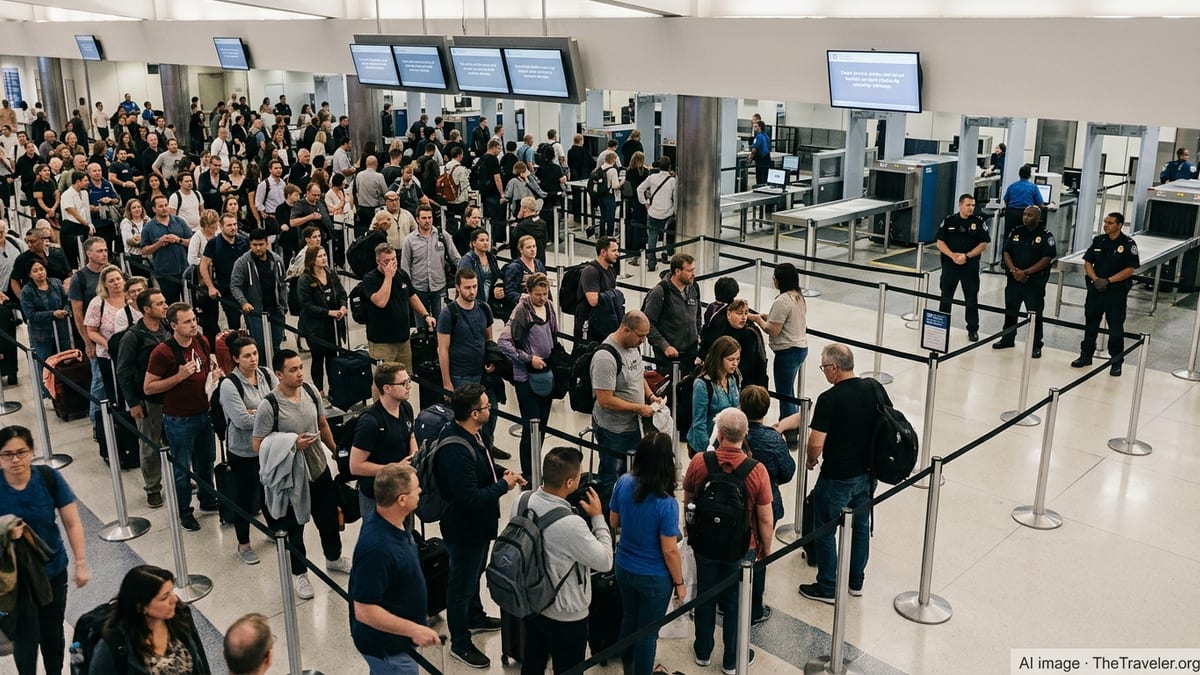
Reports of Extended Waits at Busy Morning Bank
Recent traveler accounts circulating on local forums and social media describe congestion at Raleigh–Durham International Airport’s Terminal 2 that goes beyond the airport’s typical morning rush. Posts from early-morning flights indicate that lines for standard screening have snaked past the primary security queue and back toward airline check in zones, with some passengers estimating total wait times approaching half an hour or more during peak periods.
Terminal 2 handles the majority of the airport’s mainline domestic and international carriers, concentrating a large share of originating passengers at a single checkpoint. Publicly available Transportation Security Administration throughput data for the airport show consistently high passenger volumes processed through Terminal 2’s checkpoint compared with other RDU screening locations, underscoring how modest operational disruptions or surges in demand can quickly translate into noticeable delays.
Travelers posting about recent experiences describe a sharp contrast between quieter midday windows and the first outbound bank of flights between roughly 5 a.m. and 7 a.m. Those early departures appear to be driving the longest queues, particularly for travelers using the general screening lanes rather than expedited programs.
Partial Outages and Operational Strain Add Pressure
In addition to heavy demand, some recent accounts reference partial power or system disruptions that have affected parts of the airport, including Terminal 2. Passengers earlier this year described long lines and what appeared to be reduced capacity in sections of the terminal, with only a portion of normal systems operating. While the checkpoint itself has generally remained open, even a small reduction in available lanes or screening positions can significantly increase wait times at the height of morning traffic.
RDU has also experienced episodes of weather related disruption and ground delays that ripple through the terminal complex. While these events are primarily tied to runway, ramp, and gate operations, they can shift passenger flows in unpredictable ways, concentrating large numbers of travelers into the terminal at once. When departures are compressed into shorter operating windows, the security checkpoint can become a bottleneck as delayed and on time passengers converge.
Published academic work on airport security queues notes that major hubs have become more sensitive to such spikes in the post pandemic era, with security screening delays more likely to propagate through the broader travel experience once operational buffers are exhausted. RDU’s growth in passenger numbers and airline service has placed additional pressure on infrastructure originally designed for lower traffic levels.
Guidance for Travelers Departing from Terminal 2
Publicly available advice from travel organizations and airport focused forums consistently encourages RDU passengers departing from Terminal 2 to build in extra time, particularly for the earliest departures. Many travelers now aim to arrive at least two hours before domestic flights leaving in the 5 a.m. to 8 a.m. window, adjusting earlier for families, large groups, or those checking baggage.
Several third party tools and mobile applications provide live or near real time estimates of security wait times at Raleigh–Durham and other U.S. airports. Travelers report using these services, as well as the TSA’s own digital resources, to gauge conditions before leaving home, though crowdsourced data can lag actual on site congestion. Even when technology is available, recent posts suggest that conservative planning remains the safest strategy for avoiding missed flights during periods of heavy demand.
For those eligible, enrollment in expedited screening programs such as TSA PreCheck and similar services continues to be recommended as a way to reduce time spent in line. However, recent traveler comments from RDU note that even dedicated lanes can become congested during the busiest early morning banks, meaning that participation does not fully eliminate the need for early arrival.
Expansion Plans Aim to Ease Long Term Pressure
Airport planning documents and publicly shared capital improvement presentations outline a multi year effort to expand Terminal 2’s landside facilities, including the ticketing hall and security checkpoint. The plans call for enlarging the screening area and adding capacity to better accommodate rising passenger volumes as the region grows and airlines add more routes.
These projects are designed to redistribute crowds, provide more queuing space, and create room for additional screening lanes and technology. While such improvements are expected to ease bottlenecks in the long run, they are still in the planning and development phases, and passengers in the near term will continue to navigate the existing Terminal 2 layout.
RDU has promoted a broader modernization strategy that also includes runway work and terminal enhancements intended to support larger aircraft and increased international service. As that growth materializes, security operations at Terminal 2 will remain a critical component of the passenger journey, and managing checkpoint efficiency will be central to maintaining on time departures.
What Travelers Can Expect in the Coming Weeks
With summer travel still in full swing and the Triangle region continuing to see strong demand for leisure and business flights, congestion at RDU’s Terminal 2 security checkpoint is likely to remain a regular feature of the early morning schedule. Travelers can expect fluctuating conditions, with some days moving smoothly and others marked by long queues that build quickly around the opening of the checkpoint and the first wave of departures.
Publicly available information indicates that security operations at RDU are generally able to process substantial numbers of passengers in relatively short periods when all lanes are active. However, any combination of staffing constraints, equipment issues, or wider airport disruptions can sharply increase wait times, especially when many flights are scheduled within a narrow window.
For now, the most reliable strategy for passengers remains straightforward planning: allow generous time to reach the airport, check bags, and clear security, particularly in Terminal 2. Monitoring real time updates through trusted apps and airport information channels can help travelers adjust their schedules, but those departing in the busiest hours are continuing to report that extra time at the checkpoint is a prudent investment.