


More news on this day
Passengers traveling through Raleigh–Durham International Airport on Thursday reported unusually long lines and slow movement at the Terminal 2 security checkpoint, prompting calls on social media for flyers to build in extra time for screening during busy departure banks.
Get the latest news straight to your inbox!
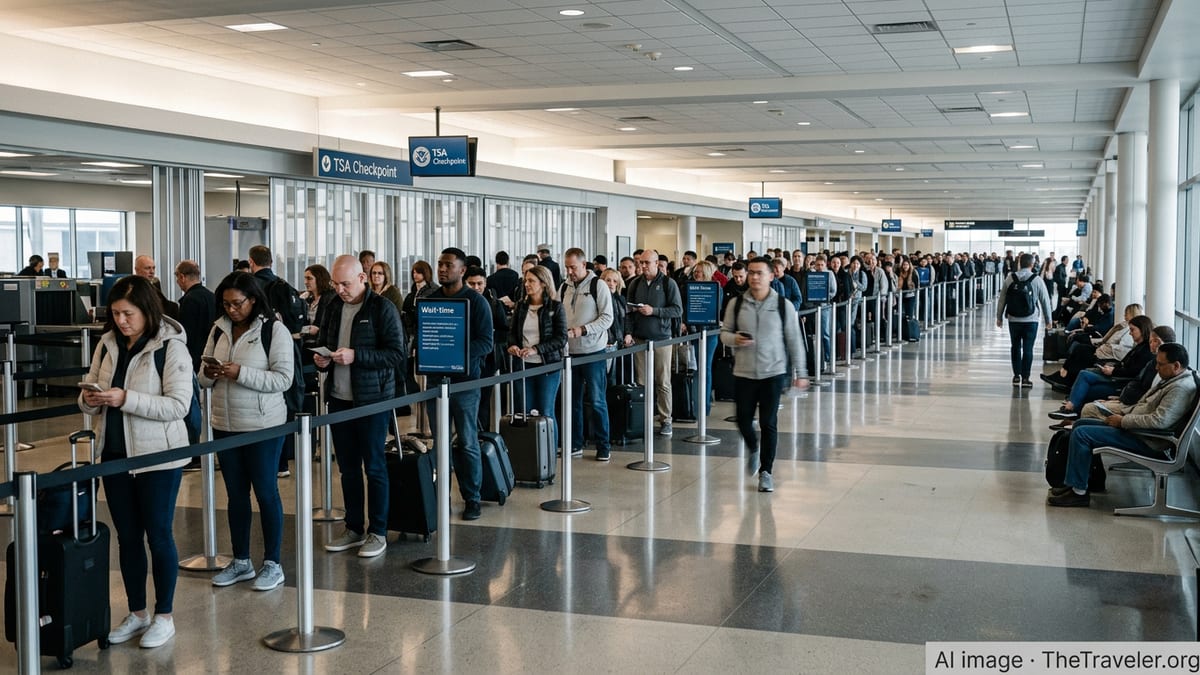
Reports of Congestion at Mainline Carrier Terminal
Terminal 2 at Raleigh–Durham International Airport handles the majority of mainline domestic and international carriers, concentrating much of the region’s peak-hour traffic in a single security checkpoint. Publicly available airport information shows that Terminal 2 serves airlines such as American, Delta, United, JetBlue, Frontier and several international carriers, making it the busier of the airport’s two terminals.
On Thursday morning, multiple traveler accounts described security lines stretching well beyond the main queuing area, with some passengers citing waits of 40 minutes or longer before reaching the scanners. Similar anecdotal reports have appeared throughout the summer travel season, particularly during the early-morning departure rush and late-afternoon outbound wave.
The airport’s own travel guidance notes that most passengers typically clear screening in under 30 minutes, while acknowledging that lines can grow considerably during peak periods. The gap between those general expectations and the longer waits described on Thursday added to frustration for some travelers coordinating tight connections and early flights.
Construction and Growth Add Pressure to Terminal 2
The delays are unfolding during a period of rapid growth and extensive construction at Raleigh–Durham International. Airport publications indicate that RDU handled record passenger volumes in both 2024 and 2025, and that Terminal 2 is in the midst of a multiyear expansion intended to add more gates and increase the size of ticketing, security and baggage claim areas.
According to the airport’s public construction updates, work around Terminal 2 includes a new runway project and roadway changes that have temporarily shifted some drop-off traffic away from the terminal’s main departures curb. These adjustments can lengthen the walk from curb to checkpoint and compress more travelers into shared entry points during busy times, potentially contributing to bottlenecks at security.
Past planning documents and annual reports have highlighted a longer-term strategy to expand Terminal 2’s security checkpoint, increasing the number of available lanes to keep pace with passenger growth. While those projects progress in phases, near-term impacts such as narrowed walkways, scaffolding, noise and temporary signage can complicate the flow of people toward the checkpoint and slow down queue movement.
Peak Travel Patterns Expose Bottlenecks
Recent traveler discussions about Raleigh–Durham International consistently identify certain high-demand windows when Terminal 2 security is more likely to back up. Early-morning departures between roughly 5 a.m. and 7 a.m., along with late-afternoon and early-evening banks from about 4 p.m. to 7 p.m., are frequently cited as periods when standard wait times rise into the 30 to 45 minute range.
These patterns align with airline scheduling practices, which cluster departures for business and connecting traffic into specific waves. With most large carriers operating from Terminal 2, several full flights can funnel passengers into the same checkpoint over a short interval. When that volume coincides with construction-related changes or minor operational disruptions, queues can lengthen quickly.
Conversely, traveler reports suggest that midday periods from late morning into early afternoon often see shorter waits, sometimes dropping below 15 minutes. The contrast between relatively quiet off-peak hours and congested rush periods underscores how sensitive Terminal 2’s checkpoint is to short-term spikes in demand.
Traveler Strategies for Navigating Delays
Airport travel tips published by Raleigh–Durham International encourage passengers to review flight status, parking options and security screening guidance before leaving for the airport, and to arrive earlier during peak seasons and busy times of day. The airport highlights that lines may be longer than usual when school holidays, major events or severe weather coincide with normal rush periods.
RDU also points travelers to federal security programs and checkpoint preparation steps intended to help lines move more efficiently. Guidance emphasizes having identification and boarding passes ready, packing carry-on bags so that electronics and liquids are easy to remove where required, and using clearly marked lanes for standard screening, PreCheck and other dedicated queues.
Frequent flyers have increasingly turned to online tools and mobile resources that estimate current wait times at Raleigh–Durham’s checkpoints. While those tools are not always precise, they can provide an additional signal about whether to plan extra time before departure, particularly for early-morning or late-day flights out of Terminal 2.
Ongoing Expansion Aims to Ease Future Queues
The airport’s long-range plans portray the current period of congestion at Terminal 2 as a trade-off in pursuit of greater capacity. Publicly available project descriptions state that the new runway and terminal work are designed to unlock more gates and enable a larger, more efficient security checkpoint that can handle continued passenger growth in the Research Triangle region.
Recent updates from the airport’s construction blog describe milestones such as removal of exterior walls at Terminal 2 to make way for a wider departures hall and reconfigured circulation space. Future phases are expected to provide additional room for queuing and screening equipment, which could help prevent the sort of spillover lines reported on Thursday.
For now, travelers departing from Terminal 2 are likely to continue encountering variable wait times at security, especially during the busiest banks of flights. Publicly available information and recent traveler experiences both point to a simple interim strategy for minimizing stress at the checkpoint: arrive earlier than usual for morning and evening departures, and be prepared for the possibility of longer lines while expansion projects remain underway.