


More news on this day
United Airlines flight UA1941, a Boeing 757-300 operating a scheduled service from Los Angeles International Airport to Chicago, diverted en route to Minneapolis–Saint Paul International Airport, according to live flight tracking data and early media reports, prompting questions from travelers as storms and operational disruptions continue to affect major Midwestern hubs.
Get the latest news straight to your inbox!
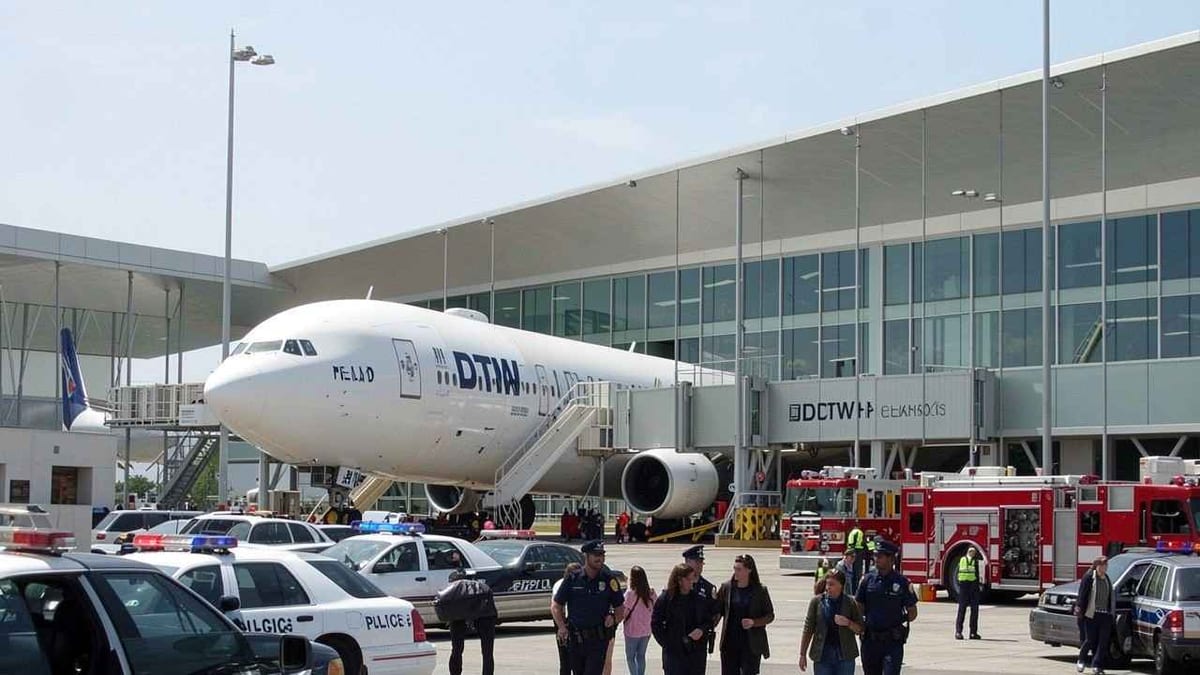
Transcontinental Flight Alters Course En Route to Chicago
Publicly available flight tracking information indicates that United Airlines flight UA1941 departed Los Angeles International Airport on schedule for Chicago, following a typical routing across the central United States before altering course toward Minneapolis–Saint Paul. Data show the aircraft descending and proceeding to the Twin Cities airport rather than continuing on to its planned destination at Chicago O’Hare.
The flight was operated by a Boeing 757-300, a narrowbody aircraft widely used by United on high-density domestic routes. The aircraft type is commonly scheduled on services between Los Angeles and Chicago, both of which are major hubs in the airline’s network.
Initial indications suggest that the diversion unfolded in a controlled manner, with the aircraft maintaining a stable flight profile and proceeding directly to Minneapolis–Saint Paul. The available information does not point to an emergency landing or any loss of control, though further operational details have not yet been published.
Passengers on board were expected to be accommodated onward to Chicago or other destinations once the aircraft was safely on the ground in Minneapolis–Saint Paul, as is standard practice after a mid-route diversion.
Weather, Traffic and Operational Pressures Across the Midwest
The diversion of UA1941 comes amid a period of heightened operational strain for airlines serving Chicago and other Midwestern airports. Publicly shared airline travel waivers and traveler reports describe significant disruption related to thunderstorms and convective weather systems tracking across the region over the last several days.
Chicago O’Hare, one of United’s largest hubs, is particularly susceptible to delays and rerouting when storms affect arrival and departure corridors. When traffic management initiatives are in place, some flights may be held at origin airports, while others are rerouted or occasionally diverted to alternate airports to wait out congestion or weather-related restrictions.
Minneapolis–Saint Paul often functions as a suitable diversion point for flights bound to or from Chicago, thanks to its runway capacity, facilities for larger narrowbody aircraft such as the Boeing 757 family, and its ability to handle connecting passengers. For flights nearing the Chicago area when conditions deteriorate, this airport can provide a practical balance of proximity and operational flexibility.
On the day of the UA1941 diversion, flight status boards across multiple Midwest airports reflected a mix of delays, reroutings, and scattered cancellations, underscoring how quickly local weather and air traffic constraints can ripple through the network.
What a Diversion Means for Passengers on Board
For travelers, a diversion such as the one involving UA1941 typically results in extended journey times, revised connections, and occasional overnight stays if onward flights become limited. Airline policies, as described in published customer guidelines and travel waiver notices, generally provide rebooking options on later flights once the aircraft has arrived safely at the diversion airport.
In many cases, passengers are automatically rebooked onto the next available service to their original destination, though seat availability and broader network disruptions can affect how quickly they are able to continue their trips. Some travelers may also be rerouted through alternate hubs if that offers a faster option to arrive in Chicago or beyond.
Airlines frequently activate temporary travel waivers when widespread storms or systemwide disruptions occur, allowing customers to adjust their plans without change fees. Reports indicate that similar waivers have been in place around the Chicago area during recent severe weather, which can help ease rebooking pressure for affected passengers both on the diverted flight and across the network.
For those on board UA1941, standard procedures would typically include updates from the flight deck and cabin crew, information screens displaying the new arrival airport, and subsequent guidance at the gate in Minneapolis–Saint Paul about next steps for reaching Chicago or connecting destinations.
Safety Protocols and the Role of Precautionary Diversions
A diversion does not necessarily indicate a critical emergency. Airlines and flight crews have broad discretion to divert when it is considered the safest or most practical option, including for medical concerns, technical checks, or anticipated weather and congestion at the destination.
In the case of UA1941, the information available so far points to a precautionary and controlled diversion rather than an incident involving an in-flight emergency. Industry practice places strong emphasis on conservative decision making, with diversions often chosen to avoid compounding risks or delays later in the flight.
Minneapolis–Saint Paul is equipped with extensive maintenance support and passenger facilities, which can make it an attractive option for a Boeing 757-300 diverting from a major transcontinental route. Once on the ground, engineers can assess any technical issues if required, while airport and airline staff work on revised itineraries for customers.
For frequent flyers, diversions are a reminder that route planning is dynamic, not fixed. Flight crews are trained to adjust to rapidly changing conditions, prioritizing safety and regulatory requirements first, then working with operations teams to minimize disruption for travelers.
What Travelers Should Watch for in the Coming Hours
As operations stabilize following the diversion of UA1941, affected passengers are likely to see updated itineraries through airline mobile apps, airport displays, and email or text notifications. Travel experts often recommend keeping contact information current in booking profiles so that automatic alerts arrive promptly when a diversion or major schedule change occurs.
Travelers with tight onward connections through Chicago may need to adjust hotel bookings, ground transportation, or separate tickets booked with other airlines. Published advice from frequent flyer communities suggests allowing extra buffer time when connecting through hubs that are experiencing active weather systems or ongoing congestion.
Observers will be watching how quickly the disrupted Los Angeles to Chicago itinerary returns to its normal schedule in the days ahead. Airlines commonly reposition aircraft and crews after events such as the UA1941 diversion, seeking to bring timetables back into alignment while accommodating passengers whose plans were disrupted.
While diversions inevitably create inconvenience, the handling of UA1941 so far fits a broader pattern seen across global aviation, in which precautionary route changes and alternate airport landings are employed as routine tools to maintain safety and manage complex traffic and weather conditions.