


More news on this day
Air travel across Asia experienced a fresh wave of disruption on June 11, as publicly available tracking data pointed to at least 70 flight cancellations and more than 1,100 delays affecting major airports from Indonesia to Jordan, Myanmar, Japan, China and India, snarling schedules for carriers including Batik Air, Royal Jordanian, Myanmar Airways International, All Nippon Airways, Air China and other regional and international airlines.
Get the latest news straight to your inbox!
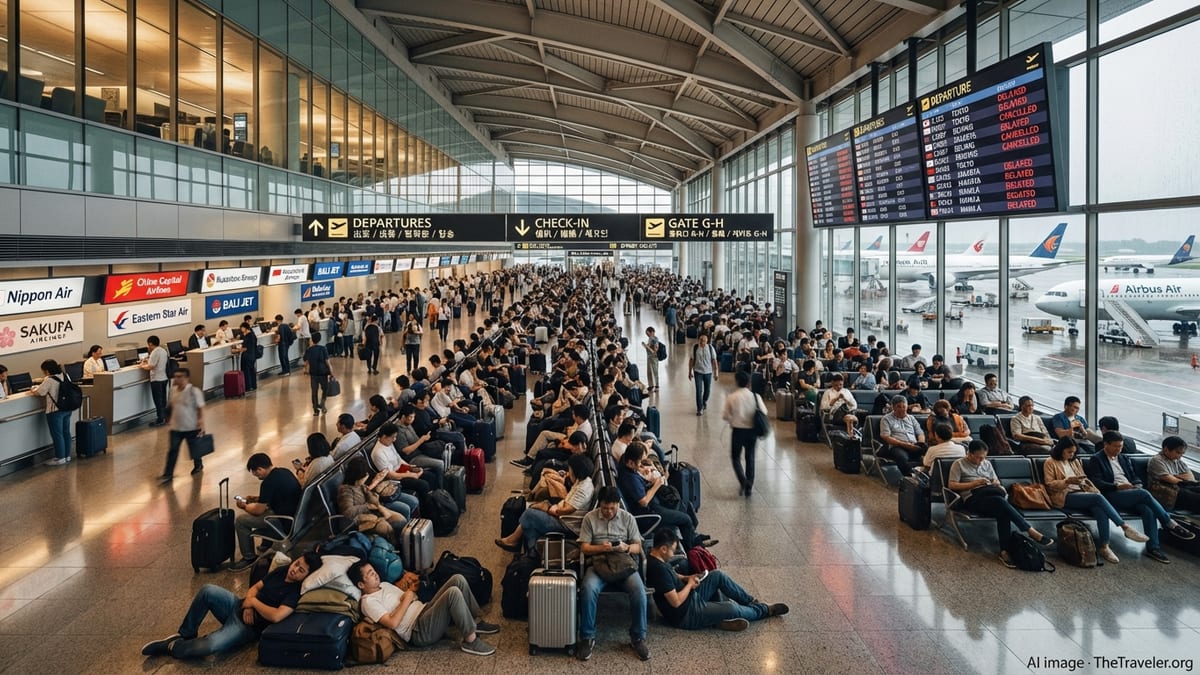
Fresh Wave of Disruption Across Asian Skies
Operational data compiled from multiple flight-tracking platforms on June 11 indicates that a cluster of cancellations and delays has rippled across several of Asia’s busiest hubs, including Jakarta, Amman, Yangon, Tokyo, Beijing and New Delhi. While daily fluctuations in on‑time performance are common, the scale of today’s disruption, with at least 70 cancellations and an estimated 1,178 delays, stands out against typical midweek patterns.
Reports from regional aviation outlets describe a combination of volatile weather systems, congested airspace and continued rescheduling linked to higher fuel costs and aircraft availability as contributing factors. In several countries, airlines are still recalibrating networks after recent decisions to trim frequencies on less profitable routes, which can leave little spare capacity when storms, air‑traffic restrictions or technical issues arise on busy days.
Travel industry commentary suggests that the latest disruption follows a broader 2026 trend of intermittent gridlock across Asian skies. Previous episodes in February and early June saw thousands of flights delayed or canceled in single 24‑hour windows, highlighting how closely packed schedules, crew rostering constraints and tight turnaround times can amplify even localized disturbances into region‑wide knock‑on effects.
Jakarta, Amman and Yangon Face Knock‑On Cancellations
In Indonesia, Jakarta’s Soekarno‑Hatta International Airport is again prominent in today’s disruption data. Flight‑status trackers show cancellations and late departures affecting domestic and regional services, with Batik Air, Garuda Indonesia and low‑cost affiliates among the carriers adjusting schedules. Analysts note that Indonesian operators are running near pre‑pandemic capacity during the mid‑year travel period, leaving little room to absorb operational shocks.
In Jordan, Amman’s Queen Alia International Airport has recorded a smaller but notable number of altered flights, with Royal Jordanian and several foreign airlines reshuffling departures and arrivals. Aviation media have recently highlighted how fluctuating demand patterns and regional geopolitical tensions can force sudden schedule changes in and out of the Jordanian capital, with mid‑week rotations particularly sensitive to aircraft and crew positioning.
Myanmar’s Yangon International Airport is also experiencing irregular operations. Myanmar Airways International and other carriers serving regional routes have registered a mix of cancellations and extended delays, according to real‑time boards consulted by travel trackers. Publicly available coverage points to a mix of monsoon‑season weather, constrained ground resources and broader uncertainty in the country’s aviation environment as background factors behind the current disruption.
Tokyo, Beijing and New Delhi Among the Hardest‑Hit Hubs
Across North and South Asia, Tokyo, Beijing and New Delhi remain central to the day’s turbulence. Tokyo’s main airports, particularly Haneda, show a higher than usual proportion of late operations affecting All Nippon Airways and Japan Airlines, alongside foreign carriers. Recent typhoon and frontal weather patterns over Japan have already led to repeated schedule adjustments this month, and aviation commentators warn that even minor storms can cascade into missed slots and aircraft rotation difficulties.
In China, Beijing’s major airports have reported both cancellations and substantial delays on a range of Air China and China Eastern services, along with international partners. Reports from aviation‑focused publications over recent weeks describe China’s network as operating at high utilization rates while carriers attempt to balance strong domestic demand, lingering international constraints and higher input costs, leaving them vulnerable when air‑traffic restrictions or storm systems emerge.
New Delhi’s Indira Gandhi International Airport continues to feature prominently in regional delay rankings, with India‑based carriers and foreign airlines adjusting departures. Indian aviation coverage in recent weeks has detailed plans by several airlines to reduce or consolidate flights between June and August in response to fuel prices and demand shifts. On days like June 11, when weather, congestion or technical issues coincide, those thinner margins can quickly translate into queues on departure boards.
Airlines Feel the Strain as Schedules Buckle
The latest figures show that a diverse mix of full‑service and low‑cost airlines are affected. Batik Air in Indonesia, Royal Jordanian in Amman, Myanmar Airways International in Yangon, All Nippon Airways in Japan and Air China in Beijing are among the carriers whose flights feature in cancellation and delay tallies, alongside a range of other Asian and long‑haul operators.
Industry analysis underscores that many of these airlines entered the Northern Hemisphere summer with ambitious schedules and limited built‑in slack. Several carriers across India and Southeast Asia have already announced planned flight reductions or temporary route suspensions for the June to August period to manage fleet maintenance, crew resources and fuel exposure. When unplanned weather or air‑traffic events intersect with these lean rosters, widespread disruption can follow.
Historical on‑time performance reports show that airlines such as All Nippon Airways, Batik Air and Myanmar Airways International normally maintain relatively solid punctuality records in the Asia‑Pacific region. Observers note that the current wave of disruptions appears less connected to chronic operational weakness and more to a combination of short‑term supply pressures, infrastructure bottlenecks and unsettled regional conditions.
Passengers Confront Long Queues and Limited Options
For travelers across Jakarta, Amman, Yangon, Tokyo, Beijing, New Delhi and other affected cities, today’s disruptions are playing out in the form of long check‑in lines, crowded customer‑service counters and uncertainty over missed connections. Passenger rights groups and travel advisors are again urging flyers to monitor airline apps, airport displays and booking portals closely, as schedules on high‑traffic days can change with little notice.
Consumer‑advocacy sites continue to remind passengers that compensation and care obligations vary greatly by jurisdiction and by airline, especially on routes that do not fall under European Union or similar passenger‑protection regimes. In many Asian markets, travelers whose flights are delayed or canceled must rely primarily on the rebooking, refund and voucher policies voluntarily published by individual carriers.
Despite the challenges, aviation specialists point out that most flights across the region are still operating, and that the headline cancellation and delay figures represent only a portion of Asia’s total daily schedule. However, with summer travel demand building and weather risks persisting, there is growing concern that repeated days like June 11 could test passenger patience and airline resilience throughout the season.