


More news on this day
United Airlines is preparing to retire much of its Boeing 757 transatlantic fleet in favor of the new Airbus A321XLR, a move that analysts say will reshape how U.S. travelers reach popular destinations in Spain, France and Italy over the next several years.
Get the latest news straight to your inbox!
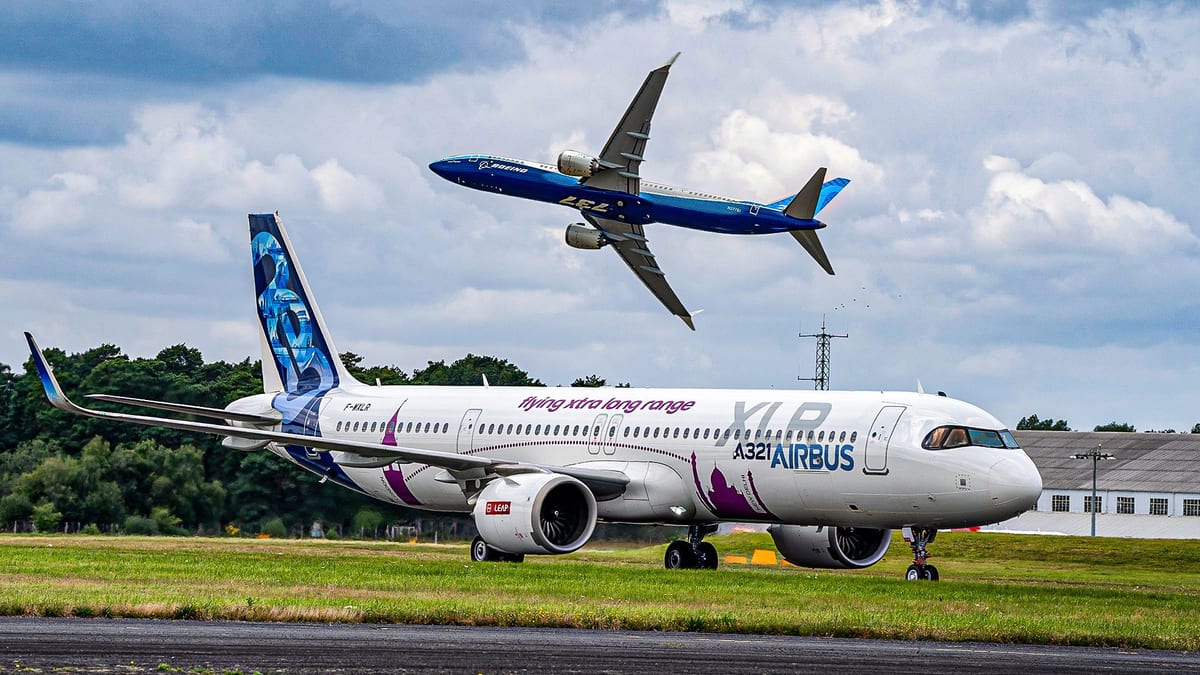
From Transatlantic Workhorse to Next-Generation Narrowbody
United has relied on the Boeing 757 for decades on so-called “thin” transatlantic routes, where demand is strong enough for nonstop service but not large enough to justify a widebody aircraft. Publicly available fleet information shows that the airline operates dozens of 757-200s on services from East Coast hubs such as Newark and Washington to secondary cities across Europe. The type’s range, runway performance and relatively modest seat count made it a niche but powerful tool for opening new destinations.
The Airbus A321XLR is designed to take over that role using modern technology and economics. Industry data indicates that United placed a firm order for around 50 A321XLRs, with deliveries now expected to begin in 2026 after several program delays. The aircraft is part of the broader A321neo family and offers additional fuel tanks and higher maximum takeoff weight to achieve ranges comparable to, and in some cases greater than, the 757 on lower fuel burn.
Reports from aviation outlets describe the A321XLR as central to United’s long-haul narrowbody strategy. The airline has signaled in past presentations that the type will largely replace 757-200s on international missions while also enabling new point-to-point routes that would have been difficult to operate profitably with older jets. United’s latest fleet communications emphasize that the A321XLR will be equipped with an upgraded premium cabin, including a version of its Polaris business class and Premium Plus seats, marking a step up from many current 757 interiors.
Recent industry coverage indicates that United aims to deploy the A321XLR first on existing 757-operated routes, creating a relatively low-risk transition as crews, maintenance and scheduling teams gain experience with the new type. Over time, as more aircraft are delivered, the airline is expected to accelerate 757 retirements, with the A321XLR becoming the primary narrowbody for longer overwater routes.
New Opportunities for Spain’s Coastal and Secondary Cities
Spain is set to be one of the main beneficiaries of United’s A321XLR strategy. Analysis of current schedules shows that the airline already serves major Spanish gateways such as Madrid and Barcelona using a mix of widebodies and 757s, particularly from Newark. Industry commentary suggests that the A321XLR will allow United to both modernize these links and consider additional destinations that previously lacked sufficient demand for larger aircraft.
Aviation analysts point to cities such as Málaga, Valencia and Bilbao as examples of markets that could become more viable once the A321XLR enters service in meaningful numbers. These destinations attract substantial U.S. leisure interest, particularly for beach holidays and cultural tourism, but have historically relied on connections through major European hubs. The A321XLR’s combination of range, lower operating cost and a full long-haul cabin layout could support seasonal or year-round nonstops from Newark or Washington, depending on demand.
Public commentary from network-planning specialists notes that United has increasingly prioritized “sun and culture” markets in Europe in recent years, aligning capacity with growing U.S. appetite for Mediterranean trips. The A321XLR provides a tool to extend this approach deeper into Spain, targeting regions with strong tourism infrastructure but limited long-haul connectivity.
For travelers, the shift from 757 to A321XLR on Spanish routes is expected to bring a more consistent onboard product. Industry previews of United’s A321XLR cabin indicate fully flat business-class seats with direct aisle access, premium economy seating and larger overhead bins. That configuration, combined with improved fuel efficiency, positions United to compete more aggressively with European carriers that already use new-generation narrowbodies on transatlantic services to Spanish leisure markets.
France Routes Poised for Secondary-City Growth
France already features prominently in United’s transatlantic network, led by multiple daily flights to Paris Charles de Gaulle from hubs including Newark, Washington and other U.S. gateways. However, many of these services rely on widebody aircraft optimized for high-volume, premium-heavy demand. Industry reports suggest that the arrival of the A321XLR will support a different kind of growth: nonstop links between the United States and smaller French cities that have strong tourism or business appeal but more modest traffic volumes.
Analysts have highlighted regions such as the French Atlantic coast and the south of France as realistic candidates for future A321XLR service. Cities like Bordeaux, Nantes or Montpellier are often cited in route-development discussions as markets where U.S. visitors rely heavily on connections via Paris, Amsterdam or Madrid. With the A321XLR, United could potentially offer nonstop seasonal flights from Newark, pairing hub connectivity in the United States with local tourism demand in France.
Publicly available commentary from aviation data providers indicates that United and other transatlantic carriers are increasingly using narrowbody long-range aircraft to test new routes with lower risk. Rather than committing a widebody to a market that might only fill well in peak summer, an A321XLR can operate with fewer seats, giving airlines more flexibility to adjust frequencies or season lengths. This model has already emerged elsewhere in Europe and is expected to expand once United’s Airbus narrowbodies arrive.
For travelers heading to France, this evolution could mean shorter journey times and fewer connections, especially for those bound for wine regions, coastal towns or emerging city-break destinations outside Paris. The A321XLR’s cabin design, with a full suite of long-haul amenities, aims to ensure that the comfort level on these thinner routes remains competitive with traditional widebody services to major hubs.
Italy’s Tourism Hotspots and Shoulder Seasons in Focus
Italy is another cornerstone of United’s European portfolio and a prime candidate for expanded A321XLR deployment. Current schedules show United serving major Italian cities such as Rome and Milan primarily with widebody aircraft during the busy summer season, supplemented by 757s and other types on select routes. Industry analysis suggests that the A321XLR could unlock more tailored capacity to popular but smaller markets across the Italian peninsula and islands.
Airline and tourism analysts point to destinations such as Naples, Palermo, Bari and Catania as examples where demand from the United States is strong during peak months but can be uneven across the year. The A321XLR’s economics may enable United to extend seasonal routes into the shoulder periods of spring and autumn, targeting travelers drawn by milder weather, lower prices and cultural events outside the high-summer rush.
Reports focused on transatlantic trends note that U.S. demand for Italy remains robust, driven by a mix of heritage travel, gastronomy-focused tourism and interest in smaller cities beyond Rome and Florence. Using A321XLRs, United could fine-tune capacity to match this pattern, operating fewer seats per flight while maintaining or even increasing the number of city pairs served.
For Italian gateways, additional A321XLR-operated services from U.S. hubs would strengthen links to the broader North American market. Connections via Newark or Washington could feed travelers from cities that do not justify direct flights to Italy on their own, but which collectively support a steady flow of visitors to coastal regions and historic towns.
What the Shift Means for Travelers and the Competitive Landscape
The move from Boeing 757s to Airbus A321XLRs is more than a simple fleet refresh for United. Aviation industry coverage describes it as a structural change in how the airline will approach long-haul narrowbody flying, particularly across the North Atlantic. With improved fuel efficiency, longer range and a more modern cabin, the A321XLR gives United new flexibility in shaping its network to Spain, France, Italy and beyond.
Travelers are likely to notice enhanced onboard comfort on routes that once featured older 757 interiors. Renderings and product descriptions released through industry channels suggest that United’s A321XLRs will offer larger seatback screens, upgraded lighting, power at every seat and improved cabin layouts. For passengers flying overnight sectors between the U.S. East Coast and Mediterranean Europe, these changes could narrow the gap in experience between narrowbody and widebody aircraft.
From a competitive standpoint, the shift positions United to respond more directly to European carriers that have already begun using long-range narrowbodies across the Atlantic. Airlines based in Spain, Ireland and the United Kingdom are testing or operating A321LR and A321XLR aircraft on routes to secondary U.S. cities, targeting leisure and visiting-friends-and-relatives traffic. United’s adoption of similar technology allows it to mirror that strategy in reverse, using its U.S. hubs to sustain a broader web of links into Europe.
Industry observers caution that exact route announcements will depend on aircraft delivery timing, regulatory approvals and market performance. However, publicly available planning documents and commentary consistently place Spain, France and Italy near the center of United’s A321XLR ambitions. As the first aircraft enter service and the Boeing 757s gradually step aside, U.S. travelers can expect a more diverse mix of nonstop options to European regions that were once reachable only through multiple connections.