


More news on this day
Passengers traveling through Belgium on 29 May faced growing disruption as Brussels Airlines, Air Baltic, Ryanair and several other carriers reported dozens of delayed and canceled flights affecting key routes across Europe and North Africa.
Get the latest news straight to your inbox!
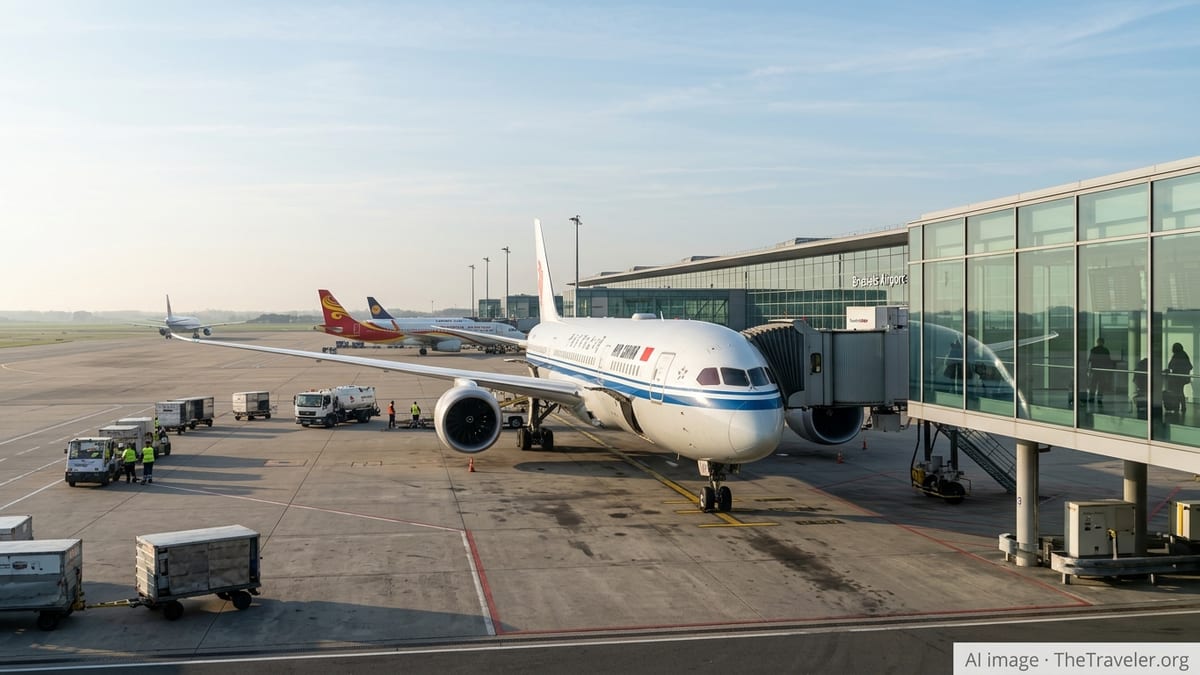
Widespread Disruptions Across Belgian Airports
Publicly available flight tracking boards on 29 May indicated at least 54 delayed departures and arrivals and seven outright cancellations affecting services linked to Belgium’s main airports. The disruption was concentrated at Brussels Airport but also touched secondary gateways serving the capital region.
The knock-on effects were visible on short and medium haul routes, with services to Frankfurt, Copenhagen, Berlin, London and other major hubs registering significant delays. Several North African connections, including flights toward Algiers and other Maghreb destinations, also experienced schedule changes or were withdrawn from the day’s program.
The issues emerged against a broader backdrop of operational strain in Belgian aviation in recent months, marked by periodic strike actions, capacity reductions and staffing pressures. Recent national walkouts affecting Brussels Airport and Brussels South Charleroi Airport have underscored the system’s vulnerability to even short disruptions, leaving airlines with limited margin to recover when schedules begin to slip.
Although the 29 May problems did not reach the scale of previous full strike days, the cumulative impact on travelers was substantial, with missed connections, rebookings and extended waits inside terminals.
Key Routes Hit, From Frankfurt to Copenhagen
According to live departure and arrival data, routes linking Brussels with major European hubs bore the brunt of the disruption. Services between Belgium and Frankfurt, a key connecting point for transatlantic and long haul flights, saw a cluster of delayed rotations as aircraft arrived late or were held on the ground awaiting slots.
Flights to Copenhagen, Berlin and London also featured prominently among the delayed services. These routes typically carry a significant mix of business and leisure travelers, making schedule reliability particularly important for same day connections and corporate itineraries. Delays of an hour or more can cascade quickly, forcing onward passengers to be rebooked on later flights or shifted through alternative hubs such as Amsterdam, Paris or Zurich.
Northbound and southbound services were both affected. Routes toward Scandinavia and Germany saw late departures ripple into evening waves, while flights heading south to Mediterranean and North African destinations, including Algiers, faced altered departure times and, in some cases, cancellation notices.
At peak times during the day, airport displays showed multiple consecutive flights marked as delayed, reflecting the difficulty of returning operations to their planned timetable once early rotations run late.
Multiple Carriers Affected, Led by Brussels Airlines and Low Cost Operators
The disruptions did not stem from a single airline, with publicly accessible tracking platforms listing Brussels Airlines, Air Baltic, Ryanair and several other European carriers among those affected. Brussels Airlines, the country’s flag carrier and a major user of Brussels Airport, saw delays on a number of short haul flights that serve as feeders to its wider network.
Low cost operators, including Ryanair and partner brands that operate on its behalf, also experienced schedule changes on routes connecting Belgium with popular city break and holiday destinations. For price sensitive travelers relying on tightly timed weekend itineraries, longer waits in the terminal or late arrival at destination airports can have outsized consequences, reducing time on the ground or complicating transfers to rail and bus services.
Air Baltic and other regional carriers operating thinner point to point connections reported issues as well, reflecting the interconnected nature of European aviation. A delayed aircraft on one sector can quickly disrupt subsequent flights, especially at busy hubs where turnarounds are scheduled with minimal buffer.
The pattern seen on 29 May aligns with broader punctuality data for early 2026, which show that Brussels and several other major European hubs have experienced fluctuating on time performance as they adapt to changing demand patterns and evolving staffing needs.
Recent Strikes and Structural Challenges Set the Stage
Travelers and industry analysts have pointed to the cumulative effect of recent industrial actions and staffing constraints in Belgium as a key factor behind the system’s fragility. Nationwide protests and strike days earlier in the spring led to mass cancellations at Brussels Airport and Brussels South Charleroi Airport, forcing airlines to reroute aircraft, reposition crews and trim schedules.
Those events also encouraged carriers to build more contingency into their operations, but the adjustments have not fully insulated passengers from day to day irregularities. When a cluster of flights encounters delays on the same day, limited spare aircraft and crew availability can make it difficult to absorb the disruption, particularly during morning and evening peaks.
Airports and airlines have been working to balance cost control with resilience, in an environment where demand has largely recovered but margins remain under pressure. Public reports from aviation data providers indicate that while on time performance at many European hubs has improved compared with earlier years, it still lags pre pandemic benchmarks on some routes and days.
The 29 May disruptions in Belgium illustrate how quickly a localized issue can expand into a broader network challenge, especially when other nearby hubs are facing their own constraints or high load factors.
What Passengers Are Advised to Do
Publicly available guidance from airlines and travel providers emphasizes the importance for passengers of monitoring flight status closely on days when irregular operations are reported. Most carriers encourage travelers to check their booking or mobile app before leaving for the airport, and to enable notifications so schedule changes are communicated as quickly as possible.
For those already at the airport when delays develop, information screens and staffed service desks remain the main channels for rebooking and assistance. Some airlines also allow same day rebooking through digital channels, enabling passengers to switch to later departures or alternative routings without queuing at the terminal.
Passenger rights regulations in the European Union provide certain protections in the case of long delays or cancellations, including meal vouchers, hotel accommodation in some circumstances and, when applicable, financial compensation. The specific level of assistance depends on factors such as the length of delay, flight distance and the cause of the disruption.
Travel management companies and corporate travel departments are also monitoring developments in Belgium closely, as repeated episodes of disruption may prompt businesses to adjust their preferred routings. For many individual travelers, however, Brussels remains a critical gateway, and the events of 29 May are another reminder to build flexibility into itineraries and to stay informed as conditions evolve.