


More news on this day
Every delayed departure carries an invisible invoice: hours of lost time, extra spending on food and hotels, missed meetings and milestones. Yet in most major markets, especially the United States, airlines still rarely pay directly for the full economic damage when flights fail.
Get the latest news straight to your inbox!
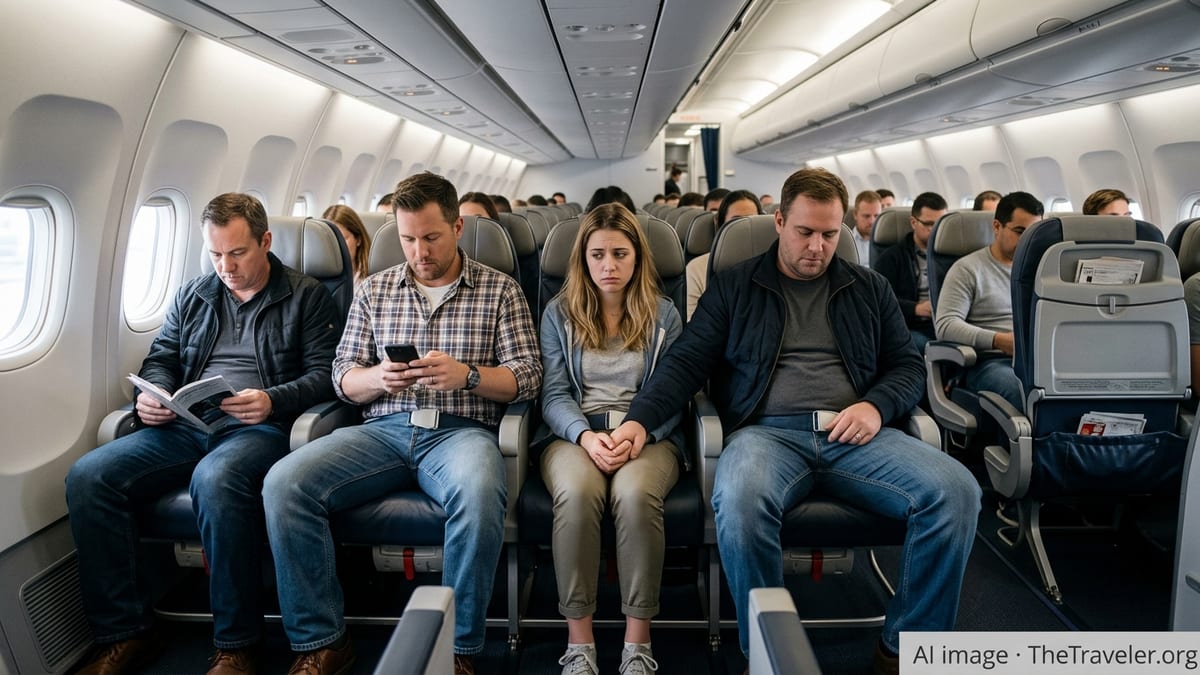
Refund rules rise, but compensation still lags
Recent regulatory changes in the United States have sharpened refund rights for air travelers but stopped short of creating broad delay compensation. A new Department of Transportation rule, finalized in 2024 and taking effect in phases through late 2024, requires airlines to provide automatic cash refunds when a flight is canceled or significantly changed and the traveler chooses not to fly. Publicly available guidance describes “significant delay” benchmarks such as three hours or more on domestic routes and six hours or more on many international services, as well as strict timelines for refund payments.
The shift marks a notable tightening of consumer protection compared with the previous system, where passengers often had to navigate airline policies and customer service channels to secure money back. Under the new approach, airlines and ticket agents must proactively identify eligible customers and send funds back to the original form of payment, instead of defaulting to vouchers or credits.
Despite that step, the rules remain focused on refunds for trips not taken, rather than compensation for time lost when travelers choose to continue. If a passenger accepts a delayed or rebooked flight, the refund right is typically waived. For many travelers who still need to reach their destination, the practical choice is to absorb the disruption while the airline’s financial exposure remains limited.
Industry analyses note that proposed U.S. regulations that might have required cash payments for long delays, similar in spirit to Europe’s regime, have not been enacted. As a result, the United States continues to separate the value of a ticket from the value of passengers’ time, leaving much of the “delay tax” off the airline’s balance sheet.
Europe’s model highlights the gap
The contrast with Europe is stark. Under European Union rules commonly known as EU261, travelers on eligible flights that arrive three hours or more late can often claim fixed cash sums, typically between 250 and 600 euros per person, depending on distance and other factors. Court decisions have reinforced that long delays can trigger compensation even when flights are not formally canceled, unless airlines can show extraordinary circumstances such as severe weather or airspace closures.
This system creates a direct financial link between poor punctuality and airline costs. Each extended delay can generate thousands of euros in payments, giving carriers an added incentive to prevent disruptions and recover quickly when operations falter. While airlines have long criticized the regulation as burdensome and argued that it can penalize them for events beyond their control, consumer advocates point to it as a benchmark for meaningful accountability.
By comparison, most U.S. carriers are not required to offer standardized cash compensation for delays of several hours when passengers still travel. Airlines may voluntarily provide meal vouchers, hotel rooms or mileage credits during severe disruptions, and federal data show that some offer more generous care than others. However, those gestures remain discretionary rather than mandated, and they rarely approach the value of the working hours or personal time that passengers lose.
The divergence means that the very same late arrival can carry significantly different financial consequences for airlines depending on where it occurs. A four-hour delay touching a European airport can trigger automatic payouts, while a similar disruption within the United States might leave travelers with little more than an apology and a refund option they cannot practically use.
The real cost of lost hours and missed connections
Economists have tried to quantify the broader toll of chronic delays on national economies. Studies cited in academic and policy literature estimate that flight disruptions can cost tens of billions of dollars annually once missed connections, business setbacks and wasted time are included. One often referenced assessment from the late 2000s put the indirect cost of U.S. flight delays in the billions of dollars a year, even before more recent growth in air travel demand.
More recent research, including work published by central bank economists, has underscored how even modest increases in average delay times can translate into millions of additional lost work hours at busy hubs. Analysts frequently assign an hourly value to passenger time, reflecting both wages and the non-work value of personal travel. When multiplied by the number of affected travelers during busy seasons or periods of air traffic disruption, the result can be striking.
None of that broader economic damage is directly priced into most airline transactions. A missed connection that forces a traveler to buy an extra hotel night, lose a billable client meeting or forfeit nonrefundable ground arrangements in another city is typically treated as a private problem. Unless national rules require it, airlines rarely reimburse consequential losses such as prepaid tours, conference fees or vacation rentals.
This separation between the price of the ticket and the cost of the disruption is the essence of the hidden delay tax. Travelers and their employers quietly absorb the bulk of the bill when schedules collapse, while the airline’s immediate financial exposure often stops at operating expenses, limited care obligations and, in some jurisdictions, modest compensation schemes.
Why punctuality pain barely shows up on airline ledgers
From an operational standpoint, delays certainly cost airlines money. Carriers pay for extra crew hours, fuel burned while waiting, out-of-sequence aircraft positioning and disrupted rotations. Government estimates have suggested that U.S. airlines collectively incur billions of dollars a year in such direct costs. However, analysts note that these internal expenses can be far smaller than the overall economic damage inflicted on passengers and the communities that rely on air connectivity.
Part of the reason lies in how risk is allocated. Airline contracts of carriage, which govern the relationship between carrier and customer, typically disclaim liability for many secondary losses. In the absence of strong statutory compensation rules, those contractual limits can mean that even large-scale disruptions translate into modest outlays for carriers relative to the total harm caused.
Moreover, the competitive pressures that might otherwise punish chronically delayed airlines can be muted. Consolidation in some markets has reduced the number of carriers on key routes, while loyalty programs and alliance structures can lock frequent travelers into particular networks. Public data on on-time performance are available, but many booking platforms still prioritize price and schedule over reliability metrics, making it harder for consumers to reward punctual operations at the point of sale.
As long as the gap remains between what delays cost passengers and what they cost airlines, industry incentives will tilt toward managing disruptions rather than eliminating them. Regulatory efforts focused on transparency and refunds nudge that balance, but they do not fully realign it. Until delay time carries a more direct financial price for carriers, the hidden tax on travelers’ hours is likely to persist.
What travelers can and cannot expect today
For now, consumer advocates emphasize that travelers must navigate a patchwork of protections that varies sharply by jurisdiction. Within the United States, published Department of Transportation materials stress that passengers are entitled to refunds when flights are canceled or significantly changed and they choose not to travel, and that refunds must be prompt and in cash or equivalent rather than restricted credits. Airlines may list additional customer service commitments on their own “customer service dashboards,” but those pledges often stop short of guaranteed cash payments for delays.
On itineraries touching the European Union or the United Kingdom, EU261-style rules may apply even to non-European carriers if the flight departs from an EU or UK airport. That can give travelers on transatlantic routes a potential route to claims that would not exist on similar domestic journeys. However, the process can still be complex, and airlines frequently contest claims by citing weather or other extraordinary circumstances.
Travel experts suggest that passengers factor reliability into their planning, building in connection buffers, choosing earlier departures when possible and paying attention to seasonal congestion patterns. Travel insurance and premium credit card protections can help cover some out-of-pocket expenses, though coverage terms and exclusions vary widely.
Even with such strategies, the structural imbalance remains. As policymakers continue to debate whether to expand delay compensation rules, each day’s schedule disruptions quietly add to an unpaid bill, one mostly settled in the currency of passengers’ time.