


More news on this day
Airlines are cautiously restoring flights across parts of the Middle East after weeks of disruption linked to the Iran war, yet reduced schedules, prolonged suspensions and costly detours show that a full recovery in regional air travel is still distant.
Get the latest news straight to your inbox!
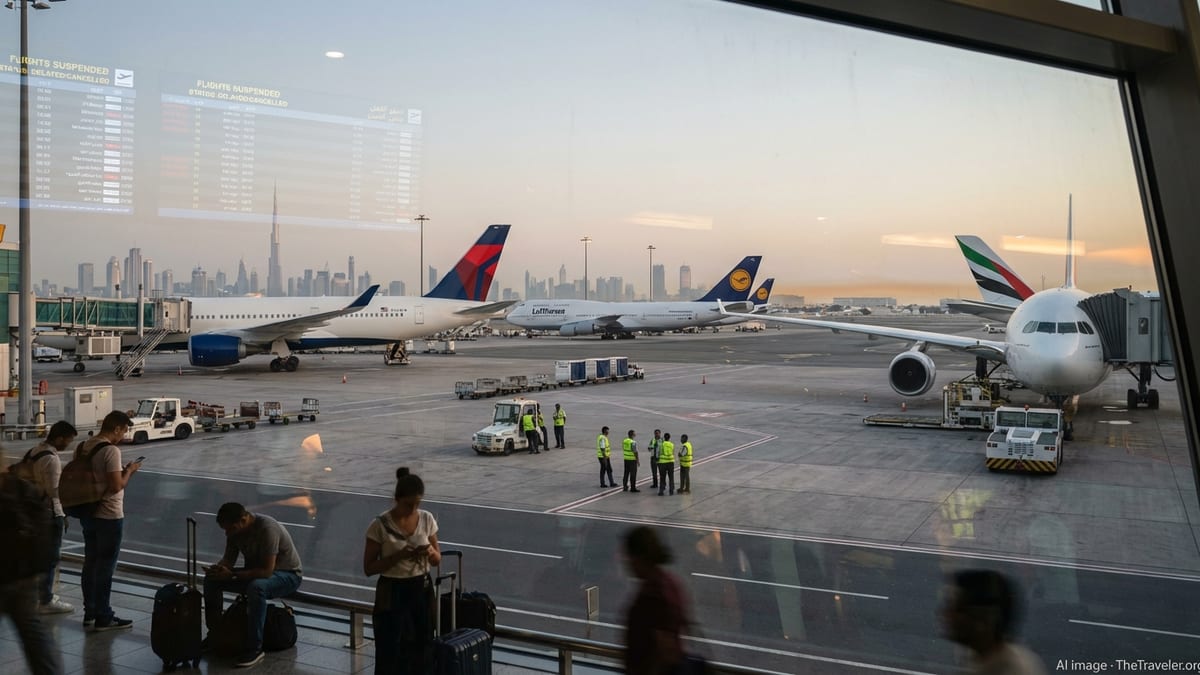
Slow return of service at key Middle East hubs
Published coverage indicates that traffic through major Gulf and Levant hubs is beginning to pick up after widespread airspace closures in late February and March. Gradual reopenings have allowed a limited number of departures from airports such as Dubai, Abu Dhabi, Doha and Tel Aviv, restoring some of the vital links between Europe, Asia and Africa that were abruptly cut.
Industry advisories describe a patchwork recovery. Some airports are operating only partial schedules or a mix of regular and special services, while others remain constrained by security restrictions and infrastructure damage. Publicly available information shows that selected routes into Dubai and Abu Dhabi have resumed, but many long haul connections are running at reduced frequency compared with pre conflict timetables.
The International Air Transport Association has highlighted the Middle East’s outsized role in global connectivity, noting that Gulf hubs previously handled a significant share of intercontinental transfer traffic. Analysts say that even a modest loss of capacity at these airports reverberates worldwide, and the current situation, with only a portion of flights back in the air, continues to reshape long haul travel flows.
Travelers transiting the region are encountering longer journey times and last minute schedule changes. With airlines still navigating evolving overflight restrictions and slot shortages at recovering hubs, many passengers are being rebooked via unfamiliar airports or forced into overnight layovers that were not part of their original plans.
European and Asian carriers extend suspensions
While Middle Eastern airlines have been among the first to restore services, many European and Asian carriers remain cautious. A recent factbox compiled in financial media reports that Lufthansa, SWISS and ITA Airways will keep flights to Dubai suspended until mid September, even as they prepare a phased resumption to other cities such as Tel Aviv in the coming months.
Dutch carrier KLM has also pushed back its return to several Middle East destinations. Company statements cited in business coverage show that flights to Dubai will remain suspended until at least early August, with broader Middle East cancellations extended through mid July. Other European airlines, including some low cost groups, are maintaining diversions that steer clear of Iranian, Iraqi and Israeli airspace, adding both distance and time to Europe Asia journeys.
Beyond Europe, carriers in Asia have made similarly conservative choices. Travel rights organizations tracking the crisis report that Oman Air, Malaysia Airlines and others have either suspended or pared back flights to regional hubs such as Doha, Jeddah and Madinah for extended periods. Singapore based airlines have cut select services that would normally route through or near the conflict zone, instead adding capacity on alternative city pairs to capture displaced demand.
These decisions reflect a combination of security assessments, regulatory guidance and commercial considerations. Longer routings increase fuel burn and crew costs, and demand patterns remain volatile as both leisure and corporate travelers weigh the risks of transiting a region still affected by sporadic military activity.
Middle Eastern carriers ramp up, but capacity gaps remain
According to recent industry analysis, Gulf based airlines have been among the quickest to ramp operations as airspace has partially reopened. Reports on airline schedules indicate that major carriers such as Emirates, Etihad and Qatar Airways have restored hundreds of daily departures compared with the nadir of the crisis, when many fleets were temporarily grounded.
Nevertheless, overall capacity through the region is still below pre conflict expectations for the 2026 summer season. A briefing on the economic impact of the Iran war notes that several key airports which collectively handled a sizable share of global traffic have had to reduce operations. Some services within the Gulf and to neighboring states remain suspended, while frequencies to secondary cities in Europe, Africa and South Asia have not yet returned to earlier planning levels.
Low cost and regional airlines are facing similar constraints. Recent coverage of Turkish and regional carriers points to extended cancellations on routes connecting cities in Iran, Iraq, Kuwait, Bahrain and the United Arab Emirates, with some suspensions posted through at least early June. In parallel, certain budget airlines have resumed select flights to Tel Aviv and other destinations but continue to keep links to Dubai, Abu Dhabi and Amman on hold from several European bases until later in the year.
The uneven recovery is creating pockets of acute scarcity on popular corridors. Analysts cited in aviation outlook reports say that seat shortages through Middle East hubs are pushing fares on many Europe Asia itineraries well above typical seasonal levels, particularly in premium cabins and on routes where alternative one stop options are limited.
Global knock on effects for fares and routes
The disruption has had far reaching consequences beyond the immediate conflict zone. Data compiled by independent aviation trackers and consultancy studies suggest that tens of thousands of flights touching the Middle East have been cancelled or rerouted since late February, with ripple effects felt across Europe, North America and the Asia Pacific region.
Airlines that once relied heavily on ultra efficient great circle routes via the Gulf now face longer stage lengths and higher fuel bills. Public economic assessments of the Iran war’s aviation impact describe a significant reduction in available airspace on key east west corridors, forcing carriers to arc south over parts of Africa or north over Central Asia to avoid restricted zones. These detours can add several hours of flying time on some city pairs.
For passengers, the result is a combination of longer itineraries and higher prices. Reports from airfare monitoring groups indicate that average fares on some Europe Asia routes have risen noticeably since the conflict began, as capacity constraints coincide with robust demand for international travel. Travelers originating in North America and connecting via Europe are also affected, as booking systems reoptimize to favor routings that steer clear of the most volatile portions of Middle Eastern airspace.
Air cargo operations are under pressure as well. Freight analysts note that shippers are contending with scarcer belly hold capacity on passenger flights and longer transit times on redirected freighter routes, adding to costs in sectors that depend on just in time deliveries between manufacturing centers in Asia and consumer markets in Europe and the Americas.
What travelers can expect in the months ahead
With no swift resolution to the conflict in sight, travel experts and risk consultancies anticipate that disruption across Middle East airspace will persist through at least the peak northern summer season. Several airlines have already removed a portion of their planned Middle East flying from schedules that run from June through August, reallocating aircraft to alternative long haul markets where routing is more predictable.
Security advisories current through late March and April recommend that travelers booking trips involving the region remain prepared for short notice schedule changes. The guidance highlights the possibility of renewed airspace closures, rolling delays as airports catch up with backlogs, and last minute aircraft and crew repositioning that can cascade through network operations.
Travelers are being encouraged by consumer groups and travel industry bodies to monitor airline notifications closely, leave extra connection time when itineraries still pass through Gulf or Levant hubs, and remain flexible on dates or routings if conditions change. Industry observers say that while the gradual resumption of some flights is a positive sign, the pattern of staggered restarts and extended suspensions underscores that the Middle East remains a challenging environment for aviation.
For now, the picture is one of partial recovery layered over continuing uncertainty. Airlines are edging back into key markets, but the region’s role as a seamless global crossroads has been significantly dented, and both carriers and passengers may need to adapt to a new, more fragmented map of east west air travel for some time to come.