


The University of Helsinki regularly appears in major global rankings and attracts thousands of international applicants every year. Before you hit submit on your application, it is worth understanding not just the admission requirements, but also how tuition fees work, how difficult housing can be, and what everyday life in Finland’s capital is really like. This guide walks you through the essentials so you can decide whether the University of Helsinki is the right place for you and plan your move with realistic expectations.
Get the latest updates straight to your inbox!
Understanding the University and Its Study Options
The University of Helsinki is Finland’s oldest and largest university, with a strong research profile and consistently solid positions in international rankings. In recent years it has typically placed just outside the global top 100 in systems such as QS, Times Higher Education and the Academic Ranking of World Universities, and it ranks particularly well in sustainability-focused rankings. In practical terms, this means you will be studying in a well-resourced public institution with active research groups in fields from climate science to linguistics.
For prospective international bachelor’s students, it is crucial to know that the University of Helsinki currently offers only a small number of full bachelor’s programmes taught entirely in English. At the time of writing, the main options are the Bachelor’s Programme in Science and the Bachelor’s Programme in Liberal Arts and Sciences. Many other bachelor’s programmes are taught in Finnish or Swedish, so if you do not speak either local language you will likely be looking at those two English options or planning to enter at master’s level instead.
International master’s programmes, on the other hand, are offered in a wide range of disciplines, from Data Science and Environmental Change to European and Nordic Studies. These programmes are usually two years long and taught in English, with intakes every autumn. A typical path for an international student is to complete a bachelor’s degree elsewhere and come to Helsinki for a two-year master’s, sometimes continuing into a doctorate.
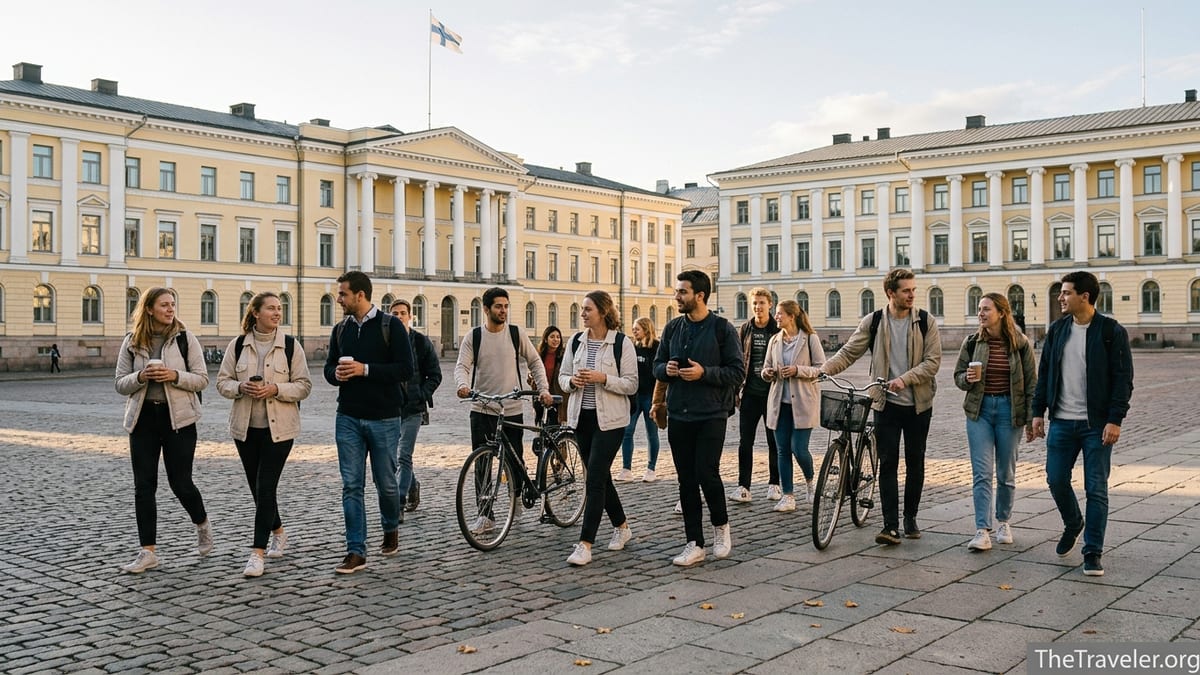
The university is spread across several campuses, each with a distinct feel. The City Centre campus houses humanities, law and social sciences in 19th‑century buildings around Senate Square, while Kumpula is home to science and mathematics on a modern hilltop campus. Viikki, to the northeast, focuses on life sciences and agriculture and is surrounded by fields and forest, and Meilahti hosts the medical campus near the main hospitals. When you choose a programme, you are also choosing which part of the city you are likely to spend most of your time in.
Admissions, Competition and Deadlines
The admissions process for international students is highly structured and follows national application periods coordinated through the Finnish Studyinfo system. For most English-taught bachelor’s and master’s programmes, the main application window for autumn entry falls in January, with results typically released in late spring or early summer. For example, recent bachelor’s applicants to the Science programme applied in early January and received their admission decisions around late March and early April, giving them several months to arrange housing and residence permits.
Competition can be intense, especially for the small number of English-taught bachelor’s places. It is not unusual for a programme to receive many times more applications than available spots. While exact acceptance rates vary from year to year and by programme, you should assume that simply meeting the minimum requirements may not be enough. Strong grades in relevant subjects, a well-prepared motivation letter where required, and any evidence of academic curiosity, such as participation in science competitions or relevant online courses, can help your application stand out.
Most programmes assess applicants based on academic records and, depending on the programme, additional materials or tests. The Bachelor’s Programme in Science, for instance, may consider standardized test scores like SAT or programme-specific entrance exams for some applicant groups, while many master’s programmes focus on the match between your previous studies and the programme content, plus your motivation letter and CV. Always read the detailed admission criteria for your target programme and check how your own background compares to recent admitted students.
Deadlines in Finland are strictly enforced. If documents such as degree certificates or language test results arrive late, your application can be rejected even if you would otherwise be qualified. For example, there are set deadlines in late May for submitting electronically verified or officially verified bachelor’s degree documents for students finishing their degree during the application period. Plan to have your language test done and your previous institution ready to send transcripts months before the application window, not after you have applied.
Tuition Fees, Scholarships and Realistic Budgeting
Finland is often described as having free education, but this no longer applies to most non‑EU and non‑EEA students at the University of Helsinki. If you are from outside the EU or EEA and are starting an English-taught bachelor’s or master’s programme, you will almost certainly pay tuition fees. Annual fees vary by programme but often fall in the range of several thousand to a five‑figure sum in euros per academic year. EU and EEA citizens, as well as students studying in Finnish or Swedish, generally do not pay tuition fees.
The university operates scholarship schemes aimed primarily at high‑achieving non‑EU/EEA master’s students. These range from partial fee waivers to packages that may also include a small living allowance. Scholarships are competitive and limited; many strong applicants will not receive one, and very few students have all expenses covered. Because of this, you should not plan your budget on the assumption that you will definitely receive a scholarship, but instead treat any award as a bonus.
Living costs in Helsinki are high by European standards. A typical student room via the main student housing foundation might cost around 350 to 550 euros per month, depending on location, room type and whether utilities are included. Private market studios in central districts can easily reach 900 to 1,200 euros or more. Food is also relatively expensive, although student-priced lunches in university cafeterias offer good value, usually consisting of a hot meal, salad, bread and drink for a modest subsidised price that many students rely on several times per week.
When building a realistic monthly budget, many international students aim for a minimum of around 800 to 1,000 euros per month if they have inexpensive student housing, or more if they need to rent on the private market. This has to cover rent, food, public transport, phone and internet, course materials, occasional clothing suitable for the Finnish climate and some social life. The Finnish Immigration Service also requires proof of sufficient funds for residence permits, so your budget is not just a theoretical exercise; it is a formal requirement for being allowed to stay.
Housing Challenges: HOAS, Unihome and the Private Market
Housing is often the most stressful part of preparing to study at the University of Helsinki. The city experiences chronic housing pressure, and the university itself does not own enough dormitories to guarantee rooms for all students. Instead, most students rely on the Foundation for Student Housing in the Helsinki Region, commonly known as HOAS, along with Unihome and the wider private rental market. Understanding how these options work, and their limitations, is essential before you apply.
HOAS is a non-profit provider offering shared apartments, studios and family flats across Helsinki, Espoo and Vantaa. Incoming international degree students can apply for HOAS housing once they have a confirmation of study place, usually up to four months before they need the apartment. Rents for HOAS rooms are often significantly lower than private market prices, but apartments are in high demand and there is no guarantee that you will receive an offer in time for the start of your studies. Many students report applying in early May and still not knowing by mid‑summer whether they will have a room for August.
Unihome is another key player, operating furnished student apartments and shared units, particularly suitable for exchange students, visiting researchers and some new degree students. The University of Helsinki has negotiated a limited quota of furnished rooms and studios from HOAS and Unihome specifically for new international bachelor’s and master’s students who are moving to Finland. However, the number of these quota places is small compared with the total number of new students, and application deadlines can be as early as late May for an autumn start. If you are admitted in a later application round or decide late, you may miss this window entirely.
Because student housing cannot be guaranteed, many newcomers end up exploring the private rental market in districts further from the centre or in nearby cities such as Vantaa. While you can sometimes find a room in a shared apartment for perhaps 500 to 700 euros per month in outlying areas, competition is strong and scams exist. It is common advice never to transfer large deposits to private landlords before seeing the apartment, and to be cautious of offers that seem much cheaper than average. Some students bridge the gap by subletting rooms from others who are temporarily away, or by staying in hostels or short-term rentals for a few weeks on arrival while they continue the housing search.
Residence Permits, Visas and Legal Requirements
If you are a citizen of an EU or EEA country, you do not need a residence permit to study in Finland, but you do need to register your right of residence after arrival. For everyone else, a residence permit for studies is mandatory if your programme lasts more than three months. The permit is issued by the Finnish Immigration Service and is tied to your admission to a degree or exchange programme at a recognised institution like the University of Helsinki.
You can only apply for a residence permit once you have an official letter of admission. The application is typically submitted online through the Enter Finland service, followed by a visit to a Finnish embassy or consulate in your country (or a nearby country) to prove your identity and show original documents. The authorities advise students to apply as soon as they receive their acceptance letter, because processing times can stretch to several months during peak periods. There are frequent reports from students who applied in February or March and were still waiting for a decision well into summer.
Among the key requirements for a student residence permit are a valid passport, proof of admission, health insurance that meets Finnish standards, and evidence of sufficient financial resources. For degree students this usually means showing that you have enough money to cover at least a year of living expenses, often several thousand euros, plus tuition fees if you are liable to pay them. The funds can be in a bank account in your own name or sometimes in the form of a reliable scholarship. You will also need to provide documentation about your accommodation, whether that is a HOAS contract, Unihome reservation or private lease.
Once in Finland, you will receive a residence permit card and a Finnish personal identity code, both of which are needed for everyday tasks such as signing a lease, opening a bank account or getting a student travel card. Your residence permit is usually granted for the standard length of your studies plus a small buffer. To continue beyond that, for instance into a master’s programme or job search period after graduation, you must apply for an extension in good time. Keeping your student status and making sufficient academic progress are part of the conditions for keeping your permit.
Language, Teaching Culture and Academic Expectations
Although your programme may be taught in English, you will be living in a bilingual city where Finnish and Swedish are the official languages. Everyday services such as supermarkets, public transport announcements and local news operate primarily in Finnish, with Swedish and English frequently visible but less dominant. The University of Helsinki encourages international students to learn at least basic Finnish, offering language courses that can sometimes be included in your degree, and language support through its language centre.
The academic culture can feel different if you are used to highly structured systems. Finnish universities place a lot of responsibility on students to manage their own time and course choices. Courses can be intensive and short, meeting several times per week over a few weeks, or spread across a whole term with lectures, readings and assignments. Assessment is often a mix of written exams, essays, project work and seminar participation rather than frequent small tests. Attendance policies vary by course; some require you to attend a certain percentage of sessions, while others focus solely on the final exam or project.
Lecturer–student relationships are generally informal. You will likely call professors by their first names, and it is normal to email them directly with questions about course content or research ideas. However, the relaxed surface appearance does not mean low standards. Assignments are expected to be completed independently and with academic integrity, and plagiarism is taken seriously. You should be comfortable working with research articles, referencing properly and participating in group projects where everyone contributes.
Many programmes at the University of Helsinki integrate research elements early on. In the Bachelor’s Programme in Science, for example, students might join lab groups, take part in coding projects or work with real datasets by their second year. Master’s students are often expected to write substantial theses that may involve months of independent research, data collection and analysis. Before applying, reflect honestly on whether you enjoy this style of self-directed study and whether you have the motivation to manage your workload without constant external pressure.
Everyday Student Life in Helsinki
Helsinki combines the feel of a compact capital with easy access to nature. From the City Centre campus you can walk to the waterfront in minutes, and from Kumpula or Viikki you are close to forests, jogging paths and winter cross-country skiing tracks. Many students cycle between campus and home from spring to autumn, taking advantage of an expanding network of bike lanes. Winters are dark and cold, with short daylight hours from November to January, but the city is well adapted, and you will quickly get used to wearing layered clothing and good shoes.
The Student Union of the University of Helsinki, often abbreviated as HYY, plays a central role in student life. All degree students are required to join and pay a membership fee each academic year, which in recent years has been in the tens of euros range and may fluctuate as budgets change. Membership gives you access to subsidised student healthcare, discounts on local public transport, and the right to participate in student decision-making. HYY also owns or operates student facilities, including social spaces and some housing, and supports more than 200 subject-specific and hobby-based student associations.
Student associations are where many international students find friends. There are clubs focused on everything from debating and board games to climbing, choir singing and national groups like the Erasmus Student Network. Events often include low-cost dinners, excursions to nearby national parks, and traditional Finnish celebrations such as Vappu in spring, when the city fills with students in coloured overalls and white graduation caps. Joining at least one or two associations early on is a good way to build a social network beyond your classroom.
On the practical side, you will rely heavily on a few key services. The national student healthcare system provides basic medical and mental health services, usually with small co-payments per visit. Public transport is handled by the Helsinki Region Transport authority with integrated tickets for buses, trams, metro and commuter trains, and full-time students under a certain age can access discounted season tickets after registering their student status. Everyday errands like grocery shopping are done at chains such as K‑Market, S‑Market and Lidl, with prices somewhat higher than in many other European countries, but with good-quality fresh and local food.
The Takeaway
Before you apply to the University of Helsinki, it is worth looking beyond glossy photos of snowy campuses and Northern Lights. You are considering enrolling in a demanding research university in a city with high living costs and a tight housing market, and you will likely be navigating a new language and very different seasonal rhythms. At the same time, you will gain access to respected academic programmes, a safe and orderly society, and a student culture that values independence, equality and close contact with nature.
To set yourself up for success, start early. Research programmes carefully to ensure that the content, language of instruction and campus location match your goals. Check admission criteria and deadlines months in advance, take required language tests in good time, and gather the financial documentation you will need for residence permits. Apply for student housing as soon as you are allowed, but prepare a backup plan in case you end up on the private market. Think realistically about your budget, your tolerance for cold winters, and your readiness to study in a system that expects a lot of independent work.
If those considerations still excite rather than scare you, the University of Helsinki can be a rewarding place to study. The combination of high academic standards, a strong student community and a uniquely Nordic urban environment makes it one of Northern Europe’s most appealing study destinations. Knowing the practical realities in advance allows you to approach the application process with clear eyes and a plan, rather than surprises and last-minute stress.
FAQ
Q1. Is the University of Helsinki free for international students?
For most non‑EU and non‑EEA students in English‑taught bachelor’s and master’s programmes, there are tuition fees. EU and EEA citizens and those studying in Finnish or Swedish usually do not pay tuition, but still cover their own living costs.
Q2. How hard is it to get into the University of Helsinki as an international student?
Competition is strong, especially for the few English‑taught bachelor’s programmes. Many programmes receive several times more applications than available places, so meeting minimum criteria is not enough; strong grades and a convincing application are important.
Q3. When should I apply for student housing like HOAS or Unihome?
You should apply as soon as you receive your official admission and the housing applications open, usually up to about four months before you need the apartment. Even then, housing is not guaranteed, so have backup options.
Q4. How much money do I need per month to live in Helsinki as a student?
A realistic minimum budget for a student with reasonably priced student housing is often around 800 to 1,000 euros per month, covering rent, food, transport, phone and basic personal expenses. If you rent on the private market, you may need more.
Q5. Do I need to learn Finnish if my programme is in English?
You can complete an English‑taught degree without speaking Finnish, but learning basic Finnish will make everyday life, part‑time work and integration much easier. The university offers Finnish language courses for international students.
Q6. How long does it take to get a Finnish residence permit for studies?
Processing times vary, but during busy periods it can take several months from submitting your application to receiving a decision. Authorities recommend applying immediately after admission to avoid delays that might affect your ability to start your studies on time.
Q7. Can I work while studying at the University of Helsinki?
Non‑EU/EEA students with a residence permit for studies are usually allowed to work limited hours during term time and full‑time during holidays, as long as work does not interfere with academic progress. EU/EEA students can generally work freely but must balance jobs with their studies.
Q8. What is teaching like compared with other countries?
Teaching is relatively informal, with first‑name terms between students and lecturers, but academically demanding. There is a strong emphasis on independent study, critical thinking and research projects rather than constant small tests or highly supervised coursework.
Q9. What happens if I cannot find student housing before the semester starts?
If you do not secure student housing in time, you may need to book a hostel, hotel or short‑term rental for your first weeks while continuing to apply for HOAS, Unihome or private apartments. It is important to have a financial cushion for this scenario.
Q10. Is Helsinki a safe city for international students?
Helsinki is generally considered a very safe city with low crime rates, efficient public services and reliable public transport. Normal urban precautions still apply, but most students feel comfortable moving around the city at different times of day and night.