


More news on this day
Rail connectivity between Uttar Pradesh and Madhya Pradesh is entering a new phase, as Indian Railways introduces direct long distance services through the two heartland states and advances large scale capacity upgrades across key routes.
Get the latest news straight to your inbox!
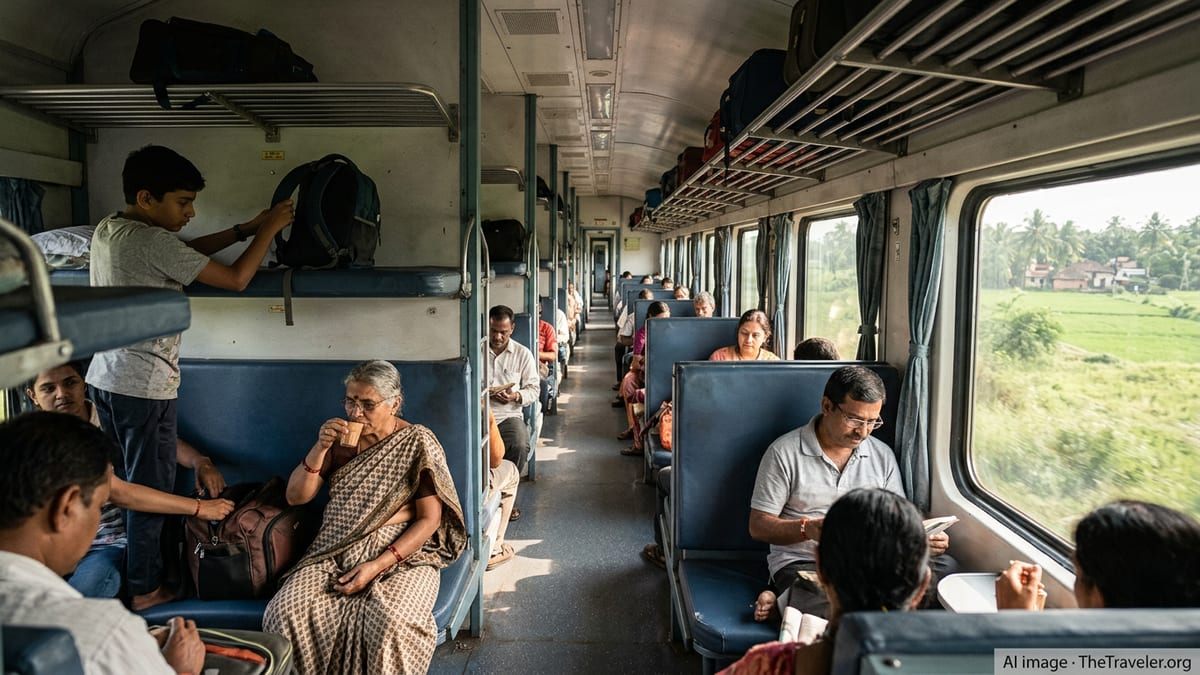
New Amrit Bharat Services Tie UP, MP and Western Corridors Together
Recent timetable changes are reshaping how passengers move between Uttar Pradesh and Madhya Pradesh, with new Amrit Bharat Express services providing direct through connections on some of the busiest east west and north south corridors. Publicly available information on the new trains indicates that two Amrit Bharat Express services launched in late April now connect Ayodhya and Banaras in Uttar Pradesh with Mumbai and Pune in Maharashtra via important junctions in Madhya Pradesh such as Jabalpur, Itarsi and Bhusaval.
The Ayodhya Cantt–Lokmanya Tilak Terminus Amrit Bharat Express and the Banaras–Hadapsar Amrit Bharat Express are positioned as affordable, long distance non air conditioned superfast services. Route details published by national media and industry outlets show that both trains cross central India, running through Satna and Jabalpur in Madhya Pradesh before heading further west, effectively creating new direct options for passengers moving between eastern Uttar Pradesh, the central Indian plateau and the Mumbai region.
These services add to an expanding network of Amrit Bharat trains that link Uttar Pradesh with other regions of the country. Government press releases describing the category present it as a mass market counterpart to the premium Vande Bharat Express, intended to raise standards on conventional overnight trains while keeping fares accessible for middle and lower income travellers.
Rail commentators note that by routing these long distance services through Madhya Pradesh rather than along purely coastal or northern alignments, the railway is deliberately strengthening cross country connectivity. For smaller cities along the way, such as Satna and Jabalpur, more direct trains to Uttar Pradesh’s religious hubs and Maharashtra’s economic centres are expected to support tourism, seasonal migration and agricultural trade.
Direct MP–UP Links Expand From Bhopal to the Eastern Coal Belt
Alongside the new cross country services, direct connectivity between Madhya Pradesh and eastern Uttar Pradesh has been steadily increasing. A press note issued in February highlighted the introduction of new express services from Bhopal toward Uttar Pradesh and Jharkhand, including trains running to Chopan via the coal and mineral belt. Rail planners present these moves as part of a wider effort to shorten journeys between central India and the eastern heartland without forcing passengers and freight to route via Delhi or other distant hubs.
The Bhopal–Chopan service, for example, provides a direct rail link from the Madhya Pradesh capital toward Mirzapur, Sonbhadra and adjoining districts of Uttar Pradesh that host power plants and mining operations. Public data on the route suggests that this connectivity is significant for bulk commodities as well as for workers who previously relied on slower, multi change itineraries to shuttle between mines, factories and home districts.
Another approved Amrit Bharat service focused on Uttar Pradesh, detailed in recent domestic coverage, is structured to feed into this growing grid by adding more medium distance capacity within the state and toward bordering regions. When viewed together with the Bhopal corridor trains, analysts describe these developments as early steps in a more mesh like rail network for the Hindi heartland, replacing older radial patterns that concentrated traffic on a handful of trunk routes.
For passengers, the immediate impact is more origin destination pairs that can be covered by a single train for most or all of the journey. For the railway, the benefit lies in dispersing demand away from saturated junctions while still keeping long haul paths reasonably fast through upgraded track sections in both Uttar Pradesh and Madhya Pradesh.
Doubling, Electrification and Speed Upgrades Lift Corridor Capacity
New trains alone cannot transform connectivity unless the underlying infrastructure can support higher throughput. Policy documents and official presentations on rail development in Madhya Pradesh describe a broad slate of doubling and electrification works designed to raise capacity and reduce congestion on lines that also carry many services to and from Uttar Pradesh.
Material released by the central government shows that Madhya Pradesh has achieved complete electrification of its railway network, backed by thousands of kilometres of sanctioned doubling projects. Specific schemes such as the Katni–Singrauli and Satna–Rewa doubling projects, the Bina–Katni third line and the Indore–Budni new line are repeatedly cited as critical for improving punctuality and creating room for more freight and passenger trains across central India.
In Uttar Pradesh, recent project lists and annual reports point to completed or ongoing doubling on corridors such as Jaunpur–Ayodhya–Barabanki and sections around Lucknow and Varanasi, along with 100 percent electrification milestones. These improvements directly support newer long distance services because they remove bottlenecks on approach lines to major stations and allow faster acceleration for modern rolling stock.
Sector analysts note that the combined effect of these works is to push up average speeds, reduce conflicts between freight and passenger paths, and make it easier to introduce new timetable slots. For travellers, this is gradually translating into shorter end to end journey times between city pairs in Uttar Pradesh and Madhya Pradesh, even when headline maximum speeds remain unchanged.
Vande Bharat and Regional Services Anchor High Frequency Links
While the Amrit Bharat trains expand affordable long haul travel, the semi high speed Vande Bharat Express network is also playing a role in tying Uttar Pradesh and Madhya Pradesh more closely together. One example is the Hazrat Nizamuddin–Khajuraho Vande Bharat Express, which links the national capital with the heritage town of Khajuraho in Madhya Pradesh via sections in Uttar Pradesh. Public timetable data shows that the train’s schedule is designed for tourism oriented weekend trips and short business visits, with higher speeds helping it compete with road travel.
Press material and background notes on the Vande Bharat program emphasise its role in bringing faster, more predictable travel times to key intercity corridors. Although many of the trains primarily serve routes within Uttar Pradesh or between the state and Delhi, their integration with conventional expresses enables passengers from cities in Madhya Pradesh to connect into a faster spine of services through junctions such as Jhansi, Prayagraj and Varanasi.
At the same time, Madhya Pradesh now hosts multiple pairs of Vande Bharat and Amrit Bharat services that knit together regional centres like Bhopal, Jabalpur and Indore. Published summaries of current operations for the state refer to five pairs of Vande Bharat and four pairs of Amrit Bharat services, with more trains proposed. As these networks mature, travel patterns are expected to shift away from overnight general coaches on slower expresses toward a mix of daytime semi high speed runs and upgraded conventional trains.
For Uttar Pradesh, which already has several prominent Vande Bharat routes serving cities such as Varanasi, Ayodhya and Agra, new cross state and cross country trains offer the prospect of more predictable arrivals and departures when connecting to central Indian destinations. Travel industry observers argue that this is particularly important for religious and heritage tourism, where group tours and packaged itineraries depend on reliable rail timings.
Tourism, Trade and Regional Growth Poised to Benefit
The enhanced direct connectivity between Uttar Pradesh and Madhya Pradesh is widely seen as having implications beyond transport statistics. Uttar Pradesh hosts some of the country’s most visited religious destinations, including Ayodhya and Varanasi, while Madhya Pradesh is home to world heritage sites like Khajuraho and important wildlife reserves. Easier rail access between these clusters is expected to support multi destination itineraries that combine temple visits, heritage walks and nature tourism across state borders.
On the trade side, the routes taken by the new Amrit Bharat and express services pass through zones that produce agricultural commodities, minerals and manufactured goods. More frequent and better timed passenger services often lead to pressure for parallel freight capacity enhancements, and publicly available planning documents already highlight the importance of coal, cement and container traffic along many of the same corridors that link Uttar Pradesh and Madhya Pradesh.
Urban planners and economists monitoring the rail build out argue that these investments in track doubling, electrification and new services can also support secondary cities that lie off the traditional Delhi focused axis. With more direct trains to both Uttar Pradesh and Maharashtra, cities like Jabalpur, Satna and Itarsi are positioned as interchange points in their own right, potentially attracting logistics facilities, back office operations and tourism services.
Taken together, the new direct routes, higher capacity corridors and modern train categories signal a structural shift in how the rail system connects the two heartland states. As additional Amrit Bharat and Vande Bharat services are rolled out in line with current plans, observers expect rail to consolidate its role as the backbone of intercity travel between Uttar Pradesh, Madhya Pradesh and the wider central Indian region.