


More news on this day
Aeroméxico is set to launch Mexico’s first nonstop flights from Mexico City to Montego Bay, Jamaica, and Nassau in the Bahamas in March 2027, while Viva Aerobus and Volaris add short domestic links to Cozumel, Acapulco and Puerto Escondido, giving travelers more options to pair Mexican city breaks with island and resort stays on single- or two-stop itineraries.
Get the latest news straight to your inbox!
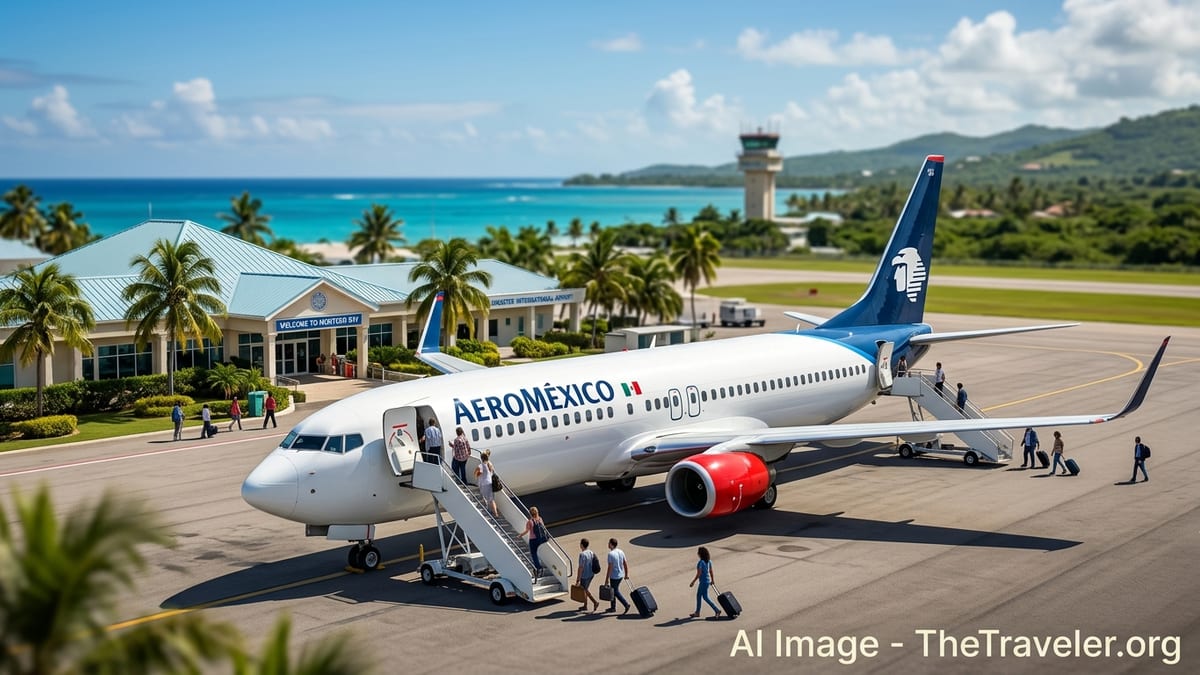
New Caribbean routes from Mexico City in March 2027
According to current schedule filings and airport information, Aeroméxico plans to begin nonstop service from Mexico City International Airport to Montego Bay’s Sangster International Airport on 18 March 2027 and to Nassau on 19 March 2027. These services are listed as the first regularly scheduled nonstops between Mexico and each island, where passengers have typically routed via U.S. hubs or Panama.
Recent timetables show Mexico City–Montego Bay operating three times per week, currently filed on Thursdays, Saturdays and Sundays, while Mexico City–Nassau is listed three times weekly on Fridays, Saturdays and Sundays. The flights are scheduled with Boeing 737 aircraft and are shown as seasonal, concentrated in the northern summer period, although exact operating dates and days may still be adjusted before launch.
Information published by Mexico City International Airport and destination listings for Aeroméxico confirm Montego Bay and Nassau as new additions to the carrier’s hub network from March 2027. Travelers should be aware that, as of mid-November 2026, these flights remain future services and do not yet appear in historical flight data because operations have not started.
From one-off routes to a broader Caribbean build-out
Aeroméxico’s investor materials for 2025 and 2026 outline a strategy of expanding medium‑haul leisure flying from Mexico City, with a particular focus on the Caribbean. The documents and network maps highlight Montego Bay and Nassau alongside existing Caribbean points, indicating that the airline is adding these routes as part of a broader regional push rather than isolated experiments.
Capacity figures in recent filings point to a significant increase in seats to Caribbean destinations over the 2025–2026 period, alongside new or resumed flights to places such as Punta Cana and San Juan. The joint venture with Delta Air Lines on transborder services gives additional feed from U.S. gateways into Aeroméxico’s Mexico City hub, which could help support Caribbean sectors by channeling U.S. passengers through Mexico rather than U.S. coastal hubs.
For travelers, the practical effect is a growing set of point‑to‑point options that combine Mexico City with island stays. Someone flying into Mexico City for business or a city break will, once these routes start, be able to continue to Jamaica or the Bahamas in a single hop, reducing total travel time compared with itineraries that require backtracking through Miami, Houston or Panama City.
Domestic “resort hops” from Puebla and Monterrey
Within Mexico, low‑cost carriers are adding short domestic flights that link inland cities directly to beach resorts, making it easier to tag coastal stays onto visits with family or work trips. Government announcements and airport data show that Volaris plans to start new nonstop services from Puebla International Airport to Acapulco and to Puerto Escondido on 1 December 2026.
The Puebla–Acapulco and Puebla–Puerto Escondido routes are scheduled three times weekly each, providing direct access from central Mexico to two Pacific beach towns that previously required either a long drive or at least one change of plane. Promotional material and official state communications describe flight times of around one hour, underlining their role as short “resort hops” rather than long‑haul journeys.
On the Caribbean side, Viva Aerobus has in recent seasons reintroduced nonstop Monterrey–Cozumel flights, restoring a direct link between northern Mexico’s main industrial hub and one of the country’s key island destinations. Local and municipal reports from Cozumel note the route’s contribution to domestic tourism, although specific 2027 schedules and frequencies should still be checked close to departure, as Mexican low‑cost carriers frequently adjust capacity.
What these changes mean for Mexican and U.S. travelers
For Mexican travelers, the main benefit of the new Mexico City–Montego Bay and Mexico City–Nassau flights will be the ability to reach Jamaica and the Bahamas without a U.S. visa or an extra international connection. Flying via Mexico City also keeps the trip on one airline in many cases, reducing separate-ticket risk and simplifying checked-bag handling, provided that all segments are booked on a single itinerary.
U.S.-based travelers using Mexico City as a hub could find shorter or more convenient routings to the Caribbean islands once these flights begin, especially when combining Delta services into Mexico City with Aeroméxico onward segments. However, the planned three‑times‑weekly frequencies mean that schedules will not work for every trip; travelers may need to adjust arrival or departure days to match the limited operating days.
Domestically, the Volaris routes from Puebla and Viva Aerobus links from Monterrey give travelers alternative ways to reach Mexican beach towns without first flying through Mexico City, Guadalajara or another major hub. This can be particularly relevant for those visiting family in Puebla or Monterrey who want to add a few days on the coast. As with the Caribbean routes, frequencies are modest, so flexibility with dates remains important.
How to plan and what to verify before booking
Because all of these services are either newly launched in 2026 or scheduled to start in 2027, details can still change. Travelers planning trips that rely on the Mexico City–Montego Bay or Mexico City–Nassau flights, or on Volaris and Viva Aerobus domestic links, should confirm current timetables, operating days and aircraft types directly on the airlines’ booking engines or official apps before purchasing separate tickets.
Lead‑in fares have varied across booking channels and, at present, are shown only as sample prices rather than fixed promotional offers, so it is advisable to check live pricing close to the time of travel rather than relying on early estimates. Seasonal adjustments are common on Mexican leisure routes, and some services may operate only during certain months of the year or at reduced frequency outside peak holiday periods.
Those connecting from international flights, particularly on separate tickets, should allow generous buffer times in case of delays or schedule changes. With multiple airlines and new routes involved, planning for longer connection windows and monitoring reservations regularly will help ensure that the added flexibility of these new city‑to‑island and inland‑to‑resort links translates into a smoother trip rather than a missed connection.