


More news on this day
Uruguay’s national team reached Miami late on Sunday after an administrative issue with flight permits in Mexico delayed its trip to the United States less than 24 hours before a World Cup opener against Saudi Arabia.
Get the latest news straight to your inbox!
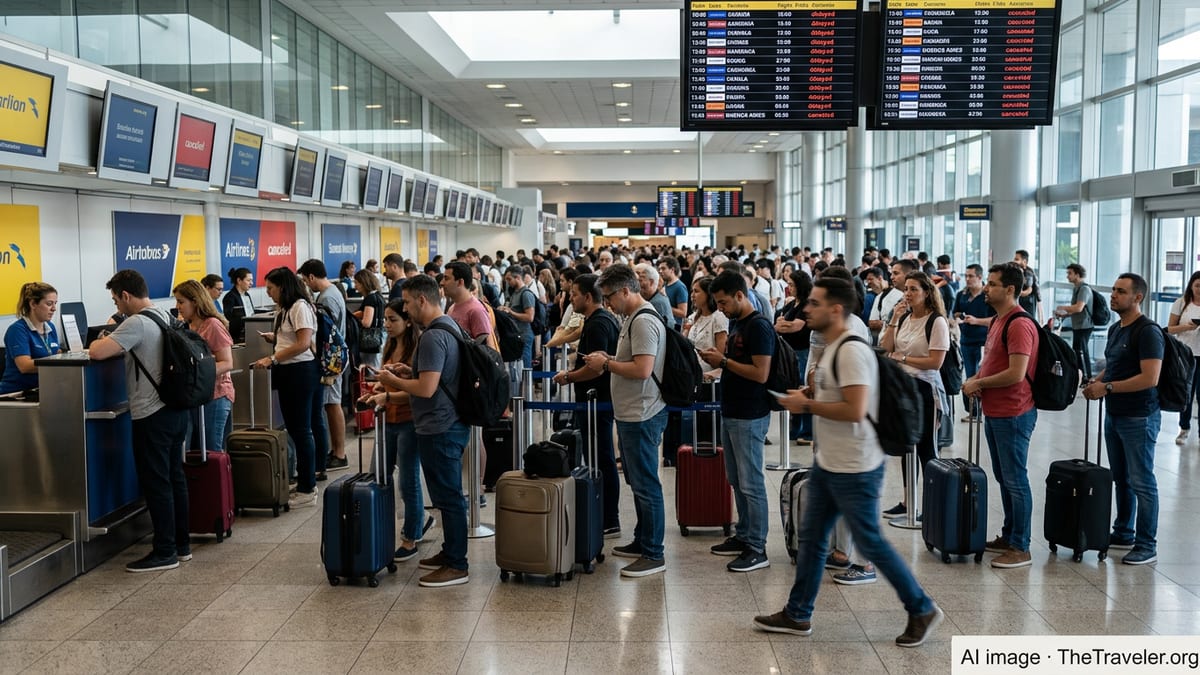
Paperwork snag delays Cancun to Miami flight
Reports indicate that the Uruguayan delegation was scheduled to travel from Cancun to Miami on Sunday, aiming to arrive with a comfortable window before Monday night’s Group H match at Hard Rock Stadium. Instead, the chartered flight remained grounded for hours after permit documentation was found to be incomplete for entry into the United States.
According to publicly available information, the situation was described as an airline permitting or documentation error that prevented the planned aircraft from operating the route as expected. The team and staff were left in limbo at their Mexican base while organizers worked to secure alternative arrangements that met regulatory requirements.
Coverage from multiple outlets notes that a replacement aircraft was eventually organized, allowing the two time world champions to resume their journey. The delay compressed the schedule on a day that had been designed to include travel, light training, and media duties in South Florida ahead of one of the most watched opening fixtures of the tournament.
The incident adds another chapter to a history of travel complications for Uruguay at major events, a recurring subplot that has quickly become part of the broader narrative around the 2026 World Cup’s logistical challenges across multiple host cities.
Late arrival tightens Uruguay’s pre match schedule
Once clearance was obtained and the new flight departed, Uruguay landed in the Miami area on Sunday night, several hours later than initially planned. Published coverage indicates that the team arrived just in time to fulfill stadium media commitments, with players and staff heading straight from the airport environment to pre match obligations.
The delay effectively shortened the recovery and preparation window before facing Saudi Arabia, particularly for players who had trained earlier in the day at the base camp in Mexico. Instead of settling into the team hotel and going through a standard evening routine, the squad navigated a more compressed timeline involving transfers, check in, nutrition, and rest.
Despite the disruption, information from post arrival comments suggests that the coaching staff has been keen to frame the episode as a manageable inconvenience rather than a decisive setback. The focus has remained on maintaining physical freshness and mental clarity for a match that could heavily influence the trajectory of Group H.
From a performance standpoint, sports analysts note that modern elite squads are accustomed to irregular travel schedules and rapid turnarounds. While the delay was unwelcome, Uruguay’s extensive support staff and structured routines are designed to absorb precisely this type of disruption.
FIFA and organizers under scrutiny over logistics
The episode has drawn attention to travel coordination for teams during the expanded World Cup, which spans three host nations and a wide geographic footprint. Publicly available information shows that FIFA acknowledged the delay and described it as an airline permitting issue, noting that organizers worked with airport and operational partners to expedite a solution.
The governing body’s role in overseeing complex tournament logistics has been closely watched, particularly after earlier reports of scheduling and transport challenges affecting other delegations and supporters. The Uruguay case has been cited by commentators as an example of how small administrative oversights can ripple into high profile disruptions in a tournament of this scale.
Travel experts following the event point out that charter operations for large delegations are subject to multiple layers of clearance, from aircraft documentation and crew permissions to arrival slots at busy international gateways like Miami. Any late change or missed step in that process can result in significant delays, even when the physical distance between origin and destination is relatively short.
For visitors heading to Miami for World Cup fixtures, the situation serves as a reminder of the stresses placed on the region’s airports and transport networks during peak tournament periods. Local travel advisories have urged fans to allow extra time for cross border journeys and domestic connections around major matchdays.
Key Group H clash heightens focus on preparation
The delayed arrival comes as Uruguay prepares for a match widely viewed as pivotal in the Group H standings. The team, a traditional force in international football, opens its campaign against a Saudi Arabia side that has grown in confidence through recent tournament experience and regional success.
Analysts note that an early result in Miami could shape the battle for knockout places, with Uruguay, Saudi Arabia, Spain, and Cape Verde all seeking momentum in a tightly balanced group. The Miami fixture is one of the showpiece events of the early group stage, scheduled in prime time and expected to draw a strong crowd at Hard Rock Stadium.
Travel disruptions so close to kickoff inevitably raise questions about whether either side might gain an advantage from steadier preparation. However, recent training reports from Uruguay’s base in Mexico described an intense and focused camp, suggesting that most tactical and physical work had already been completed before the final travel day.
For visiting supporters, the late night scenes of team buses arriving at the hotel have added a sense of drama to an already anticipated contest, underscoring how off field logistics can quickly become part of the World Cup storyline.
Miami readies for influx of Uruguay and Saudi fans
In Miami Gardens and across the wider metropolitan area, preparations for the opener between Uruguay and Saudi Arabia have intensified as traveling fans arrive from Latin America, the Middle East, and beyond. Local coverage highlights heightened activity around the stadium, with security measures, parking controls, and public transport services all adjusted for World Cup volumes.
Hard Rock Stadium is one of the main hubs of the tournament in the United States, hosting multiple group matches and later stage fixtures. The Uruguay Saudi Arabia meeting is among the earliest tests of venue operations, from field conditions and crowd management to traffic flow around the surrounding neighborhoods.
Tourism and hospitality businesses in South Florida have reported strong demand tied to the match, with hotels near Miami Gardens and in popular visitor districts seeing increased bookings from both sets of supporters. Restaurants, bars, and fan zones have positioned the game as a centerpiece of their World Cup programming, particularly given the passionate following that Uruguay carries in the region.
Even with the team’s travel disruption, the broader visitor experience in Miami is expected to remain a highlight of the group stage, combining global football with the city’s established reputation as a major tourism destination. For many fans, the story of Uruguay’s late arrival has only added another talking point to an already eventful start to the 2026 tournament.