


More news on this day
The United States has placed 23 countries on its highest Level 4 “Do Not Travel” advisory list, signaling what publicly available guidance describes as a greater likelihood of life-threatening risks and sharply limited ability for consular assistance in those destinations.
Get the latest news straight to your inbox!
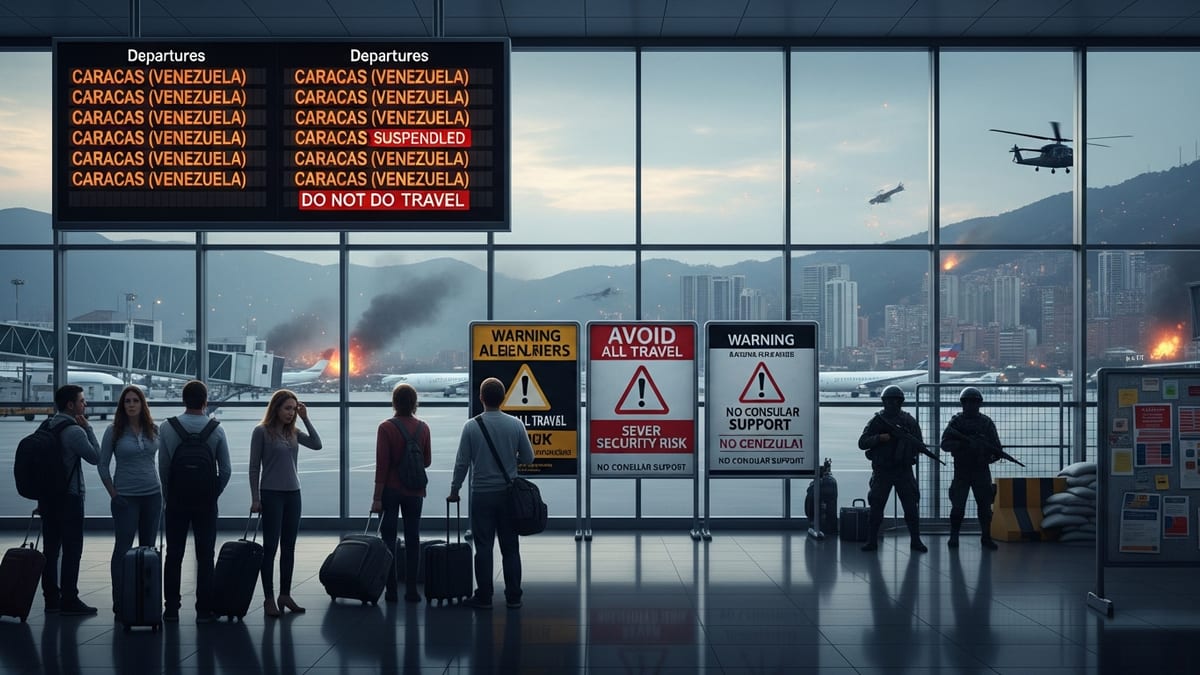
What a Level 4 ‘Do Not Travel’ Advisory Means
According to travel-advisory background material from the U.S. Department of State, Level 4 is the most severe rating in a four-tier system that ranges from “Exercise Normal Precautions” at Level 1 up to “Do Not Travel” at Level 4. The designation is used when security conditions, conflict, or other hazards are considered so serious that people are urged not to visit or to depart if already in the country when it is safe to do so.
Publicly available State Department fact sheets note that Level 4 advisories reflect a greater likelihood of life-threatening risks such as terrorism, armed conflict, kidnapping, severe crime, or breakdowns in public order. In many of these places, guidance states that the U.S. government has very limited or no ability to provide emergency services to its citizens.
The advisory level is not a legal ban on travel, and U.S. citizens with valid documents are not automatically barred from boarding flights solely because a destination carries a Level 4 rating. However, official explanatory material stresses that travel to such countries is strongly discouraged and may affect access to evacuation options, insurance coverage, or company travel policies.
Government publications also emphasize that advisory levels are countrywide assessments. Within some destinations, risk may vary by region, and separate regional notices can supplement the national warning. In several Level 4 countries, conflict or insurgency is concentrated in specific provinces, while other areas face different but still serious threats such as high crime or weak health systems.
How the List Reached 23 Countries
Data aggregators that continuously track the State Department’s public feed show that, as of early November 2026, 23 countries are listed at Level 4 “Do Not Travel.” These independent trackers compile each advisory and its most recent update date into live maps and logs, allowing users to see when a country moves into or out of the highest category.
Recent updates recorded in late October and early November 2026 contributed to the current total, with new or renewed Level 4 advisories linked to factors such as armed conflict, civil unrest, terrorism, and heightened risks of kidnapping or wrongful detention. Countries including Afghanistan, Iran, Iraq, and Myanmar continue to appear on the list, reflecting long-running instability and security concerns documented across multiple advisories.
Other nations are listed due to a combination of sustained violence, fragile governance, and limited consular access. Live travel-advisory trackers show that the number of Level 4 countries has fluctuated in recent years, at times expanding during major crises such as the global pandemic and contracting as conditions improved in some regions. The current tally of 23 places the 2026 landscape toward the higher end of that range, although well below the global Level 4 posture that was in effect at the height of COVID-19.
Because advisories can change at any time, travelers and travel providers are urged by official guidance to consult the State Department’s advisory page directly before booking or departure. The live feed lists the current overall level, the date of the last update, and the key reasons identified for that rating.
Common Risk Factors Behind the Highest Rating
Publicly posted advisory texts for Level 4 countries highlight a recurring set of threats. Many of the affected destinations are confronting active armed conflict, widespread civil unrest, or high levels of violent crime. In some, state institutions and security forces are weakened or fragmented, making it difficult to guarantee basic safety for residents or visitors.
Kidnapping and hostage-taking are frequently cited among the reasons for the highest-level warnings. In parts of the Sahel, the Middle East, and other conflict zones, non-state armed groups, criminal networks, and militias have targeted both locals and foreigners, including aid workers and business travelers. Advisory language often notes that the risk of wrongful detention or arbitrary arrest is elevated in countries where political tensions are high and judicial safeguards are limited.
In several Level 4 destinations, health-system fragility is also a factor. Official materials describe concerns about limited intensive-care capacity, shortages of medicines, or lack of reliable emergency transport, which can magnify the impact of injuries, disease outbreaks, or natural disasters. Where infrastructure has been damaged by war or disasters, access to airports, hospitals, or safe overland routes may be severely constrained.
Another consistent theme in publicly available explanations is the restricted ability of U.S. consular staff to operate in these environments. Embassies and consulates in Level 4 countries may work with reduced personnel, limited movement outside secure zones, or in some cases closure. This greatly diminishes the scope of services that can be provided to citizens in an emergency, including evacuation support, welfare checks, or legal liaison.
Implications for Travelers and the Tourism Industry
The expansion or contraction of the Level 4 list tends to ripple through the travel and insurance sectors. Industry advisories note that many corporate travel policies reference State Department levels when approving trips, and a Level 4 designation commonly triggers automatic suspensions of non-essential business travel to the affected country.
Travel insurance providers also factor government advisories into product terms. Public guidance from insurers indicates that some policies may exclude coverage for travel booked after a destination has been placed under a Level 4 advisory, particularly for security-related claims. Specialized war-risk or high-risk coverage can sometimes be purchased, but is often more expensive and may carry strict conditions.
For leisure travelers, the presence of a destination on the Level 4 list can effectively halt mainstream tourism, as commercial tour operators, cruise lines, and large hotel chains reassess safety obligations and liability exposure. Flights may still operate to some of these countries, especially where they serve diaspora communities or essential trade links, but schedules can be reduced and connections rerouted depending on airline risk assessments.
Travel organizations encourage individuals with essential reasons to be in higher-risk areas, such as humanitarian work or family emergencies, to review security plans carefully and enroll in available alert systems. Official U.S. resources, for example, provide a mechanism for citizens traveling abroad to register their contact details so that they can receive security updates or be reached more easily during a crisis.
Staying Current as Advisories Evolve
Travel-advisory levels are not fixed, and historical records show that countries can move between different levels as elections, peace agreements, ceasefires, or new waves of unrest alter the risk picture. Some destinations have shifted in and out of Level 4 status several times in recent years as security conditions worsened or improved.
Publicly accessible databases that mirror the State Department feed allow users to view not only the current advisory level but also the date of the most recent change. This can help travelers, companies, and universities understand whether a country has been at a high-risk status for an extended period or has only recently been elevated due to a particular incident or trend.
Government guidance stresses that advisory levels are one tool among many for evaluating risk and that individuals should also monitor local news, airline notices, and information from other national foreign ministries when planning trips. Even in countries not listed at Level 4, rapidly changing events can lead to localized disruptions, curfews, or border closures with little advance warning.
For the moment, the identification of 23 countries worldwide as “Do Not Travel” destinations underscores the extent to which conflict, instability, and severe security challenges continue to shape global mobility in late 2026. Travelers and industry stakeholders are being urged by published advisories and analysis to incorporate the evolving list into their risk planning and decision-making.