


More news on this day
The United States has renewed its highest tier “Do Not Travel” advisory for six locations in the Middle East, maintaining Level 4 warnings for Iran, Iraq, Lebanon, Syria, Yemen and Gaza as security alerts across the region highlight ongoing risks for American travelers and airlines in late 2026.
Get the latest news straight to your inbox!
Level 4 Warnings Reaffirm Ongoing Security Risks
Recent updates to the US State Department’s travel advisory system, reflected in public databases monitored by media and risk consultancies, show that Iran, Iraq, Lebanon, Syria, Yemen and Gaza remain designated at Level 4, the most severe “Do Not Travel” category. The renewed guidance indicates that assessments of terrorism, armed conflict, civil unrest and the threat of targeted attacks in these territories have not eased as of November 2026.
According to published coverage drawing on the official advisories, the Level 4 classification urges US citizens to avoid all travel and, for those already in these areas, to depart when conditions allow. The language cited in country notices emphasizes the risk of kidnapping, missile and drone strikes, improvised explosive devices and sudden escalations near borders, airports and government facilities.
The renewed warnings place these six locations in a distinct risk tier compared with many neighboring states, which are generally rated one step lower at Level 3 “Reconsider Travel.” The split underscores that, while the wider region is affected by instability, US government assessments continue to view the security environment in the Level 4 locations as significantly more volatile and difficult for consular support.
Travel-security analysts note that the persistence of Level 4 ratings into late 2026 suggests that improvements, if any, have not yet reached the threshold for a meaningful downgrade. The pattern aligns with similar high-level warnings issued by partners such as Australia and New Zealand for several of the same destinations.
New Regional Alerts Highlight Houthi and Iran-Linked Threats
Alongside country-specific advisories, a series of region-wide security alerts in October and November 2026 has drawn attention to the broader risk picture for Americans in the Middle East. Publicly available notices shared by US diplomatic missions and reproduced in media reports describe an elevated threat of attacks linked to Iranian-backed Houthi forces and other groups aligned with Iran.
Alerts circulated in early November referenced a higher risk of armed attacks targeting US government personnel and facilities in several Gulf and Levant locations. Coverage of these messages indicates that embassies and consulates in countries including Saudi Arabia, the United Arab Emirates, Bahrain, Jordan and Kuwait have urged heightened vigilance, even though those states themselves are not currently in the Level 4 category.
Security notices summarized in open-source reporting reiterate previous warnings that Iran and groups supportive of Iran may target US interests across the region and beyond, potentially including sites associated with the United States such as international hotel chains, foreign schools, transportation hubs and businesses. The alerts stress the possibility of rapid escalation and the knock-on effects for air travel and local infrastructure.
For the six Level 4 locations, the renewed “Do Not Travel” designation sits on top of these broader concerns. In places such as Iraq, Lebanon, Syria and Yemen, the combination of active or latent conflict, the presence of non-state armed groups and limited government control in some areas creates layered risks that are reflected in the continued highest-level warning.
Impact on Air Travel Routes and Transit Through the Region
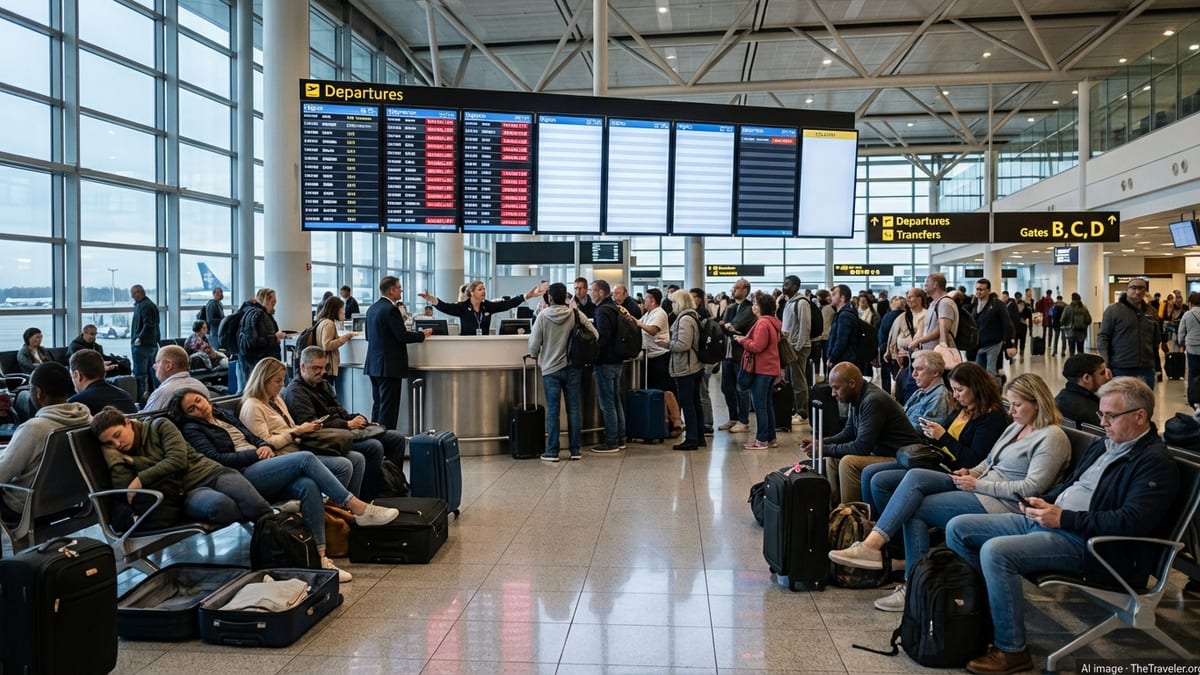
The sustained Level 4 advisories coincide with an unsettled aviation environment across parts of the Middle East. Industry bulletins and travel-industry assessments report that select airlines have extended route suspensions or diversions around high-risk airspace, particularly near conflict zones and along corridors affected by missile and drone activity.
Risk assessments cited by aviation and government sources point to specific concerns about airports and airspace in or near some of the Level 4 territories, where past incidents have included strikes on civilian airports and critical infrastructure. These factors have prompted operators to re‑route flights, adjust schedules or limit overnight crew layovers in certain cities.
At the same time, publicly available information indicates that many major hubs in the Gulf and Eastern Mediterranean remain operational, serving as key transit points for travelers skirting higher‑risk areas. Countries such as the United Arab Emirates, Qatar and Saudi Arabia are generally rated at Level 3 “Reconsider Travel,” which, while serious, is distinct from the outright “Do Not Travel” status of Iran, Iraq, Lebanon, Syria, Yemen and Gaza.
Travel analysts emphasize that the renewed Level 4 alerts have implications even for passengers who do not intend to stop in those territories. Airline booking systems, insurance policies and corporate travel programs often treat Level 4 countries differently, potentially limiting available routings, raising premiums or triggering automatic restrictions on employee travel near affected airspace.
What the Renewed Alerts Mean for US Leisure and Business Travelers
For American leisure travelers, the continued “Do Not Travel” status of six Middle East locations effectively removes these destinations from the mainstream tourism map for the time being. Destination marketing, cruise itineraries and escorted group tours have already shifted away from Level 4 areas, favoring alternative routes through Gulf hubs and neighboring countries with lower advisory levels.
Travel-insurance policies frequently reference US government advisories when defining covered and excluded destinations. Public policy wording available through major insurers shows that some plans automatically exclude coverage for trips to locations under the highest official warning, which can affect reimbursement for cancellations or emergency evacuation related to those countries.
For business travelers and expatriate workers, particularly those in energy, infrastructure and humanitarian sectors, the renewed alerts reinforce existing requirements for formal risk assessments and evacuation planning. Corporate security guidance cited in industry digests recommends maintaining contingency routes that avoid Level 4 territories when possible and ensuring that staff are enrolled in alert systems that mirror State Department messaging.
Companies with operations that must remain in or near high‑risk zones are closely tracking the renewed US advisories alongside similar notices from European and Asia‑Pacific governments. Combined, these advisories feed into corporate thresholds for suspending travel, relocating personnel or activating crisis management protocols.
Planning Travel Around a Fragmented Regional Risk Map
The latest updates highlight how uneven the security picture has become across the Middle East. While Iran, Iraq, Lebanon, Syria, Yemen and Gaza remain under “Do Not Travel” orders, several nearby destinations popular with international visitors sit one tier lower. Public advisory summaries list Bahrain, Jordan, Kuwait, Oman, Qatar, Saudi Arabia, the United Arab Emirates and the territories of Israel and the West Bank at Level 3 “Reconsider Travel,” reflecting serious but somewhat lower assessed risk.
This fragmented map requires careful itinerary design for travelers who still intend to visit the broader region. Travel experts advise, based on current public guidance, that itineraries should be checked against the most recent advisories shortly before departure and again during a trip, as ratings and security alerts can change with little notice.
In line with official recommendations outlined in worldwide caution notices and regional alerts, open-source guidance encourages Americans abroad to stay informed through local news, maintain a low profile in areas of potential protest and keep travel documents and exit plans up to date. Travelers are also urged to pay particular attention to the status of airports and major highways that could be affected by temporary closures or checkpoints.
As of mid‑November 2026, the renewed “Do Not Travel” alerts for six Middle East states serve as a clear marker of where US authorities currently see the gravest risks. For prospective visitors and transit passengers alike, the updates reinforce the need to view the region not as a single travel market but as a patchwork of sharply differing security environments, each requiring a tailored approach to risk management.