


More news on this day
U.S. air travelers could soon find it harder to claim meal vouchers or hotel rooms during major disruptions, as a new federal rule lets airlines treat 10 categories of delays and cancellations as beyond their control and outside the usual promises of care.
Get the latest news straight to your inbox!
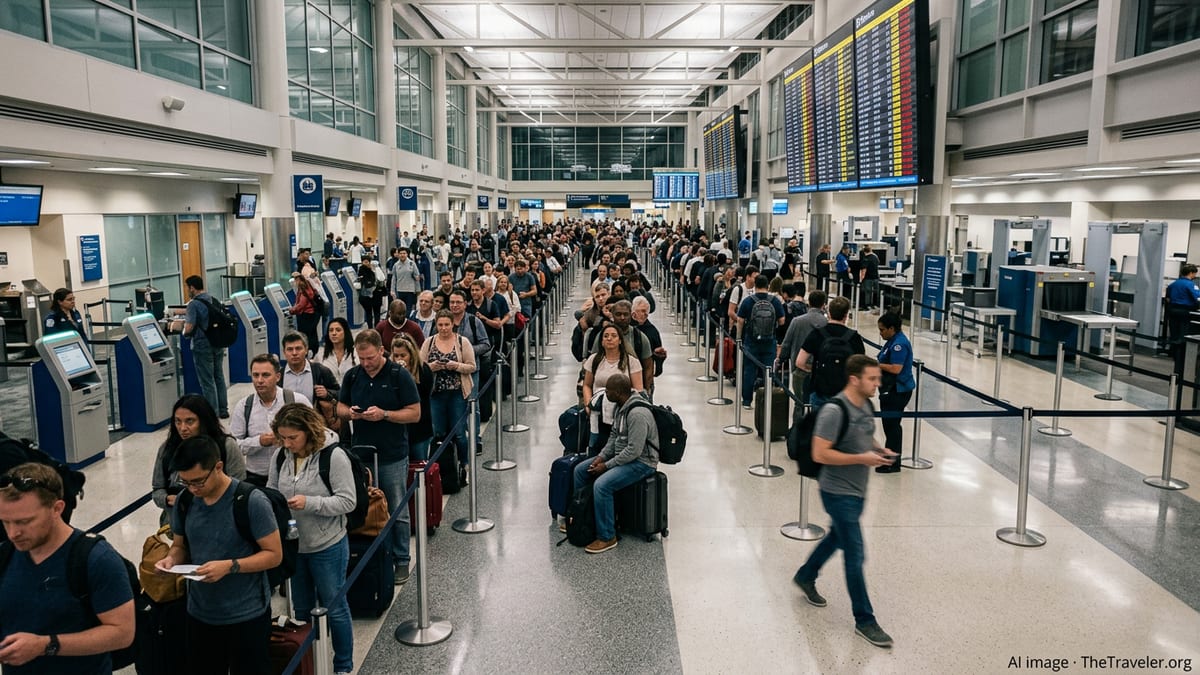
New Rule Redraws the Line Between Airline-Controlled and Uncontrollable Delays
Publicly available regulatory documents show that the latest U.S. Department of Transportation rule on refunds and consumer protections creates a new category of events that are no longer treated as traditional "air carrier" responsibility. In practical terms, the change means airlines will have broader authority to classify more disruptions as uncontrollable, limiting when they owe stranded passengers meal vouchers, hotel stays or ground transportation.
Since 2022, the Department’s FlightRights.gov dashboard has highlighted voluntary commitments from the ten largest U.S. airlines to provide free rebooking, meal credits and, in most cases, hotel accommodations when cancellations or long delays are within the carrier’s control. Those pledges were never a legal mandate, but they created expectations among travelers that airline-caused disruptions often came with tangible support at the airport.
The newly finalized delay-cause framework carves out 10 specific scenarios, ordered by Congress to be treated differently in Federal Aviation Administration and DOT reporting. Once these events are reclassified as outside carrier control, airlines can decline to provide previously advertised amenities in more situations without being marked as failing to meet their own customer service plans.
Consumer advocates note that the change arrives at the same time as broader refund rules, which focus on getting passengers their money back after cancellations or significant schedule changes. While the refund standards remain important, the narrowing of meal and hotel coverage for day-of-travel disruptions is emerging as a separate fault line in airline customer care.
Ten Events That Can Now Leave Passengers Without Meals or Hotels
According to recent coverage summarizing the rule’s implementation, the new category includes 10 types of events that airlines may now classify as uncontrollable for customer service purposes. The list spans situations that range from rare but serious incidents to operational issues that passengers might previously have viewed as airline responsibility.
These events include the death of a passenger on board and the time needed to clean and secure the aircraft afterward, along with damage to the aircraft from weather, foreign object debris or sabotage. Baggage system failures outside the airline’s control and certain cybersecurity attacks are also defined in this new bucket, provided the carrier is complying with applicable cyber regulations.
Government system outages that directly affect safe flight operations, such as failures of air traffic control or critical navigation systems, are specifically called out. So are medically driven emergencies that require attention through no fault of the airline, and delays sparked by the removal of unruly passengers from the aircraft.
Two of the most consequential categories for travelers involve airport closures caused by hazards such as volcanic ash or severe wind conditions, and certain kinds of unplanned maintenance or safety interventions that must occur before an aircraft can depart and cannot be postponed. When disruptions fall into these defined areas, meal and hotel benefits that passengers may have come to expect will no longer be guaranteed.
What Changes for Airline Customer Service Promises
The U.S. still does not have a nationwide equivalent to Europe’s EU261 regime, which requires airlines to provide compensation and care in many delay and cancellation scenarios, regardless of cause. Instead, domestic carriers rely on their contracts of carriage and customer service plans, which spell out when they will offer vouchers, hotels or other help.
After the widespread disruptions of 2021 and 2022, DOT placed public pressure on airlines to expand those voluntary commitments, and by 2023 all ten major U.S. carriers guaranteed free rebooking and meals when a disruption was within their control, with nine also promising hotel rooms in such cases. The new delay classifications do not erase those general pledges, but they do shrink the universe of events that carriers must treat as controllable.
Under the updated framework, airlines can point to the expanded list of uncontrollable causes in their reporting and internal policies when deciding whether to provide lodging or meal credits. For example, a lengthy overnight delay linked to newly deemed uncontrollable maintenance could now fall outside the scope of hotel guarantees that once applied to most mechanical problems.
Industry analysts suggest this shift may encourage airlines to refine the language in their customer service plans, clarifying when obligations apply and when they do not. Travelers who assume any lengthy delay automatically triggers food or hotel support may find that the fine print has become much more important to understand.
Interaction With New Refund and Fee Rules
The change in delay categories arrives alongside separate DOT rulemakings on refunds and so-called junk fees in air travel. A final rule published in 2024 requires airlines and ticket agents to provide prompt refunds when flights are cancelled or significantly changed and consumers refuse alternative transportation or credits. Another initiative targets misleading or surprise ancillary fees and aims to ensure that passengers see the full price of air travel up front.
These refund rules are designed to address the financial impact of disrupted trips, particularly when travelers decide not to fly at all on a changed or cancelled itinerary. They do not, however, guarantee meals or overnight hotel stays for passengers who remain in transit and choose to wait for a later departure, which is where the new uncontrollable delay definitions have their greatest effect.
Some policy observers argue that the combination of clearer refund rights and narrower amenity obligations could shift the calculus for delayed passengers. In certain cases, it may be more attractive to request a refund and rebook on another carrier or a different day, rather than rely on uncertain access to vouchers or hotels that an airline is no longer required to provide.
At the same time, airlines and regulators continue to debate whether the United States should move closer to an EU-style model that pairs refunds with mandatory compensation and care during disruptions. The recent rule illustrates how incremental changes to technical definitions can significantly influence the balance of rights and obligations in the absence of a broader overhaul.
What Travelers Can Do Now
For passengers, the immediate takeaway is that fewer delay scenarios will automatically trigger meal, hotel or ground transportation support, even when a disruption is lengthy and highly disruptive to travel plans. Understanding which events fall into the new uncontrollable category can help set expectations before arriving at the airport.
Travelers may want to review their chosen airline’s customer service plan and contract of carriage before purchasing tickets, paying close attention to how the carrier distinguishes controllable and uncontrollable causes. Those documents often specify whether hotel coverage is limited to non-local passengers, whether reimbursements are capped at a certain rate and how meal credits are issued.
Independent travel insurance, premium credit card protections and corporate travel policies may also play a larger role. Some products explicitly cover hotel and meal costs when flights are delayed beyond a set number of hours, regardless of whether the airline views the disruption as controllable. As airlines lean more heavily on the expanded list of uncontrollable events, these external protections could become more valuable.
With the new rule scheduled to take effect in October 2026, the months ahead are likely to see airlines updating their public commitments and fine-tuning internal procedures. For now, the central message to U.S. flyers is that the safety net of automatic meals and hotel rooms is becoming thinner, and informed planning is increasingly essential when booking complex or time-sensitive trips.
KhanList coverage of the new uncontrollable delay categories
U.S. DOT: Refunds and Other Consumer Protections rule
U.S. DOT FlightRights.gov airline customer service dashboard
TheTraveler.org analysis of narrowed meal and hotel promises