


Hol Chan Marine Reserve is one of Belize’s signature reef experiences, but it is also a tightly regulated protected area governed by Fisheries Department rules. Understanding how entrance fees work, what your tour price really includes, and which in-water regulations apply at Hol Chan Channel, Shark Ray Alley and Mexico Rocks will help you avoid surprises at the dock and ensure your visit supports conservation rather than harming the reef.
Get the latest updates straight to your inbox!
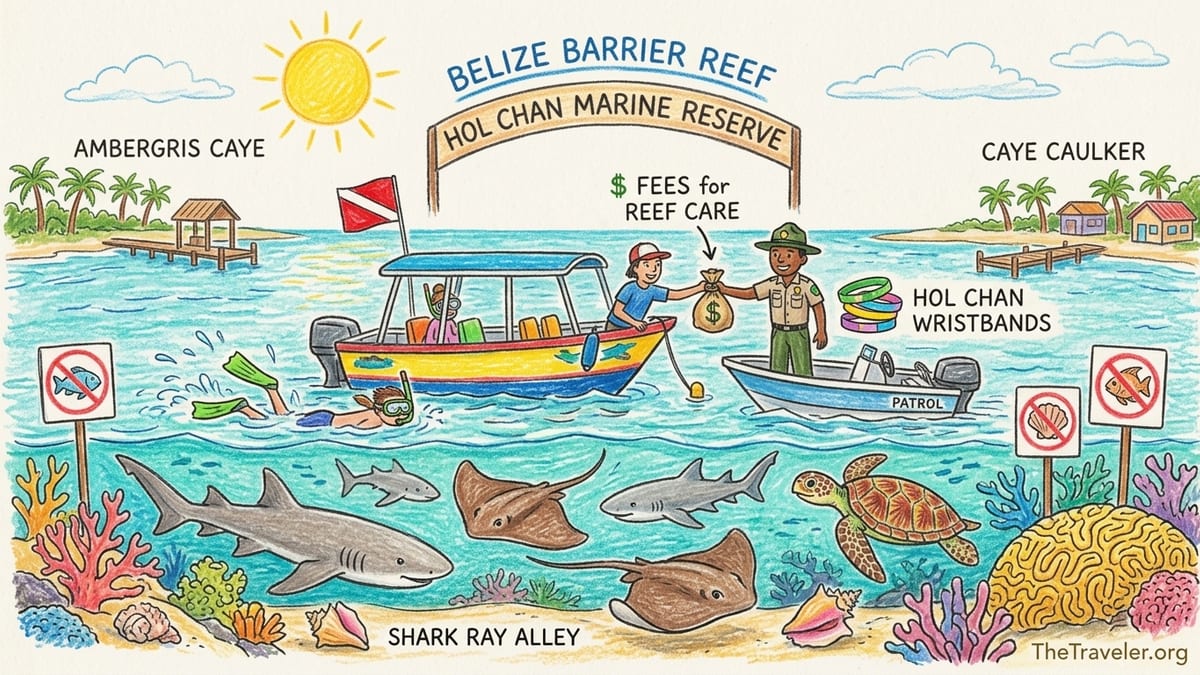
How Hol Chan Marine Reserve Fees Work Today
Hol Chan Marine Reserve sits off Ambergris Caye and Caye Caulker and is managed by Belize’s Fisheries Department under a dedicated set of marine reserve regulations. Visitors pay a per-person user fee to enter the protected area, separate from the price of a snorkel or dive tour. This fee helps fund enforcement, mooring buoys, research and the rangers who patrol the reserve.
As of late 2026, recent tour descriptions and operator guidance typically mention a Hol Chan Marine Reserve fee in the rough range of 10 to 15 US dollars per person, often quoted in Belize dollars at approximately BZ$20 to BZ$30. For example, some Caye Caulker operators list a full-day Hol Chan itinerary at around 115 US dollars plus a 15 US dollar marine park fee, while other shared boat trips from San Pedro mention a 10 US dollar cash entrance fee due on the dock. These figures can and do change when the Hol Chan Board of Trustees adjusts the tariff, so they should only be used as general benchmarks rather than fixed amounts.
Importantly, the official rate is set by the reserve and Fisheries Department, not by individual tour companies. When this article is updated, the writer should confirm the current entrance fee directly with Hol Chan Marine Reserve staff or reputable local operators, and clearly date any specific figure. Travelers should also expect slightly different handling of the fee between basic shared tours, higher-end catamaran trips, and private charters, which may roll the charge into a package price.
Because the fee is collected on behalf of a protected area, visitors will usually be asked to carry photo identification and may receive a wristband or voucher showing the payment is valid for that day’s entry. In practice, most guests simply pay the tour company and never interact with the ranger who reconciles the paperwork, but knowing that the money supports conservation can make the extra line item feel far more worthwhile.
Are Fees Included in Tour Prices, and What to Ask Before Booking
One of the most common points of confusion for first-time visitors is whether the Hol Chan Marine Reserve fee is included in the advertised tour price. In San Pedro and Caye Caulker, many shared snorkel trips now bundle the fee into the per-person rate and note that the park charges are “included” for convenience. However, some operators, especially small family boats and private charters, prefer to keep it separate and collect the exact entrance fee in cash on the day of the trip.
To avoid misunderstandings, travelers should ask very specific questions before reserving. At a minimum, clarify: “Is the Hol Chan Marine Reserve fee already included in this price, or will I need to bring extra cash for the park?” and “If it is not included, how much should I budget per person today?” This is especially important if you are comparing a 65 US dollar half-day snorkel that includes the fee with a 55 US dollar option that does not. The cheaper ticket may become more expensive once you add the separate park charge.
It is also worth asking how the fee works across different itineraries. A quick, two-stop Hol Chan and Shark Ray Alley snorkel from San Pedro may carry a single entrance fee, while a longer Caye Caulker day trip that visits Hol Chan, Mexico Rocks and additional reef sites could have a different structure. Some boat operators will confirm that the same per-person fee covers multiple in-reserve stops for that day, while others may avoid Mexico Rocks on certain trips to keep the total price lower.
If you are traveling as a family or group, ask whether children pay the full rate and whether there are discounts for Belizean nationals or residents. Policies can vary and may change when new regulations or management plans come into effect. Finally, for cruise-ship excursions that advertise “Hol Chan Marine Reserve” in the title, confirm that the official park fee is either fully included or clearly itemized, so you are not surprised by an onboard announcement requesting extra cash just before boarding the snorkel boat.
Core Conservation Rules: No-Take and No-Removal Principles
Hol Chan Marine Reserve is not a free-for-all playground; it is a managed conservation area governed by Belize’s Fisheries regulations. Across the reserve’s zones, a central rule applies: visitors must not remove or disturb any flora or fauna. That includes living coral, sponges, fish, conch, lobster, turtles, and even dead coral heads, rocks, shells or sand. These prohibitions apply whether you are snorkeling in shallow water at the Hol Chan Channel, drifting over the reef at Mexico Rocks, or floating with nurse sharks at Shark Ray Alley.
In practical terms, this means you should never snap off a small coral branch to take home, pocket a pretty shell from the seabed, or carry away a piece of bleached coral that “looks dead anyway.” Under Fisheries rules, even dead material plays a role in the reef ecosystem, and removing it is an offense unless specifically authorized. Tour guides will regularly remind guests of this rule before they enter the water and may intervene if they spot someone collecting souvenirs in a mesh bag or life vest pocket.
Fishing is tightly controlled inside the reserve. In Hol Chan Channel (Zone A) and Mexico Rocks’ no-take areas, all fishing is prohibited. In other zones designated for general use or catch-and-release, only properly licensed fishers or registered sports-fishing vessels may operate and must follow broader Fisheries Department rules on seasons, size limits and gear types. Long lines, gill nets, seine nets and spear guns are explicitly banned inside the reserve. For most leisure visitors, the simplest approach is to treat Hol Chan as a non-fishing area and book dedicated sports-fishing trips in permitted zones outside the strict no-take sections.
General environmental rules also forbid depositing trash, fuel, or any other material into the water, anchoring on the reef, or constructing temporary platforms without authorization. While these may sound like issues for boat captains rather than guests, you have a role too: pack out all plastic packaging, keep sunscreen bottles secure, and alert your guide if you see fuel, oil or floating litter around the mooring area so it can be addressed quickly.
Moorings, Boat Conduct and Guide-to-Guest Ratios
To protect the reef structure, boats visiting Hol Chan Marine Reserve are required to use permanent mooring buoys rather than drop anchors on the coral. Reserve rules specify that vessels are only allowed to remain in the exclusive recreational areas while a mooring is available, and they may stay for a limited period, often around one hour, before rotating out to make space for other boats. Captains who ignore these requirements and linger too long or attempt to anchor where there are no buoys risk being denied entry in the future.
For travelers, these mooring rules explain why your guide might hurry you back to the boat after 40 to 50 minutes in the water, even if you feel you could snorkel for hours. A busy afternoon at Hol Chan Channel or Shark Ray Alley can see multiple boats waiting to use the same buoy. Efficient rotation ensures that hundreds of visitors can enjoy the reef each day without endless idling engines or inappropriate anchoring on fragile coral heads.
Boat conduct regulations also require vessels to display a diver-down flag when snorkelers or divers are in the water and to observe low-wake speeds when approaching people near the surface. This is why your captain will often circle well outside the snorkel area, cut the engine, and drift the final distance to the mooring buoy before tying off. You may also notice that boats leave engines idling while people are climbing ladders, which helps maintain steering control in case of shifting wind or current, though captains are expected to keep propellers safely disengaged when swimmers are nearby.
Hol Chan’s management plan and Fisheries rules also address guide-to-guest ratios. A common standard is a maximum of eight snorkelers or divers per certified guide in the water, although the Board of Trustees has authority to impose stricter limits if conditions warrant. In real terms, this means that a 24-person boat should have at least three in-water guides, often spread into smaller sub-groups. When shopping for tours, ask how many guides accompany each trip and whether they swim alongside guests or remain on the boat. A company that respects small ratios and puts guides in the water typically offers a safer, more conservation-minded experience.
Wildlife Interaction Rules: From Hol Chan Channel to Shark Ray Alley
Close encounters with marine life are a major draw at Hol Chan Marine Reserve, but they are governed by specific rules designed to reduce stress on animals. Across the reserve, visitors are prohibited from harassing or chasing wildlife. That means no riding turtles, grabbing nurse sharks by the tail, or cornering rays for a photo. Guides are trained to keep groups at a respectful distance, especially from endangered species like sea turtles and any visiting manatees.
In Hol Chan Channel, which is a fully protected no-take coral reef zone, feeding fish is generally prohibited, and visitors are not allowed to use gloves. The no-glove rule discourages people from gripping or climbing on coral, which can crush fragile structures and remove the protective mucous layer on living colonies. You will often see guides demonstrating the correct way to float horizontally and use gentle fin kicks so guests can glide over the channel without touching the bottom, even when the depth appears shallow.
Shark Ray Alley, one of Hol Chan’s most famous sites, has its own set of rules. Scuba diving within the designated recreational area is not allowed, in part to reduce congestion and give snorkelers more space. Feeding nurse sharks is permitted, but only under controlled conditions from the boat and typically by licensed guides using fish scraps. Guests should not bring their own bait, toss food directly at animals, or attempt to hand-feed sharks or rays. Even though nurse sharks are generally docile, unpredictable behavior can occur, and the more human-provided food they receive, the more they associate boats and people with easy meals.
Mexico Rocks, a no-take zone focused on patch reefs and beautiful coral formations, follows similar interaction principles but emphasizes non-feeding behavior. Here, feeding fish is restricted to areas or situations authorized by the reserve, and the use of gloves remains prohibited. Many guides specifically choose Mexico Rocks for quieter, more relaxed snorkeling without the adrenaline of shark feeding, focusing instead on spotting schools of tangs, parrotfish, and occasional rays gliding across the sandy patches.
Specific Rules for Hol Chan Channel, Shark Ray Alley and Mexico Rocks
Hol Chan Channel, often referred to as Zone A, forms the heart of the reserve. In this cut through the barrier reef, fishing of any kind is forbidden, and no fishing gear is allowed in the water except basic snorkeling equipment like mask, snorkel and fins. Gloves are not permitted, fish feeding is banned, and all visitors must remain within the marked boundaries around the mooring buoys. Because currents can be present, guides usually lead guests along a set path that lets them drift with the flow while staying in sight of the boat and within the official zone.
Shark Ray Alley, sometimes described as part of Zone D, combines a sandy bottom with nearby sea grass and reef. Regulations here focus on balancing the popularity of shark and ray encounters with safety and conservation. Commercial fishing is generally excluded from the designated recreational area, scuba diving is not permitted within the core snorkel zone, and gloves remain prohibited. Feeding of sharks may occur, but only by tour guides from the boat. Visitors are expected to float calmly at the surface, avoid crowded dogpiles around food, and keep their hands to themselves as nurse sharks and rays swim past.
Mexico Rocks lies further north off Ambergris Caye and has been incorporated into the Hol Chan Marine Reserve as a no-take area. All extractive activities are banned throughout this zone: no spear fishing, no net use, and no reef fishing, even for catch-and-release in the strictly protected patch reef areas. Only non-extractive recreation like snorkeling is allowed, with a focus on minimizing contact with the bottom and coral heads. Operators who visit Mexico Rocks must register their vessels with the reserve and follow the same mooring, guest-to-guide and safety rules that apply elsewhere in Hol Chan.
Beyond these high-profile zones, Hol Chan includes additional general-use and special-management areas where different combinations of catch-and-release fishing, licensed commercial fishing and tourism are allowed. For regular visitors, the key takeaway is to respect instructions from guides and rangers at each specific stop. A behavior that is acceptable in one general-use zone, such as licensed catch-and-release for bonefish, may be completely forbidden in no-take sections of Mexico Rocks or within Hol Chan Channel itself.
Planning a Responsible Visit: Questions for Operators
Because Hol Chan’s rules are grounded in official Fisheries regulations and a detailed management plan, enforcement on the water can be strict. The easiest way to stay on the right side of these rules is to choose a reputable operator and ask targeted questions ahead of time. Start with basics: “Which specific zones will we visit? Hol Chan Channel, Shark Ray Alley, Mexico Rocks, or a mix?” and “How long will we spend in each area?” Operators who can clearly explain their route usually have a better handle on the regulations that apply.
Next, dig into safety and conservation details. Ask, “What is your typical guide-to-guest ratio in the water?” and “Do guides snorkel with the group, or stay on the boat?” An answer that mentions small groups of around eight people per guide, with at least one guide always in the water, is a good sign. You can also ask whether they provide a safety briefing on no-touch rules, wildlife interactions and how to use the mooring ladders before anyone enters the water.
It is also wise to confirm whether the boat is licensed for Hol Chan and whether all guides hold current Belize Tourism Board and Fisheries approvals. Legitimate operators are usually proud to mention their licenses and often display decals or certificates at the dock. If an unlicensed boat offers a “cheap” run out to Mexico Rocks or the back reef without mentioning the marine reserve fee or rules, it is worth walking away. Enforcement patrols can and do ask to see boat registration and visitor documentation.
Finally, ask how the company handles environmental issues like sunscreen and trash. Many Hol Chan operators now recommend or require reef-safe sunscreen applied at least 20 minutes before boarding, encourage rash guards to reduce chemical load in the water, and maintain strict no-litter policies on board. These small details add up, especially across thousands of visitors each month, and they signal an operator’s commitment to protecting the reserve for the long term.
The Takeaway
Hol Chan Marine Reserve is more than a photogenic snorkel stop; it is a carefully managed conservation area where visitor behavior is guided by Fisheries Department regulations and a detailed zoning system. Entrance fees, while sometimes confusing at first glance, are a critical tool for funding rangers, moorings and ongoing reef monitoring. They are typically in the 10 to 15 US dollar range per person as of 2026, but travelers should always confirm the current rate directly with the reserve or their tour operator and expect that it may change over time.
The most important rules for visitors are simple: take nothing, touch nothing, and follow your guide’s instructions in each specific zone, whether you are drifting over Hol Chan Channel’s coral walls, floating among nurse sharks at Shark Ray Alley, or gliding above the patch reefs at Mexico Rocks. Boats must use mooring buoys, keep speeds low near swimmers and respect time limits at popular sites, while guides are expected to maintain safe guest ratios and model respectful wildlife interactions.
By asking direct questions about fees, itineraries, guide numbers, and environmental practices before you book, you can choose operators who align with the reserve’s conservation goals instead of merely exploiting its popularity. The result is a safer, more enjoyable experience for you and a lighter footprint on one of Belize’s most celebrated sections of the barrier reef.
FAQ
Q1. How much is the Hol Chan Marine Reserve fee right now?
The reserve fee is typically in the rough range of 10 to 15 US dollars per person as of 2026, but rates are set by Hol Chan’s management and can change. Always confirm the current amount directly with the reserve or a reputable operator shortly before your trip.
Q2. Is the Hol Chan fee included in my snorkel or dive tour price?
Many shared trips from San Pedro and Caye Caulker now include the fee in the advertised price, while some private charters and budget tours list it separately and collect it in cash on the day. Ask your operator explicitly whether the park fee is included or extra.
Q3. Can I snorkel Hol Chan on my own without a tour guide?
No. Hol Chan is a regulated marine reserve, and visitors are expected to enter with licensed tour operators whose boats are registered for the area. Independent snorkeling from kayaks or private vessels is generally not allowed within the core reserve zones without proper authorization.
Q4. Are fishing and spearfishing allowed inside Hol Chan Marine Reserve?
Fishing of any kind is prohibited in no-take zones such as Hol Chan Channel and Mexico Rocks. In other designated areas, only licensed operators following Fisheries rules may fish, and gear like long lines, gill nets and spear guns is banned. Most leisure visitors should treat the reserve as a no-fishing area.
Q5. What are the main rules for Shark Ray Alley?
At Shark Ray Alley, scuba diving is not allowed in the core snorkel area, gloves are prohibited, and feeding nurse sharks is only permitted under guide control from the boat. Visitors must not harass sharks or rays, chase them for photos or attempt to hand-feed them.
Q6. What makes Mexico Rocks different from Hol Chan Channel?
Mexico Rocks is a no-take patch reef zone known for intricate coral formations rather than dense shark and ray aggregations. All extractive activities, including fishing and spearfishing, are banned, and visitors must follow strict no-touch, no-collection rules similar to those at Hol Chan Channel.
Q7. Why are gloves not allowed in Hol Chan Marine Reserve?
Gloves make it easier for people to grab or brace against coral, which can crush fragile colonies and strip their protective surface. Banning gloves discourages touching and climbing on the reef and helps protect both coral and visitors from cuts or stings.
Q8. How many people are allowed per guide in the water?
Hol Chan’s regulations reference a maximum of around eight snorkelers or divers per guide, with the Board of Trustees authorized to tighten this if needed. In practice, reputable operators keep groups small and put multiple guides in the water on fuller boats.
Q9. Do I need to bring cash for the Hol Chan fee?
Often yes, especially if the operator lists the fee separately or if you are booking a private charter. Some companies accept card payments at their office but still hand over cash to the reserve. Ask in advance how payment is handled and plan to carry small bills just in case.
Q10. What happens if someone breaks the rules inside the reserve?
Rangers and guides can intervene if visitors touch coral, collect shells, harass wildlife or ignore safety instructions. Boats and individuals who repeatedly violate regulations risk fines, being denied entry or, in serious cases, losing their licenses under Fisheries Department enforcement.