


More news on this day
Travelers flying on US airlines face a new reality: a growing list of flight disruptions now treated as “uncontrollable” events, leaving passengers without guaranteed meal vouchers or hotel rooms even after long delays or overnight cancellations.
Get the latest news straight to your inbox!
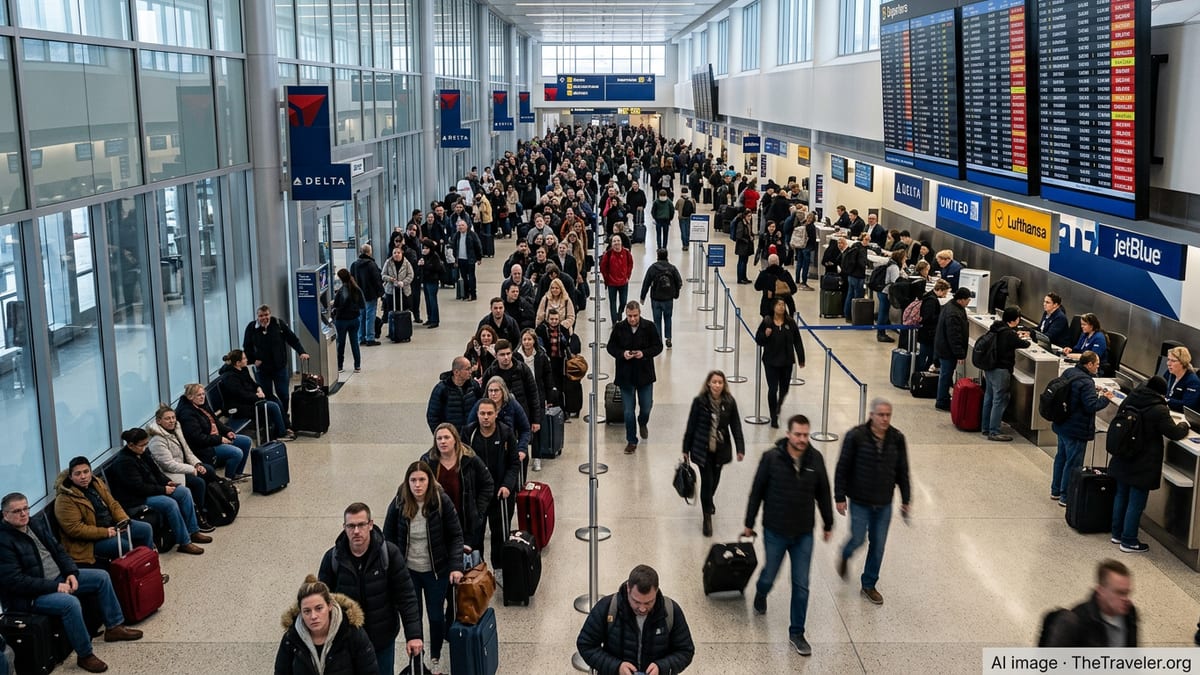
Expanded List of “Uncontrollable” Delays Narrows Passenger Help
Published coverage indicates that major US airlines are updating internal rulebooks and customer service plans to spell out more situations where they no longer promise meal or hotel assistance when flights are severely delayed or canceled. A recent summary of these changes highlights 10 broad categories of events, from cybersecurity breaches to airport closures, that carriers classify as outside their control, even when passengers are stranded for hours or overnight.
According to that reporting, airlines may now deny routine care such as food vouchers or overnight accommodation when delays are linked to passenger medical emergencies, the removal of unruly travelers, baggage system breakdowns beyond the carrier’s direct control, or unscheduled maintenance that must be completed before the aircraft can fly safely. Similar treatment applies when operations are disrupted by government or air traffic control system failures, damage from weather or debris, or brakes that overheat after a safety incident.
In practice, this means that what many travelers once assumed would trigger automatic help now sits in a gray zone. While airlines retain discretion to assist on a case‑by‑case basis, these categories carve out wide space where carriers say they “owe” nothing beyond rebooking on their own flights and any legally required refunds for cancellations or significant changes.
The shift does not change federal refund rules, which still require airlines to return money when flights are canceled or significantly altered and a traveler declines rebooking. It does, however, narrow the separate, voluntary commitments for meals and hotels that the US Department of Transportation publicized as a major win for air passengers in recent years.
How This Interacts With DOT’s Refund and Dashboard Efforts
Since 2022, the US Department of Transportation has pushed airlines to make their customer commitments more transparent, launching the FlightRights.gov dashboard and later codifying new refund requirements in regulation. Publicly available information from DOT shows that all ten of the largest US airlines now guarantee free rebooking and meals, and nine promise hotel accommodations when a delay or cancellation is within the airline’s control and leads to an overnight stay or a wait of several hours.
Those dashboard promises, however, depend on how carriers define “controllable” versus “uncontrollable” disruptions inside their contracts of carriage and customer service plans. While DOT’s final refund rule clarifies when a ticket refund is due for canceled or significantly changed flights, it does not prescribe when airlines must furnish hotels or meal vouchers during irregular operations, leaving that largely to each company’s policies.
Recent filings and analyses of those contracts show that airlines continue to treat weather and classic “acts of God” as outside their obligation to provide amenities. The newer concern for travelers is that the list of exempt events has expanded to include a wide array of operational and infrastructure problems that can still leave passengers facing major out‑of‑pocket costs. Even where DOT urges stronger standards, amenities remain a competitive and contractual matter, not a universal legal right.
Consumer advocates point out that the gap between the refund rules and the meal and hotel commitments can be confusing. A traveler might be entitled to a full refund after a cancellation but receive no hotel help while trying to arrange a last‑minute alternative, particularly when the disruption falls into one of the growing number of “uncontrollable” categories.
What Airlines Say They Will Still Provide
Despite the expanded exceptions, many large US airlines continue to spell out specific circumstances where they will cover food or lodging. American Airlines, for example, states in its customer service plan that it will provide a hotel voucher for overnight delays and food credit when delays of three hours or more are within its control and the passenger is away from their home city. Similar language appears across several other major carriers, often with limits based on distance from home or reasonable cost caps.
Independent comparisons compiled from DOT’s dashboard and carrier websites indicate that, when a delay or cancellation is clearly caused by an airline issue such as a crew misconnection or certain mechanical problems, most major US airlines now promise to rebook passengers on the next available flight and issue a meal voucher for long waits. In many cases, they also commit to complimentary hotel stays and ground transportation if an overnight stay is required.
However, once a disruption is labeled “uncontrollable” under the broader definitions now in circulation, these obligations generally disappear. Instead, travelers are encouraged to claim refunds where eligible or to tap trip insurance and credit card protections for additional reimbursement. The result is a patchwork of protections that can differ sharply depending on the root cause of the delay and the specific wording in a carrier’s contract.
Reports examining airline rulebooks stress that even where carriers reserve the right to deny amenities, agents sometimes exercise discretion to offer vouchers or hotel discounts. Yet those gestures are voluntary and uneven, particularly during large‑scale disruptions when rooms are scarce and call centers are overwhelmed.
How US Rules Compare With Europe and Canada
The evolving US approach stands in contrast to the more prescriptive systems in place in the European Union and Canada. Under the EU’s well‑known Regulation 261/2004, airlines must provide meals, refreshments and hotel accommodation when flights are heavily delayed or canceled, and cash compensation is often due unless the cause falls into narrowly defined “extraordinary circumstances.” Travelers’ rights to care apply regardless of whether the airline considers the disruption controllable, and obligations can continue for multiple days.
Canada’s Air Passenger Protection Regulations also mandate minimum standards of treatment, including food and accommodation, for certain delays and cancellations, again with defined exemptions. While the details and payout levels differ from the EU regime, passengers there benefit from clearer statutory entitlements rather than relying on voluntary pledges.
By comparison, US law focuses primarily on refunds when service is not delivered as purchased, alongside protections for involuntary bumping and disability‑related assistance. Amenities like hotel rooms, meal vouchers and rebooking on other carriers are governed by airline‑written contracts and marketing commitments, supported by DOT’s transparency tools but not backed by automatic statutory compensation for most delays.
For American travelers accustomed to EU‑style protections on transatlantic trips, the widening list of “uncontrollable” delays at home may come as a surprise. The changes highlight the importance of understanding which rules apply on which routes, and how quickly responsibilities can shift once a flight crosses from one regulatory regime into another.
What Travelers Can Do Before Their Next Flight
Given the growing number of disruptions that US airlines classify as outside their control, analysts recommend that passengers review an airline’s customer service plan and contract of carriage before booking, particularly for complex itineraries or trips with tight connections. These documents spell out when a carrier promises meals, hotels or rebooking help, and when it does not, even in the face of long waits.
Travel experts also point to the role of trip insurance and premium credit cards, which may reimburse meals and lodging when airlines decline to do so after covered delays. Policies differ widely, but some products specifically address missed connections, severe weather, airport shutdowns and other scenarios that appear on the airlines’ “uncontrollable” lists.
Passengers can further reduce risk by building longer connection times, booking earlier departures in case of cascading delays, and monitoring weather and operational advisories closely in the days before travel. While such strategies cannot eliminate disruptions, they can improve the odds of finding same‑day alternatives without overnight stays.
Ultimately, the trend toward broader “uncontrollable” carve‑outs underscores a broader shift in US air travel: the cost and inconvenience of many major delays is moving back toward the passenger, unless other protections are purchased or available through financial products. Understanding the new limits on meal and hotel coverage is increasingly essential for anyone planning to fly.
KhanList: US Airlines Will No Longer Owe You Meals Or Hotels For 10 'Uncontrollable' Delays
US DOT FlightRights.gov Airline Customer Service Dashboard
US DOT: Final Rule on Automatic Airline Refunds and Consumer Protections