


More news on this day
For decades, air travel has largely been sold on reliability and routine. As the planet warms and weather patterns shift, evidence increasingly suggests that turbulence, storms and heat will test that promise, forcing airlines and passengers to adjust expectations about how smooth and predictable flying can be.
Get the latest news straight to your inbox!
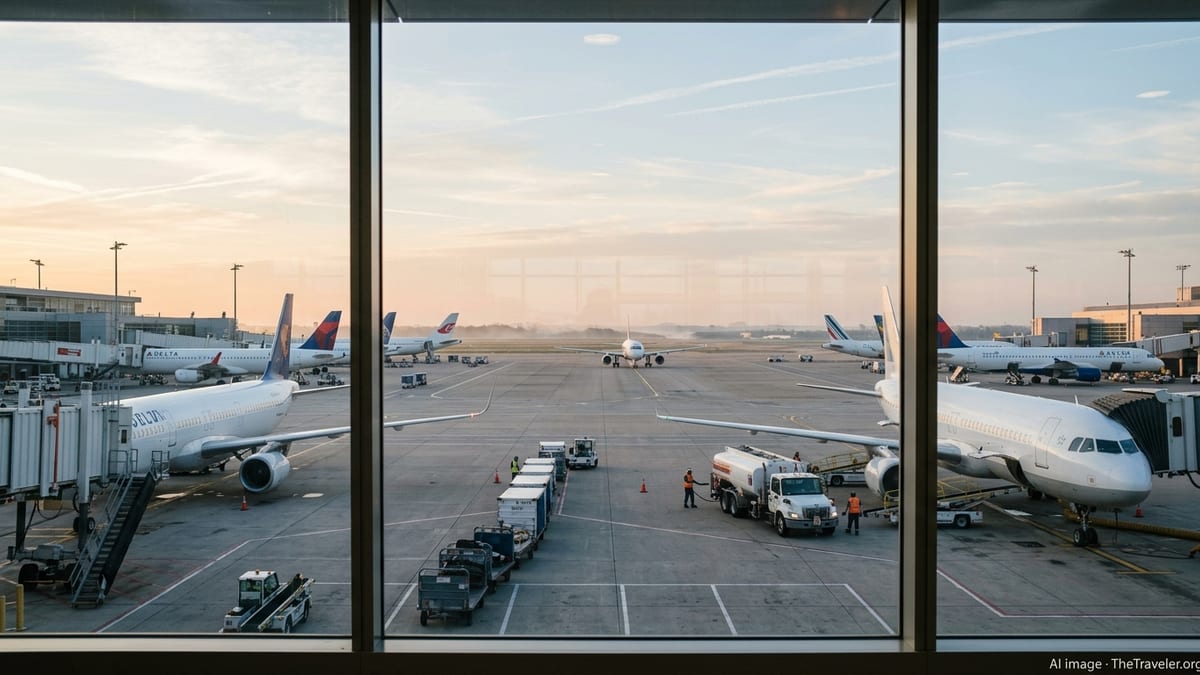
Hotter skies, stronger winds and a bumpier ride
Studies in recent years have drawn a clearer line between a warming climate and conditions that make flying less comfortable and potentially more disruptive. Research from the University of Reading indicates that severe clear-air turbulence over the North Atlantic, one of the world’s busiest flight corridors, increased by around 55 percent between 1979 and 2020. Similar work projects that, as greenhouse gas emissions continue, light, moderate and severe turbulence will become more frequent on many long-haul routes.
Clear-air turbulence is particularly challenging because it develops in cloud-free skies, near fast-moving jet streams at typical cruise altitudes, and cannot be seen on conventional radar. Climate projections published in recent atmospheric science journals suggest that as temperature contrasts aloft sharpen in some regions, jet stream wind shear could strengthen by roughly 16 to 27 percent this century, while the upper atmosphere becomes 10 to 20 percent less stable. Both trends favor the kind of invisible, sudden jolts that can catch crews and passengers by surprise.
The implications for aviation are broad rather than catastrophic. The research does not point to turbulence making flying unsafe in general, but it does indicate that the industry may need to factor in more frequent rerouting, speed changes and use of turbulence-avoidance tools. Those measures protect safety but often add time and fuel burn, and can cascade into missed connections and schedule disruption.
Stormier patterns and knock-on delays
Beyond turbulence in clear skies, a warmer climate is influencing the storms that aviation planners track every day. Analyses in leading climate journals find that upper-level jet streams are expected to strengthen and become more variable in key regions, shaping where and when severe storms form. Faster jet streaks have been linked in previous work to outbreaks of strong thunderstorms, severe winds and hail, all hazards that can close runways, force diversions or trap aircraft and crews out of position.
Recent case studies of major U.S. winter storms underscore how extreme weather can ripple through the network. Academic work examining the 2022 Winter Storm Elliott, for example, found that the event generated extensive rerouting, cancellations and prolonged passenger delays as airports across large parts of the country struggled with snow, wind and frigid temperatures. Location-based data used in that research showed that many travelers were delayed not just by hours but in some cases by more than a day as connections unraveled.
As heat and moisture increase in the atmosphere, some climate models suggest that intense rainfall events may also become more frequent in certain regions. For airports, heavier downpours can overwhelm drainage, contribute to flash flooding on taxiways and access roads, and complicate ground operations. Airlines already rely on sophisticated forecasting and dispatch systems to manage around storms, but published assessments indicate that the background risk of weather-driven disruption is likely to trend upward as the century progresses.
When it is literally too hot to take off
Rising temperatures on the ground present a different kind of challenge. Aircraft generate lift based on the density of the air flowing over the wings; as air warms, it becomes less dense, reducing lift and requiring either more runway, lighter weight or cooler conditions. In recent summers, major hubs in hotter regions have periodically had to reduce payloads or delay departures during extreme heat, particularly for smaller regional jets and aircraft operating at the edge of their performance envelopes.
Technical reports on infrastructure in the U.S. Southwest, including assessments covering Phoenix Sky Harbor International Airport, describe how prolonged extreme heat can strain both airport facilities and aircraft operations. On the hottest days, density altitude effectively raises the “feel” of the airport’s elevation, lengthening the runway distance required for safe takeoff. If temperatures exceed the range for which performance data are certified, some flights may be held on the ground until conditions ease.
These constraints add another variable to already complex scheduling. Airlines can respond by shifting more departures to early morning or late evening, adjusting aircraft types on specific routes, or building in additional margin for fuel and payload. However, such moves can only partly insulate passengers from the reality that heatwaves, which climate data show are becoming longer and more intense in many regions, will sometimes mean slower operations and last-minute changes.
Airlines plan for resilience, but uncertainty remains
Aviation planners have been studying climate pressures for years, often focusing initially on emissions reductions. The United States Aviation Climate Action Plan, released by federal agencies in 2021, outlines a pathway toward net-zero aviation emissions by 2050 through sustainable fuels, new technologies and operational efficiencies. Within that framework, resilience to extreme weather and climate impacts is emerging as a parallel priority.
Inspector general reviews and related federal documents highlight a growing recognition that airports and air traffic infrastructure need to prepare for a future with more frequent heatwaves, floods, storms and sea-level rise. Recommendations in those reports point to updating design standards, integrating climate projections into long-term airport planning and prioritizing funding for projects that harden runways, terminals and navigation equipment against weather extremes.
Airlines, in turn, are flagging climate-related risks in financial filings. Recent annual reports from major U.S. carriers note that increased frequency and severity of storms, floods, fires and excessive heat could drive more delays and cancellations, raise fuel consumption as flights reroute to avoid weather and require significant investment in climate-resilient infrastructure. These disclosures underscore that the industry views climate effects not as distant possibilities but as material operational and financial factors.
What passengers may need to accept
For travelers, the practical question is what all this means at the seat level. Experts in atmospheric science and aviation operations broadly agree in the published literature that flying will remain one of the safest ways to travel. Modern aircraft are designed to withstand far more stress than they typically encounter, and forecasting tools for storms and turbulence continue to improve.
However, a growing body of research and planning documents suggests that passengers may need to recalibrate expectations about smooth, perfectly punctual journeys. More frequent patches of turbulence on popular routes, occasional heat-related weight restrictions, and days when storms cause widespread cancellations are all outcomes that climate projections and recent case studies indicate are likely to become more common rather than less.
Airlines can mitigate some of these pressures with better forecasting, flexible scheduling and investments in more efficient, resilient fleets and infrastructure. Yet climate change is reshaping the atmosphere on a global scale, and aviation operates within that changing system. For now, the emerging message from the data is that a slightly bumpier, less predictable future for air travel is not a sign of failure, but an adaptation challenge that the industry and its passengers will need to navigate together.
University of Reading: Aviation turbulence soared by up to 55% as the world warmed
Turbulent flights to continue as warming world shakes skies
U.S. Aviation Climate Action Plan
DOT Inspector General: Resiliency in aviation programs
Evidence for large increases in clear-air turbulence over the past four decades