


More news on this day
The U.S. Department of Transportation has issued a final rule revising how U.S. airlines report the causes of delays and cancellations, narrowing which disruptions are counted as carrier-controlled under the FAA Reauthorization Act of 2024 and reshaping how travelers, regulators, and consumer advocates will interpret on-time performance data.
Get the latest news straight to your inbox!
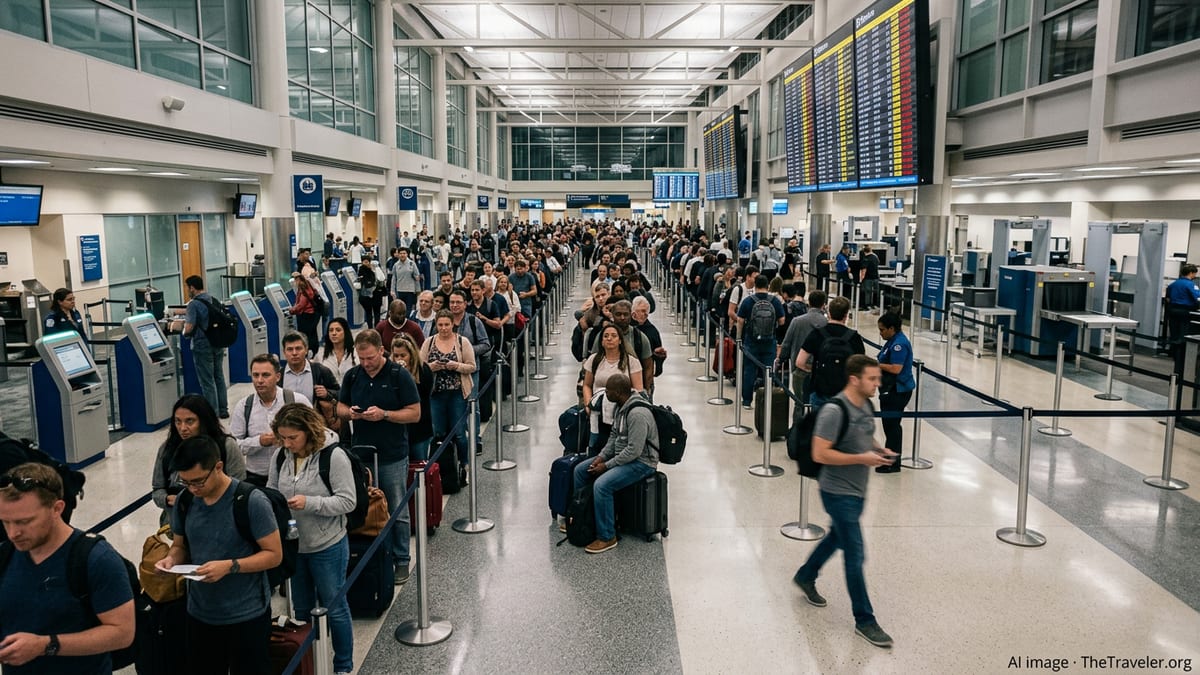
New Rule Carves Out Exceptions From Carrier-Controlled Delays
The final rule, published in the Federal Register on September 3, 2026, implements Section 511(b) of the FAA Reauthorization Act of 2024 by revising delay and cancellation categories in 14 CFR 234.4 and related Bureau of Transportation Statistics reporting directives. According to the published text, the Department is updating its longstanding framework in which most disruptions not attributed to the national aviation system, extreme weather, security, or late-arriving aircraft defaulted into a broad "Air Carrier" category.
Under the statute and rule, ten specific types of disruptions that were previously counted in the carrier category must now be reported in a separate bucket rather than as carrier-caused. The list focuses on events tied to federal government functions or certain airport and security operations, including air traffic control instructions and some ground stops. Regulators describe the change as aligning federal statistics with the statutory distinction Congress drew between controllable airline events and situations that lawmakers determined should be treated differently for reporting purposes.
The rule does not alter the basic structure of the on-time performance system, which still requires large reporting carriers to code every delayed or canceled flight into one of several major categories. Instead, it refines what is counted within those groupings and mandates a new code specifically for the ten carved-out events referenced in the 2024 law. The Department notes in the preamble that this approach is intended to maintain time series continuity while making the data more granular for policymakers and the traveling public.
What No Longer Has To Be Reported As Airline-Caused
The most consequential shift for consumers tracking airline performance is that delays and cancellations stemming from certain federal aviation functions will no longer appear in the carrier-controlled column of monthly statistics. The rule directs airlines to move disruptions attributable to Federal Aviation Administration air traffic control instructions, including some ground delay programs and reroutes, into the new category created under Section 511(b). Published summaries of the rule indicate that Congress explicitly excluded these events from the definition of carrier-caused delays, and the Department has now embedded that exclusion into its reporting rules.
Other carved-out causes include some airport-initiated ground stops, certain security-related holds, and a limited set of emergencies where carriers are required to follow governmental orders. While these events still must be recorded and reported, they will no longer inflate the Air Carrier category that is widely used in public dashboards and media reporting on airline reliability. For airlines, this change reduces the share of delays that appear as within their control, even though the operational impact for travelers on the day of travel can look very similar.
The Department’s technical directives have long provided detailed examples of what belongs in the Air Carrier code, ranging from maintenance and crew legality to computer outages, baggage loading, and boarding processes. Under the new framework, those operational causes remain within the carrier-controlled category. The adjustment instead pulls out a narrower set of government-driven events that were previously grouped together with issues fully under an airline’s control.
Implications for Consumer-Facing Dashboards and Public Data
The rule arrives as DOT continues to expand and refine its airline customer service dashboards, which display carrier commitments on refunds, rebooking, and incident handling. Section 511 of the 2024 law directs the Department to ensure that its data and dashboards more clearly distinguish between delays within a carrier’s control and those tied to national aviation system operations. The final rule on cause categories is one element of that broader data modernization effort.
Publicly available information shows that DOT’s on-time performance data feed into dashboards and online tools that travelers and analysts increasingly rely on to evaluate airlines. With the new category in place, those tools may show a smaller proportion of delays tagged as carrier-caused for some airlines, particularly at congested hubs or in periods of heavy air traffic management. The underlying number of minutes of disruption does not change, but the attribution presented to the public will shift at the margin.
Industry and consumer groups have taken differing positions in the rulemaking docket. Airline submissions generally supported separating out government-driven events, arguing that traditional statistics overstated the share of disruptions within their control. Consumer advocates warned that narrowing the carrier category could make it harder to hold airlines accountable and might create confusion if travelers see apparent improvements in carrier-controlled metrics without a corresponding improvement in their travel experience. The Department ultimately adopted the congressionally mandated carve-outs while emphasizing that overall delay and cancellation volumes will remain visible in published data.
Interaction With Refund and Passenger Rights Rules
The narrower definition of carrier-caused delays for reporting purposes does not change passenger refund rights that were expanded by DOT’s 2024 refund and consumer protection rules and then codified and adjusted under the FAA Reauthorization Act of 2024. Those rules define when a cancellation or significant delay triggers a refund obligation, generally based on schedule changes and arrival time thresholds rather than on whether a disruption is coded as carrier-controlled or tied to the national aviation system.
Regulatory text and guidance highlight that airlines must continue to provide refunds when flights are canceled or significantly changed and the passenger chooses not to travel, regardless of the reason for the disruption. Similarly, obligations to refund baggage fees for significantly delayed checked bags and to return ancillary fees when services are not provided are not linked to the cause coding used in on-time performance reports. The new delay categories instead affect statistical reporting and the presentation of carrier reliability metrics, rather than the substantive rights travelers can exercise after a disruption.
The 2024 law also directs carriers to adopt policies to reimburse lodging, local transportation, and meals when cancellations or significant delays are directly attributable to the airline. How carriers interpret "directly attributable" in those policies may be informed by the new reporting categories, but the rule on delay coding does not itself establish or limit reimbursement obligations. Travelers will still need to review each airline’s written policy to determine what support is offered in various disruption scenarios.
What Travelers Should Watch As the Rule Takes Effect
The final rule becomes effective after a transition period in which BTS updates its technical reporting directives and airlines adjust their internal coding systems. As that process unfolds, travelers and analysts monitoring the DOT’s on-time performance database and carrier ranking tables may notice subtle changes in the mix of delay causes. For example, the share of delays attributed to the national aviation system and the new Section 511 category could rise, while the recorded share of Air Carrier delays declines.
For individual trips, the practical impact remains the same: a disruption means a missed connection or late arrival, no matter how it is coded in a federal database. The significance of the change lies in how performance trends are reported and debated. Policymakers may use the more granular categories to distinguish between investments needed in air traffic control modernization and accountability measures directed at airline operations. Analysts will also be able to track over time whether carved-out government-driven events account for a growing share of delay minutes.
Travelers interested in how their preferred airline performs can continue to consult the DOT’s public dashboards and monthly Air Travel Consumer Reports, while paying close attention to the definitions and footnotes that explain which disruptions count as carrier-controlled. As the new rule is implemented, those explanatory materials are expected to be updated to reflect the additional category and the narrower scope of the Air Carrier code, helping frequent flyers interpret the evolving statistics behind the headlines.
DOT Accounting and Reporting Requirements for Airlines
Federal Register: Refunds and Other Consumer Protections (2024 FAA Reauthorization)
Title 49 U.S. Code Chapter 423: Passenger Air Transportation