


More news on this day
Fresh US security alerts across West Asia are warning American citizens of a rising threat of attacks by Iran-backed Houthi militants and potential Iranian plots, urging travelers to brace for sudden flight cancellations, airspace closures and wider disruptions to regional air and sea routes.
Get the latest news straight to your inbox!
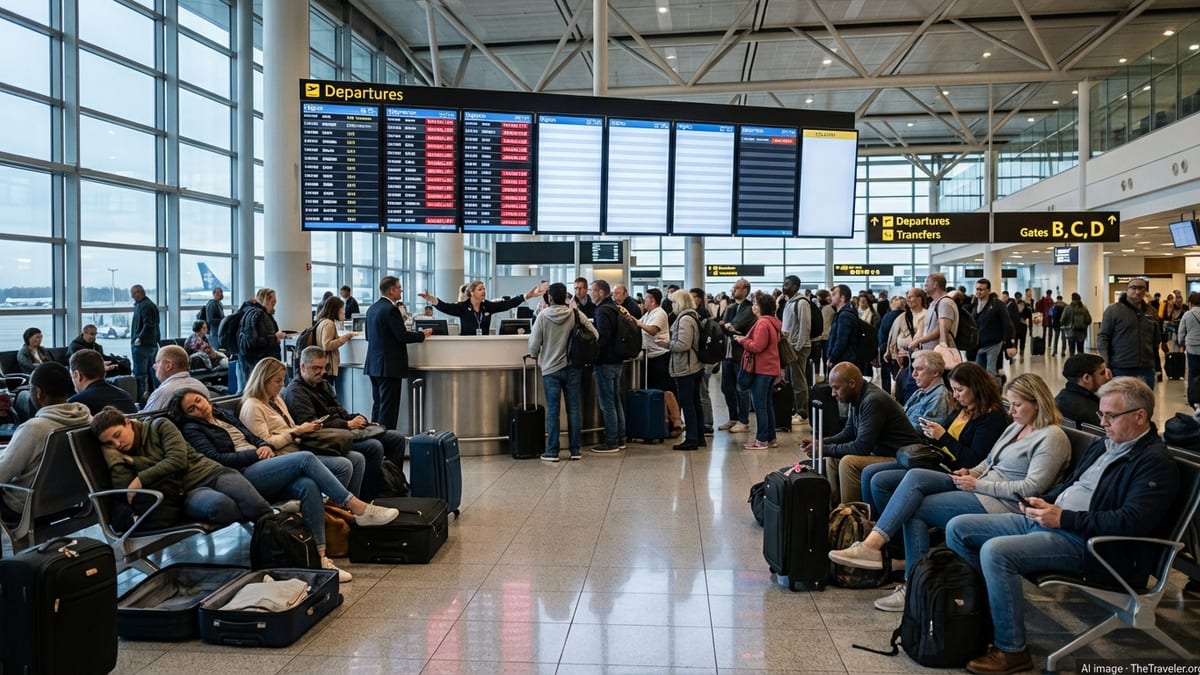
New wave of security alerts across the region
Publicly available security notices issued on November 7 by the US mission in the United Arab Emirates and other embassies in West Asia highlight what officials describe in published coverage as an increased threat of armed attacks by Yemen’s Houthi movement and concerns about Iranian activity targeting US interests. The alerts reference a pattern of recent missile and drone strikes on Saudi Arabia, including attacks on civilian airports and infrastructure that caused casualties and extensive travel disruption.
Coverage in regional and US outlets shows that the November 7 messages build on a broader campaign of warnings that began in October, when diplomatic posts from Israel to the Gulf circulated near-identical language urging Americans to “exercise heightened vigilance” and be prepared for flight cancellations and airspace closures. The alerts do not cite specific new plots, but collectively frame Houthi and Iranian-linked threats as broad-based, spanning aviation, government facilities, and locations associated with the United States.
The State Department’s global “Worldwide Caution,” last updated in July 2026, similarly notes that Iran and groups supportive of Iran may target US interests overseas or locations associated with the United States and Americans, reinforcing the concern that attacks may not be limited to conflict zones. The latest regional alerts refer back to these standing cautions while emphasizing the immediate impact on day-to-day travel across West Asia.
Reports also indicate that security messages are directing US citizens to enroll in the Smart Traveler Enrollment Program, which allows embassies to push real-time security updates and contact travelers in an emergency. For Americans already in West Asia, this system is being portrayed in public information as a primary channel for rapidly changing guidance on routes, curfews and airport status.
Air travel: closures, diversions and longer journeys
Publicly available information from recent security alerts and media coverage shows that the most visible effect for travelers has been on commercial aviation. Advisories distributed in October and early November warn that airports in Saudi Arabia and neighboring states face an elevated risk of Houthi missile and drone attacks, particularly facilities linked to international traffic and energy infrastructure.
According to recent reporting, an October 10 strike on Riyadh’s main international airport killed an American citizen and prompted a fresh round of warnings urging US travelers to reconsider nonessential trips and to monitor airline communications closely for last-minute changes. Subsequent alerts stress that even airports not directly hit may experience knock-on effects, such as temporary airspace closures, rerouted flights and extended security checks.
Travel data cited in news coverage indicates that major carriers serving hubs such as Riyadh, Jeddah, Dubai and Abu Dhabi have added routing buffers around high-risk areas, increasing flight times on some West Asia and Red Sea corridors. In certain cases, airlines have reportedly re-routed services away from the most exposed southern Red Sea approaches, contributing to delays and more complex connection patterns for passengers flying between Europe, Asia and Africa.
For Americans planning trips into or through the region, publicly available guidance now emphasizes building flexibility into itineraries, including additional connection time and contingency plans for overnight stays. The security alerts also encourage travelers to carry sufficient funds and essential medications in hand luggage in case of unexpected diversions or extended airport closures.
Maritime routes under pressure from Houthi activity
Beyond air travel, maritime advisories from the US Maritime Administration describe a persistent threat environment in the Red Sea, Bab el Mandeb Strait, Gulf of Aden, Arabian Sea and the wider Somali Basin, with specific reference to Houthi attacks on commercial shipping. A current advisory, numbered 2026-013, notes that from November 2023 to October 2025 more than 100 Houthi attacks on commercial vessels were recorded, affecting ships linked to over 60 nations and disrupting one of the world’s most important trade arteries.
Although some reporting indicates a reduction in the frequency of attacks in 2026 compared with earlier peaks, US maritime guidance states that the threat has not disappeared. The Houthis announced a blockade on Saudi-affiliated shipping transiting the Bab el Mandeb in July 2026, and security analysts continue to flag risks from anti-ship missiles, one-way attack drones and remotely operated surface craft in the southern Red Sea and adjacent waters.
Maritime security reports show that vessels with US, Israeli or UK associations, and companies publicly identified as trading with Israeli ports, are considered at elevated risk while transiting these choke points. Commercial operators are being urged in formal advisories to tighten electronic emissions, review ship security alert procedures and maintain close contact with regional maritime security centers.
For travelers, the direct effect is most visible in the cruise and ferry sectors, where itineraries that once passed routinely through the Red Sea and Gulf of Aden have been altered, shortened or temporarily suspended. Cargo-related delays can also ripple into passenger travel by affecting fuel supplies, port schedules and the availability of consumer goods in some coastal hubs.
Impact on popular destinations and regional hubs
The current US warnings are not limited to conflict frontlines such as Yemen and southern Saudi Arabia. Published summaries of embassy alerts show messages covering at least ten locations across West Asia, including Israel, Iraq, Jordan, the United Arab Emirates and other Gulf states, reflecting concern that Iranian-backed groups might widen their target set to include symbolic or soft targets further from Yemen.
In Israel, a September 19 security alert referenced by regional media instructed US citizens to exercise heightened vigilance amid renewed Houthi attacks on Saudi Arabia and the potential for broader Iranian and proxy activity. The message pointed Americans to local departure boards for Ben Gurion and Haifa airports and warned that sudden airspace closures or travel disruptions were possible even if Israel itself was not the primary target.
Similar wording has appeared in alerts across Gulf capitals, where major transit hubs such as Dubai and Doha handle large volumes of connecting passengers who never leave the airport. Public information suggests that these hubs remain open and heavily trafficked, but the warnings emphasize that indirect effects of regional strikes, including temporary rerouting of overflights and heightened security postures, can still disrupt itineraries.
Travel industry analysts quoted in recent coverage note that tour operators and corporate travel managers are reassessing risk for itineraries that rely on Saudi domestic connections, pilgrim routes and Red Sea coastal tourism. While many destinations remain open, the increased complexity of routing and the potential for sudden schedule changes are beginning to influence corporate travel policies and insurance decisions.
Guidance for Americans planning or continuing travel
Publicly available US government guidance encourages Americans considering travel to West Asia to check the State Department’s country-specific advisories, which in some cases now recommend reconsidering nonessential travel or avoiding particular border regions. Where commercial flights and overland routes remain available, the emphasis is on preparation rather than automatic cancellation, with travelers urged to maintain flexible tickets and closely monitor local developments.
The latest embassy alerts repeatedly highlight the value of the Smart Traveler Enrollment Program, which allows US citizens to receive security messages from nearby missions and facilitates contact in an emergency. Media reports indicate that recent alerts specifically invite Americans already in the region to enroll or update their contact details so that they can receive rapid instructions if airports close or if local security conditions deteriorate.
Travel insurers and risk consultancies cited in open-source reporting are advising clients to review policy language carefully, particularly clauses related to war, terrorism and government-ordered closures. Some policies distinguish between changes caused by airlines and those stemming from state security decisions, which can affect eligibility for refunds or alternate routing support.
For now, there is no blanket US directive halting civilian travel to West Asia, and many flights continue to operate into major hubs. However, the breadth and tone of recent US alerts, combined with detailed maritime warnings covering the Red Sea and adjoining waters, underscore that Americans visiting or transiting the region face an unusually fluid environment in which security developments tied to Iran-backed Houthi activity can quickly translate into real-world disruption.