


More news on this day
More than 6,750 flight delays and 283 cancellations centered on the Chicago and New York metropolitan hubs this week are highlighting what analysts describe as an intensifying reliability crisis in United States air travel during 2026.
Get the latest news straight to your inbox!
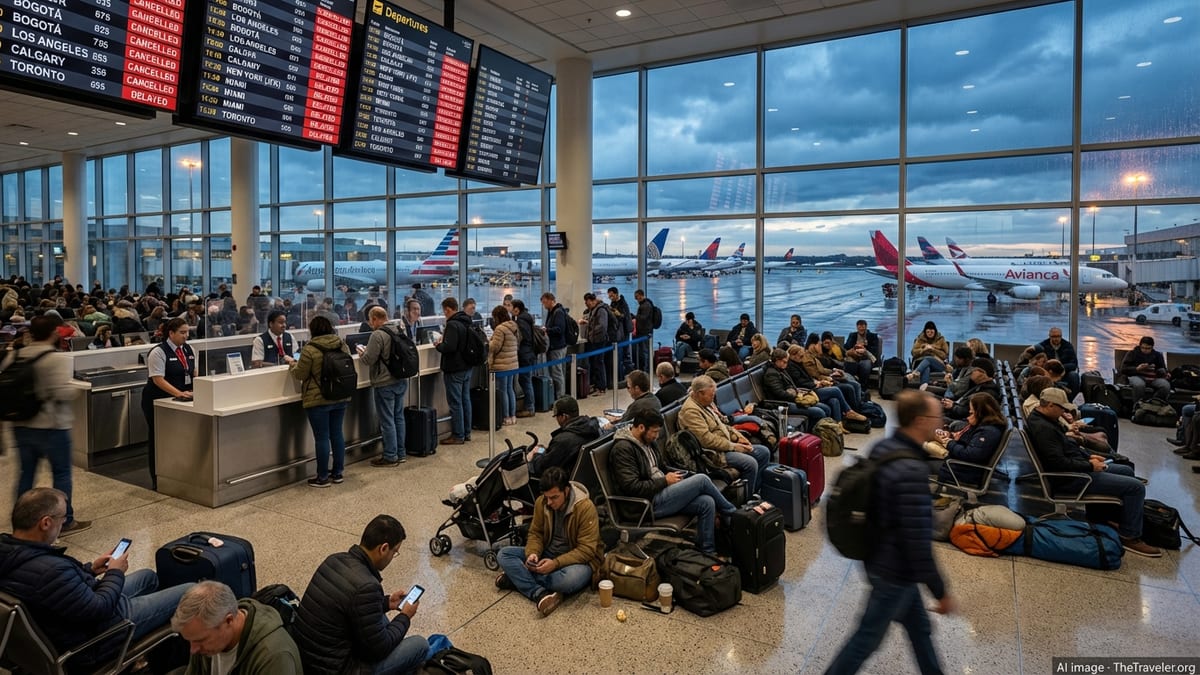
Severe Weather Sparked a Chain Reaction Across Key Corridors
Publicly available disruption summaries indicate that the latest wave of delays and cancellations was triggered by strong late-summer thunderstorms sweeping across the Midwest and East Coast on September 3 and 4, 2026. Storm systems moving through the Great Lakes and Mid-Atlantic regions produced low clouds, lightning and temporary ground stops that forced aircraft to wait on the tarmac or remain at gates instead of departing on schedule.
An overview from one disruption-tracking service notes that similar storm conditions earlier in the week had already caused at least 283 flight cancellations and around 6,750 delays, with Chicago seeing particularly heavy disruption. These figures align with live U.S. operational totals from flight-tracking platforms, which show thousands of domestic flights running late or being withdrawn from schedules on the most impacted days.
Federal aviation operations planning published for September 4 pointed to possible thunderstorm-related delays at Chicago O’Hare and Midway as well as New York’s major airports, alongside other hubs including Philadelphia, Washington and several Florida cities. The combination of convective weather, low ceilings and traffic management initiatives in crowded terminal areas led to reroutes, metering programs and, in some cases, temporary ground stops that restricted departures and arrivals.
While storms were the immediate trigger, transportation coverage stresses that weather alone does not explain the scale of disruption. Instead, the storms acted as a stress test for a system already operating near capacity at many large hubs, amplifying every minor delay into hours-long knock-on effects across the national network.
Chicago and New York Hubs at the Center of the Disruption
Analyses drawing on aviation tracking data show that Chicago O’Hare International Airport emerged as one of the worst-affected facilities, recording more than 1,000 delayed flights within the broader pool of 6,750 delays. Chicago Midway also experienced schedule pressure as thunderstorms and traffic-management programs pushed arrival and departure banks out of their planned windows.
New York’s busy metropolitan system added another choke point. Reports summarizing the disruption note that LaGuardia registered some of the highest cancellation counts, with more than 80 flights dropped during the worst of the storm impacts. Advisory messages from federal air traffic command also referenced the potential for ground stops and delay programs affecting John F. Kennedy International Airport and the wider New York terminal area, underscoring how quickly capacity can be reduced when thunderstorms move through constrained East Coast airspace.
Real-time dashboards built on federal data show that, even as conditions improved by September 5, major hubs including Chicago O’Hare, JFK, LaGuardia and Newark remained under close operational watch. On-time indicators for that morning were generally positive, but total national figures compiled by flight-tracking services still reflected thousands of delays and hundreds of cancellations within, into or out of the United States over the preceding 24-hour periods.
For travelers transiting between Chicago and New York, the combination of weather-sensitive airspace, limited slack in schedules and dependence on hub-and-spoke connections meant that a single missed departure could quickly cascade into missed onward flights, overnight stays and rebookings spread over multiple days.
Structural Fragilities: Congested Skies and Tight Schedules
Beyond the immediate weather disruption, the episode is renewing scrutiny of how tightly scheduled the U.S. aviation system has become at its largest nodes. Regulatory filings and policy documents released over the past year show that authorities have repeatedly flagged Chicago O’Hare, JFK and Newark as structurally congested airports where small disturbances can quickly ripple across national traffic flows.
In notices related to the Summer 2026 scheduling season, federal regulators highlighted concerns that added capacity at O’Hare, layered on top of construction and existing congestion, could lead to significant delays if not carefully managed. Separate analyses of New York area traffic emphasize that high volumes combined with complex, interdependent airspace and staffing shortfalls at key control facilities have produced persistent delay risks that are difficult to resolve in the short term.
Historical performance reports from the transportation sector further describe Chicago and the three primary New York airports as long-standing sources of delay contagion. Because these hubs serve as major connection points and handle dense banks of arrivals and departures, even moderate schedule shocks can cause widespread missed connections and aircraft rotations that run late for the rest of the day.
The early September storm disruptions fit that pattern. Once ground stops and flow-control measures were imposed at O’Hare, Midway, LaGuardia and JFK, carriers had limited room to recover. Aircraft and crews needed for later flights were left out of position, and available gate and runway capacity had to be rationed carefully as weather windows opened and closed.
Travelers Face Mounting Reliability Concerns in 2026
For passengers, the latest figures from Chicago and New York add to a perception that flying within the United States has become less predictable in 2026. Travel outlets tracking the recent disruption describe a landscape in which major metropolitan systems across the Midwest, Northeast and Florida appear near the top of delay and cancellation tables week after week.
Consumer-rights organizations that monitor disruptions have also been documenting increased demand for compensation advice and rebooking assistance following large-scale weather events. One widely cited disruption briefing focused on September 3 emphasized that airlines canceled hundreds of flights and delayed thousands more across a handful of major airports, and explained why many of those cases are considered outside carrier control under current regulations.
At the same time, travel waivers and flexible rebooking options have become a regular feature of peak storm periods for passengers using New York and other East Coast airports. Informal reports and public postings from recent months show that carriers have repeatedly issued waivers tied to thunderstorm outbreaks around JFK, LaGuardia and Boston, encouraging travelers with flexible plans to shift itineraries away from the most threatened travel dates.
Analysts following the sector suggest that, unless scheduling, staffing and infrastructure pressures ease, similar episodes to the early September disruption at Chicago and New York hubs may continue as weather systems intersect with an already stretched network.
What the Latest Numbers Mean for the Rest of September
By the morning of September 5, live airport-status dashboards indicated that most major U.S. hubs, including Chicago and New York, were operating without extraordinary delay programs in place. Nonetheless, national statistics compiled by flight-tracking platforms still showed tens of thousands of delays and several hundred cancellations over the preceding day, highlighting how long it can take for the system to fully stabilize after a major disturbance.
Industry and regulatory publications point to several factors that will influence how the rest of September unfolds. Seasonal thunderstorms remain a threat across the Midwest and East Coast for several more weeks, and ongoing construction and runway work at some large airports restrict operational flexibility. Meanwhile, the tail end of the busy summer travel season continues to keep load factors high, leaving few empty seats for rebookings when things go wrong.
Scheduling notices for the Summer 2026 season also indicate that authorities are working with airlines to better match planned operations to realistic capacity levels at Chicago O’Hare, JFK and other congested airports. However, those measures are designed on a seasonal basis, and their impact on day-to-day resilience during active weather patterns will only become clear over time.
For now, publicly accessible planning tools and advisories recommend that passengers traveling through Chicago and New York during unsettled weather periods build in longer connection times, monitor flight status frequently and consider earlier departures when possible, particularly during late-afternoon and evening hours when historical delay statistics often peak.
US flight delays and cancellations analysis – NomadLawyer
Storm-related disruptions and statistics – AirHelp