


More news on this day
The United States Embassy in Jerusalem has issued a new security alert ahead of Yom Kippur, warning American travelers to Israel to brace for possible flight cancellations, airspace closures and sudden changes to travel plans as regional tensions rise.
Get the latest news straight to your inbox!
Security Alert Issued Ahead of High Holy Day
According to publicly available information on the US Embassy’s website and related media coverage, the security alert was issued on September 19, 2026, as Israel moves into the peak of the Jewish High Holy Days period. Yom Kippur in 2026 begins at sundown on Sunday, September 20, and ends after nightfall on Monday, September 21, a time when much of the country traditionally comes to a standstill.
The alert advises US citizens traveling to, from or through Israel to exercise increased caution and to monitor their itineraries closely in the days surrounding the Day of Atonement. Coverage of the notice indicates that travelers are being told to expect potential disruptions at short notice, including changes to commercial flight schedules and possible airspace restrictions affecting Ben Gurion Airport and other regional hubs.
The warning forms part of a broader pattern of updated security messages issued across the Middle East in recent days. Publicly accessible summaries of the alerts show that they highlight both the risk of regional spillover from ongoing tensions and the operational challenges of traveling during one of Israel’s most significant religious holidays.
Potential Flight Cancellations and Airspace Closures
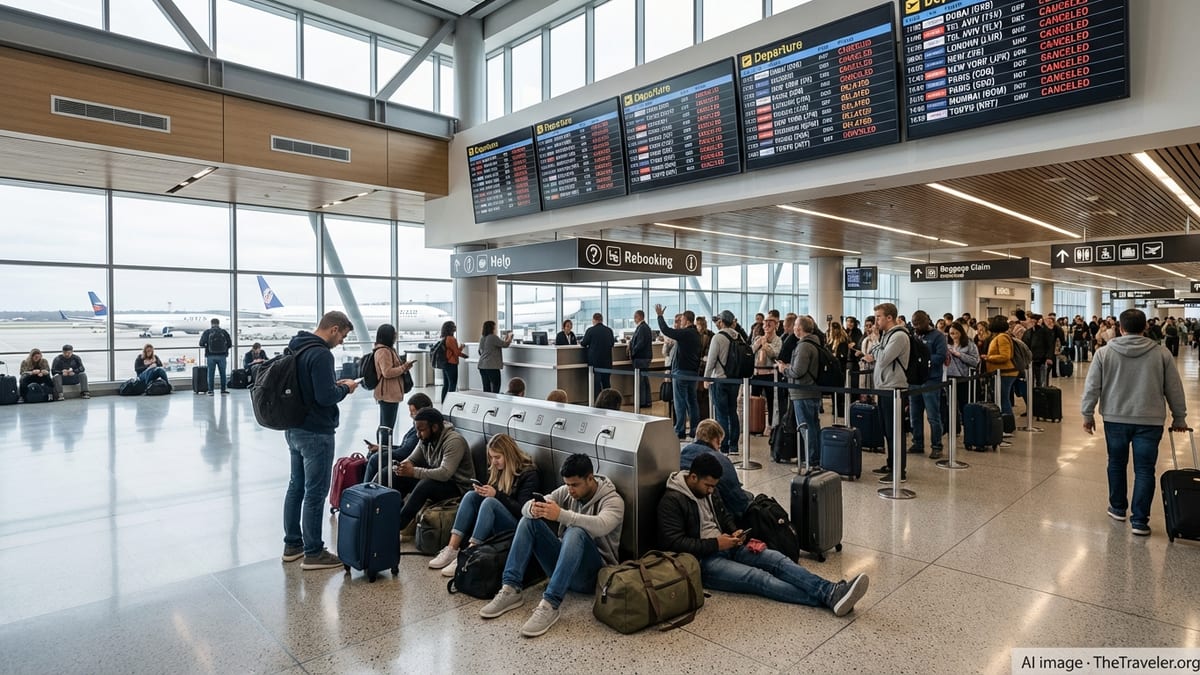
Reports summarizing the embassy alert state that American travelers should be prepared for flight cancellations, delays and diversions involving Israel’s main international gateway, Ben Gurion Airport near Tel Aviv. Airlines may alter or suspend services with limited advance notice if security conditions change or if Israel imposes temporary airspace restrictions around the holiday period.
Travel information services note that even under normal circumstances, flight schedules around Yom Kippur are significantly reduced as many carriers avoid operating during the 25-hour fast, when road traffic falls sharply and most public services shut down. This year’s embassy alert suggests that the reductions could be compounded by wider regional developments, increasing the likelihood of last‑minute timetable changes.
The State Department’s general guidance for Americans traveling in the Middle East, updated earlier in 2026, already recommends that citizens enroll in the Smart Traveler Enrollment Program to receive email or SMS notifications of security developments affecting their routes. The new Jerusalem alert reinforces those recommendations, underscoring the value of real‑time updates for anyone connecting through Israel to other destinations in the region.
Travel industry monitoring indicates that some airlines serving Israel have begun adjusting capacity and advising passengers to reconfirm departure times 24 to 48 hours before travel. While many flights are still operating, booking platforms and carriers’ own channels show an above‑average number of schedule changes compared with typical off‑peak periods.
Heightened Tensions During Yom Kippur Period
The alert comes at a time when Israeli security forces are already reported to be preparing extensive operations in the West Bank and Jerusalem in response to recent incidents and concerns over potential escalations during the holiday season. Local and international coverage from Israel describes a visible increase in checkpoints, patrols and road closures as authorities seek to maintain calm throughout Yom Kippur.
Regional news reports also highlight parallel US advisories in nearby countries, reflecting wider uncertainty in the Middle East. Analysts quoted across several outlets point to the risk that developments involving Iran‑aligned groups, including cross‑border threats and long‑range missile capabilities, could affect aviation and security planning across multiple states, including Israel.
Within Israel itself, Yom Kippur is typically marked by empty highways, closed shops and minimal public transport, creating a unique environment for visitors. Published travel accounts describe the quiet streets of Jerusalem and Tel Aviv during the fast as striking even in calmer years. Against the backdrop of the latest embassy alert, safety experts consulted in news coverage are emphasizing that the combination of reduced services and elevated security postures can make unplanned changes more disruptive for foreign visitors.
Publicly available travel safety notices from other governments, including European and Asian states, similarly caution that Jewish holiday periods in Israel can coincide with an increase in security incidents or tensions, particularly in and around Jerusalem’s Old City and flashpoint sites in the West Bank. The latest US alert aligns with that pattern, while placing special emphasis on the impact on air travel.
Practical Guidance for American Travelers
In line with State Department recommendations, the embassy alert encourages Americans in Israel to maintain situational awareness, pay attention to local media and follow instructions from local security and emergency services where relevant. Travelers are advised to keep mobile phones charged, carry copies of travel documents and ensure that airlines, tour operators and accommodation providers have up‑to‑date contact details.
Public information from US consular services stresses the importance of flexible planning, urging travelers to build extra time into itineraries, avoid tight same‑day connections and consider purchasing tickets that allow changes without excessive penalties. Travel insurance policies that explicitly cover trip interruption, missed connections and security‑related disruptions are also being highlighted in industry commentary as a potentially valuable safeguard for the 2026 High Holy Days period.
For those already in Israel, guidance circulating in traveler forums and news features suggests stocking up on essentials before Yom Kippur, as many supermarkets, restaurants and pharmacies close for at least 24 hours, and public transport largely halts. Visitors staying in central Jerusalem or Tel Aviv are often reminded that services may taper off several hours before the fast begins and may not resume fully until the following day’s evening.
US government resources emphasize that citizens seeking assistance can reach American consular staff by telephone or through online contact forms, even when routine in‑person services are reduced. Travelers are encouraged by official channels to keep copies of emergency contact numbers readily available in case of unexpected changes or incidents.
What Travelers Should Watch in the Coming Days
As Yom Kippur approaches, aviation analysts and regional correspondents are closely watching for further adjustments to airline schedules serving Tel Aviv, as well as any announcement of expanded airspace restrictions. Industry observers note that decisions can be implemented quickly if security assessments change, with knock‑on effects for connecting flights in Europe and North America.
Travelers are being advised in media reports to track updates from both their carrier and airport operators in real time, including potential changes in check‑in cut‑off times and security screening procedures. Some airlines are already recommending that passengers arrive earlier than usual at Ben Gurion Airport in the days immediately before and after the holiday to accommodate possible congestion or additional checks.
Security commentators writing in regional outlets point out that the end of Yom Kippur does not automatically bring an immediate return to normal operations. With further Jewish holidays such as Sukkot approaching soon after, and with regional dynamics still uncertain, a rolling pattern of heightened security measures and altered transportation schedules is considered possible into early October.
For now, the embassy’s message underscores a clear central theme for US travelers: trips to Israel around Yom Kippur 2026 remain possible, but require unusual flexibility, close monitoring of conditions and a willingness to adjust plans quickly if the security or aviation picture shifts.