


Ask a dozen travelers whether Vatican City or the ruins of Ancient Rome left a bigger mark on them and you will hear a dozen different, very passionate answers. Both experiences are intense in completely different ways. One is a plunge into faith, Renaissance genius and papal power. The other drops you into the everyday world of emperors, gladiators and citizens whose city once ruled the known world. Deciding where to spend your limited time and money in Rome in 2026 is not just a logistical question. It shapes how you will remember the city for years to come.
Get the latest updates straight to your inbox!
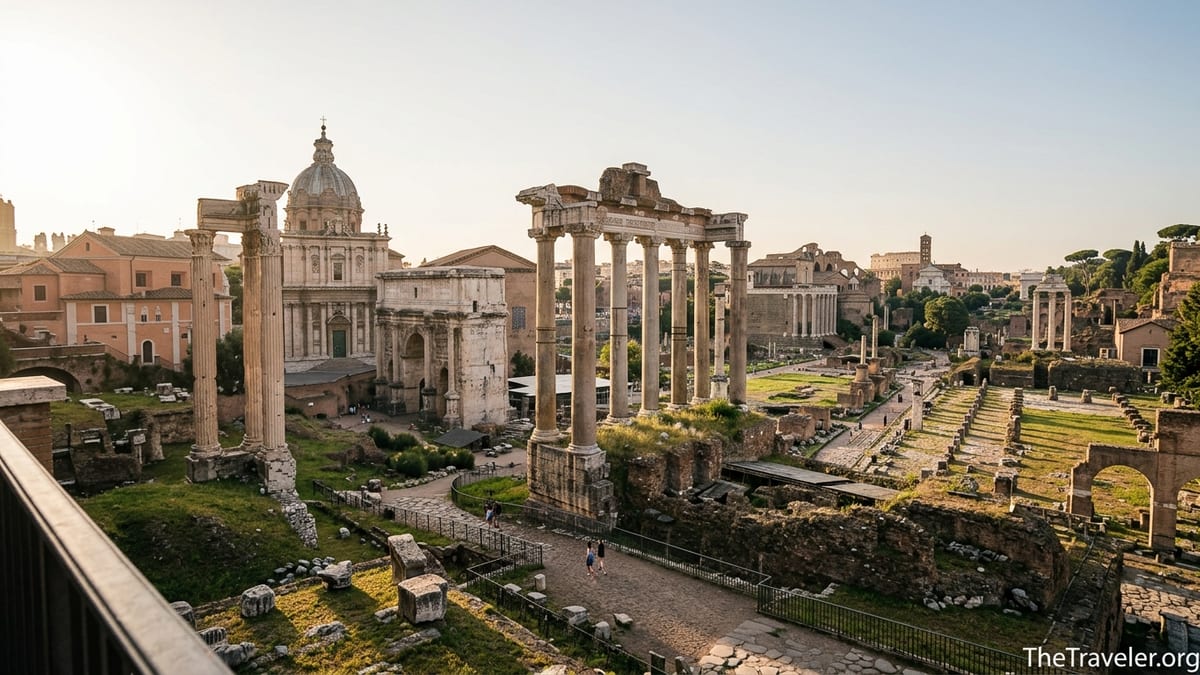
The Emotional Punch: Spiritual Awe vs Historical Imagination
The Vatican experience is often described as overwhelming in the most literal sense. Stepping into the Sistine Chapel at the end of the Vatican Museums route, you stand shoulder to shoulder with visitors from every continent, all craning their necks toward Michelangelo’s ceiling. The sheer density of art in those final minutes can be almost exhausting, but many travelers still describe a quiet, personal jolt when they finally see the Creation of Adam with their own eyes. For practicing Catholics, attending a papal audience in St Peter’s Square or simply sitting in the basilica in front of the Pietà adds an intensely spiritual layer that can be deeply moving.
Ancient Rome’s impact is usually slower and more physical. Walking through the Colosseum and then down into the Roman Forum pulls you into an enormous open-air stage where everyday life, politics and spectacles once played out. The emotion here is less about hushed reverence and more about wonder at scale and continuity. You can stand on the Palatine Hill, look down over the Forum, and trace the route of triumphal processions while hearing modern scooter horns in the distance. That clash of eras makes many travelers feel the weight of history in a very tangible way.
For some, Vatican City feels more curated and controlled, a polished sequence of masterpieces framed by velvet ropes and timed entry slots. Ancient Rome feels more like exploration. You wander among broken columns, bake in the Mediterranean sun and read small plaques to reconstruct stories in your mind. If you are the type of traveler who is more moved by imagination and space than by masterpieces, the Forum and Palatine Hill may ultimately leave a deeper impression.
Age and personal background matter too. First-time European travelers, especially students and art lovers, often cite the Vatican Museums and Sistine Chapel as the singular highlight of their trip. Visitors who have seen many cathedrals and galleries sometimes report that standing inside the Colosseum, with its elliptical walls rising around them, was the moment when Rome stopped being an idea and became a real place.
What You Actually See: Highlights of Each Experience
A standard Vatican Museums ticket in 2026 takes you through a curated path of galleries that can easily run 2 to 3 kilometers of walking. You move from ancient sculptures like the Laocoön Group to intricate tapestries and the famous Raphael Rooms, before being funneled into the Sistine Chapel as the finale. Along the way you glimpse courtyards, papal apartments and collections of everything from Egyptian mummies to early Christian art. Although you do not see every one of the Vatican’s 24 or so galleries, the standard route is enough to fill most people’s capacity for art in a single visit.
St Peter’s Basilica is technically separate, but for many visitors it is inseparable from the museum experience. Climbing the dome gives you a panoramic view over St Peter’s Square and the rooftops of Rome, while walking through the nave places you under one of the largest church interiors in the world. The feeling is of power and permanence. Even visitors who are not religious often remark on how small they feel under the coffered ceiling and Bernini’s immense bronze baldachin.
On the Ancient Rome side, the standard combined ticket covers the Colosseum, Roman Forum and Palatine Hill. Inside the Colosseum, you can circle the upper levels to see the reconstructed arena floor, stand at edge viewpoints and examine small exhibits on building techniques and gladiatorial games. Many travelers now opt for the “full experience” ticket or guided tours that include access to the underground levels and arena floor. Stepping out onto the arena itself, even for a few minutes, can be far more impactful than viewing from the stands, because you see the structure from the gladiators’ perspective rather than as a passive spectator.
The Forum and Palatine offer a different type of highlight. Here the attraction is not one iconic view, but the layering of them: the Arch of Titus, the House of the Vestal Virgins, the remains of the Temple of Saturn, the imperial palaces spread across the Palatine ridge. A traveler who takes the time to sit with a map or guidebook and match ruins to stories often leaves with a more textured sense of how Rome once worked as a living city.
Time, Crowds and Practical Impact on Your Day
In 2026, both sites are heavily managed, and the practical experience has a big influence on how impactful your visit feels. The Vatican Museums require timed-entry tickets, and in busy periods many popular morning and mid-morning slots sell out days or weeks ahead. Official ticket prices for basic adult entry are in the mid-20 euro range, with an additional online booking fee, while third-party “skip-the-line” options and small-group tours often run from about 40 to over 80 euros per person, depending on extras like early access or after-hours entry. For most travelers this is one of the largest single-ticket expenses of a Rome trip.
Once inside, you are effectively in a one-way system that can take 2 to 4 hours, longer if you browse slowly or add a guided tour. Corridors can be very crowded in high season, especially near the Raphael Rooms and along the approach to the Sistine Chapel. That density can dilute the emotional impact for some visitors, who remember shuffling through hot rooms more than the art itself. Others accept the crowds as the price of seeing world-famous masterpieces and still come away inspired.
At the Colosseum and Forum, crowd management also relies on strict timed entries for the amphitheater itself. Recent changes have made same-day tickets harder to obtain in person, pushing most travelers to buy online in advance. The standard combined ticket is typically around the high teens in euros and includes 24-hour access to the Forum and Palatine Hill, which you can visit either before or after your Colosseum slot. That flexibility allows you to break up the day, perhaps seeing the Colosseum in the cooler early evening and wandering the Forum in the morning light the next day.
In practice, this means a Vatican day often feels like a single dense block of culture, while an Ancient Rome day can be stretched and paced. If you are sensitive to heat and crowds, the shaded interiors of the Vatican Museums can be physically more comfortable than the sunbaked stones of the Forum in July. On the other hand, being outdoors with room to breathe can feel more relaxing and allow the experience to sink in more deeply than walking in a slowly advancing river of people inside museum corridors.
Cost, Value and How Far Your Ticket Really Goes
When travelers compare Vatican City versus Ancient Rome, cost is rarely the only factor, but it shapes expectations. A basic Vatican Museums ticket in 2026 sits around the mid-20 euro mark for adults, plus a small reservation fee if booked online. Audio guides, official guided tours, and evening openings add layers of cost. On peak days, when regular tickets are sold out, many travelers turn to third-party platforms offering “ticket only” or “escorted entry” packages in the 70 to 90 euro range. You are paying at that point for convenience and access rather than extra content, and it can raise expectations for a genuinely transformative experience.
The Colosseum, Forum and Palatine combined ticket remains relatively better value. The standard 24-hour ticket runs close to 18 euros for adults on the official channel, which gives you entry not only to the arena but also to an entire archaeological park that can comfortably fill half a day or more. Upgraded “full experience” tickets that include the underground areas or special exhibits cost more, but the premium is often smaller than the jump between basic and “skip-the-line” Vatican products. For many budget-conscious travelers, this means they feel more satisfied with the return on investment from their Ancient Rome day.
Hidden costs should also be considered. At the Vatican, the route funnels you through gift shops full of religious items, art books and souvenirs. While none of this is mandatory, the environment encourages spending a little extra, whether on postcards of the Sistine Chapel or a rosary blessed in St Peter’s Square. Around the Colosseum and Forum, the main add-ons tend to be cold drinks, sun hats and the occasional impulse purchase from street vendors. The temptation to overspend can feel less intense, even if you choose to add a paid guided tour.
One area where Vatican City can offer unique value is if you plan onward travel within the Church’s orbit. For example, current promotional agreements occasionally give Vatican ticket holders discounted entry to sites like the papal palace and gardens at Castel Gandolfo. Travelers who are already deeply interested in Catholic history or papal heritage can leverage this into a multi-day themed itinerary that feels cohesive and memorable.
Depth of History: Empire vs Church
The question of which experience leaves a bigger impact often comes down to which story of Rome resonates more with you: the imperial story or the Christian one. The ruins of Ancient Rome put you in contact with the city that once ruled an empire stretching from Britain to North Africa. Standing by the Arch of Titus, you can read reliefs celebrating the conquest of Jerusalem. Walking along the Via Sacra, you follow the path where emperors paraded war spoils and political prisoners. Visiting the Domus Aurea on a pre-booked guided tour, you step into the underground remains of Nero’s Golden House, once a symbol of imperial excess. These encounters make the rise and fall of Rome feel less abstract and more like a sequence of real decisions by flawed human beings.
Vatican City presents the later story of how Christianity became the dominant faith of that same empire and then outlived it. In the necropolis beneath St Peter’s Basilica, accessible by special “Scavi” tours, you can see tombs that date to early Christian times and the traditional site linked to the apostle Peter. In the museums above, Renaissance popes used art and architecture to assert their authority, commissioning works by Michelangelo and Raphael that still shape Western visual culture today. The Vatican is one of the clearest places in Europe where religion, art and politics visibly merge.
Travelers interested in continuity are often surprised by how the two experiences echo one another. Visiting both can show you a long arc: from the pagan temples of the Forum to the first house churches, from persecuted Christians to popes who crowned emperors. For some, the idea that an institution like the papacy now sits just across the Tiber from the ruins of the empire that once tried to suppress their faith is profoundly moving. Others are more struck by the sheer impermanence suggested by the crumbling stones of the Forum compared with the still-functioning bureaucracy of the Holy See.
If you have limited time and must choose, think about which questions you find yourself asking. Are you more curious about how an ancient empire organized its cities, entertainment and politics, or about how religion shaped Europe’s art, morality and power structures over the last fifteen centuries? Your answer will likely predict which experience lingers longer in your memory.
Types of Travelers and Which Experience Suits Them
Not every traveler is looking for the same kind of impact. Art and architecture enthusiasts usually find the Vatican almost compulsory. Where else can you walk past works by Raphael, Michelangelo and Bernini in a single morning? For photography-focused travelers, the interior of St Peter’s Basilica, the spiral staircase of the museums and the views from the dome provide endless material. If you routinely visit art museums at home and enjoy them, the Vatican will likely impress you more deeply than the weathered sculptures scattered through the Forum.
History lovers and fans of ancient civilizations, however, often find Ancient Rome more satisfying. There is a special thrill to picking out details like the seating hierarchy inside the Colosseum, or the remains of ancient plumbing and paving in the Forum. Children and teenagers sometimes connect better with stories of gladiators, emperors and fires than with frescoes and papal portraits. A family might spend a morning at the Colosseum with a guide who explains gladiator training and then let the kids run among the ruins on the Palatine Hill, turning the day into a sort of historical playground.
Travelers who dislike tight indoor spaces and dense crowds may find the Vatican stressful, especially in peak season. Anxious or introverted visitors sometimes report sensory overload partway through the museum route. For them, the open spaces of the Forum, where you can step aside, sit on a low wall and just watch the light move across the stones, feel more peaceful and restorative. Conversely, those who are sensitive to heat or mobility issues may prefer the relatively smooth floors, shade and on-site facilities of the Vatican Museums to the uneven, often dusty paths of the archaeological park.
Spiritual travelers, pilgrims and those with a personal connection to Catholicism almost always place Vatican City at the top of their list. Attending a mass in St Peter’s, seeing relics and tombs of saints, or simply lighting a candle can be powerfully moving in ways that go beyond aesthetic appreciation. For them, the impact of Ancient Rome is real but secondary, interesting as background to the story of the early Church rather than as a primary focus.
Designing Your Itinerary for Maximum Impact
If your schedule allows, the most impactful approach is not choosing one over the other but sequencing them to build a narrative. Many travelers find it helpful to visit Ancient Rome first, on their first or second full day in the city. Starting at the Colosseum and Forum grounds you in the pre-Christian story of Rome, from the mythical founding on the Palatine Hill to the height of imperial power. Spending 3 to 5 hours walking the archaeological park early in your trip gives you reference points that will echo as you explore the city’s later layers.
Later, perhaps on a slightly cooler or cloudier day, visit the Vatican Museums and St Peter’s. Knowing the outline of Roman imperial history makes the transition into the Christian and papal era clearer. When you look up at Michelangelo’s Last Judgment on the Sistine Chapel’s altar wall, you can frame it as part of a long tradition of power being expressed visually, just as the triumphal arches in the Forum once broadcast imperial victories. This narrative framing can make both experiences feel richer and more interconnected.
For travelers with only two full days in Rome, a common strategy is to dedicate one day entirely to Ancient Rome and one day to the Vatican area, without trying to cram in too many additional neighborhoods. On the Ancient Rome day, you might book a morning Colosseum slot, break for lunch on a nearby side street away from the main tourist strip, then wander the Forum and Palatine until late afternoon, finishing with sunset views from the Capitoline Hill. On the Vatican day, you could take an early timed entry to the museums, exit near St Peter’s and spend the afternoon visiting the basilica and climbing the dome, with time left for a slow coffee in the colonnaded square.
If you truly must choose only one, consider recent experiences. If you have just come from Paris and spent days in the Louvre and Orsay, your appetite for more dense museum corridors may be low, tipping the scales toward Ancient Rome. If instead you have been traveling through quieter Italian hill towns and have not seen major art collections, the concentrated hit of the Vatican Museums might feel refreshing and unforgettable.
The Takeaway
So which historic experience leaves a bigger impact, Vatican City or Ancient Rome? There is no universal answer, but there is likely a right answer for you. The Vatican is intense, curated and saturated with some of the greatest art of the Western tradition, crowned by the Sistine Chapel and the vastness of St Peter’s Basilica. For many travelers, especially those with an interest in art, faith or architecture, it is a once-in-a-lifetime experience that defines their memory of Rome.
Ancient Rome, centered on the Colosseum, Forum and Palatine Hill, is more spacious and open-ended. Its impact comes from physical immersion in a landscape of ruins, from the feel of worn stone steps under your shoes to the sight of modern Rome framed by ancient arches. It demands a bit more imagination but rewards you with a visceral sense of how ordinary and extraordinary lives unfolded two thousand years ago.
If you can, experience both and let them speak to each other. Start with the stones of the empire, then move to the frescoes and domes of the Church that followed it. Together, they tell one of the most compelling stories in human history, and it is that story, rather than any single monument, that tends to stay with travelers long after their flight home.
FAQ
Q1. If I only have one full day in Rome, should I choose the Vatican or Ancient Rome?
If you have never seen major Renaissance art in person and are comfortable with crowds, the Vatican Museums and St Peter’s Basilica may leave a stronger impression. If you prefer outdoor exploration, open views and ancient history, prioritize the Colosseum, Roman Forum and Palatine Hill instead.
Q2. Which is more crowded in 2026, the Vatican Museums or the Colosseum area?
Both can feel very busy in high season, but the Vatican Museums are often more consistently crowded indoors along a fixed one-way route. The Colosseum uses timed entries and the Forum and Palatine Hill offer more open space, so crowds can feel less compressed once you are beyond the Colosseum itself.
Q3. Is one experience better for children and teenagers?
Many families find Ancient Rome easier for younger travelers. Stories of gladiators, emperors and everyday life in the Forum tend to capture children’s imaginations, and the open areas allow them to move around more freely. The Vatican’s long corridors and dense artwork can be tiring for kids unless you choose a family-oriented tour.
Q4. Which site is more physically demanding?
The Vatican Museums involve several hours of indoor walking on relatively smooth floors, with occasional stairs and few places to sit. Ancient Rome demands walking on uneven stone, navigating hills on the Palatine and standing in the sun. Travelers with mobility or heat-sensitivity issues may find the Vatican somewhat easier, while those sensitive to crowding may prefer the open air of the Forum.
Q5. How much should I budget for each experience?
As of 2026, expect to pay in the mid-20 euro range for a basic adult Vatican Museums ticket booked directly, more if you add guided tours or third-party skip-the-line options. The standard Colosseum, Roman Forum and Palatine Hill combined ticket is typically around the high teens in euros, with higher prices for underground or arena access tours.
Q6. Can I visit both the Vatican and Ancient Rome in one day?
It is technically possible but not recommended if you want a meaningful experience. Each area can easily fill half a day or more, and combining them often leads to fatigue and reduced impact. Most travelers are happier dedicating separate days, or at least pairing one of them with a lighter neighborhood stroll rather than another major site.
Q7. Do I need guided tours, or is it enough to visit on my own?
Guided tours can significantly deepen both experiences by providing context and stories you might miss on your own. At the Colosseum and Forum, a good guide brings ruins to life. At the Vatican, a guide can help you navigate more efficiently and focus on key works. Independent travelers comfortable with research can still have rich visits using audio guides or well-chosen guidebooks.
Q8. Which experience is better for photography?
Ancient Rome generally offers more freedom for photography, with wide views, changing light and fewer restrictions. Inside the Sistine Chapel photography is forbidden, and some areas of the Vatican Museums restrict flash. However, St Peter’s Basilica and the Vatican courtyards are highly photogenic, so serious photographers may find value in both.
Q9. Does religious background change which site feels more impactful?
Yes, for many people it does. Catholic and Christian travelers often experience the Vatican as a pilgrimage, with emotional weight that goes beyond aesthetics. Non-religious visitors may still be moved by the art and architecture but sometimes report feeling a stronger connection to the universal human stories embodied in the ruins of Ancient Rome.
Q10. If I have already visited one, is the other still worth my time on a return trip?
Absolutely. The two experiences complement rather than duplicate each other. If you saw the Vatican on a previous visit, exploring Ancient Rome will fill in an earlier chapter of the city’s story. If you have walked the Forum and Colosseum before, seeing the Vatican’s art and St Peter’s Basilica will show you how Rome reinvented itself in later centuries.