


More news on this day
Thousands of airline passengers were left stranded across the United States as widespread cancellations and delays rippled through major airports in North Carolina, Georgia, Texas, Massachusetts, Florida, New York and California, with tracking data showing hundreds of flights grounded and more than twice as many running late for carriers including American Airlines, Delta Air Lines, JetBlue and Southwest.
Get the latest news straight to your inbox!
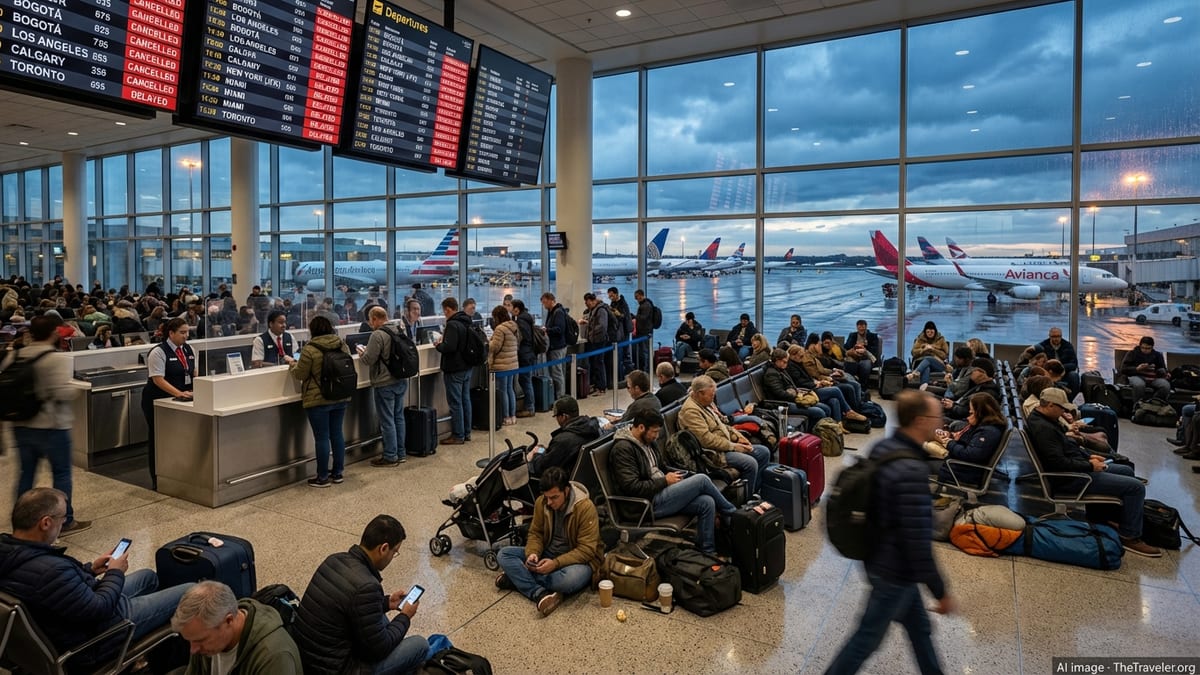
Ground Stops and Rolling Delays Hit Major Hubs
Tracking platforms showed at least 376 flights canceled and more than 800 delayed across the country, with disruption concentrated at some of the nation’s busiest hubs. Publicly available data indicated sharp spikes in cancellations at airports in Atlanta, Charlotte, Dallas Fort Worth, Boston, Miami, New York and Los Angeles, creating long lines, terminal crowding and missed connections throughout the day.
Reports indicate that the pattern resembled previous large-scale breakdowns, in which a sudden shock to airline operations quickly cascaded across networks. In those events, a tightly scheduled system left little slack to recover once crews and aircraft slipped out of position, leading to compounding delays that stretched into subsequent days and across multiple regions.
In several of the affected states, weather added another layer of complexity, with thunderstorms and low visibility periodically slowing arrivals and departures. Aviation analysts note that when bad weather coincides with scheduling or technology problems, the combined effect can be far more disruptive than either factor alone, particularly at hub airports that funnel traffic from dozens of spokes.
The Department of Transportation’s own consumer reports have documented how even modest disruptions can translate into thousands of stranded travelers once knock-on effects are taken into account. Those reports show that cancellations at major carriers often cluster at large hubs, where each grounded flight can derail travel plans for hundreds of passengers at a time.
American, Delta, JetBlue and Southwest Under Pressure
American Airlines, Delta Air Lines, JetBlue Airways and Southwest Airlines were among the carriers most visibly affected by the latest wave of disruptions, according to flight-tracking tallies and airline status boards. These four airlines together move a substantial share of US domestic traffic, so concentrated operational problems at any one of them can quickly become a national story.
Recent federal data highlight how thin the margins are. In monthly Air Travel Consumer Reports, American, Delta, JetBlue and Southwest collectively operate hundreds of thousands of flights, yet even a cancellation rate near one percent still equates to thousands of lost flights in a matter of weeks. When extraordinary events push those numbers higher, the practical impact for travelers can be severe, with many facing overnight waits and forced rebookings.
The industry has already been under scrutiny after previous technology-related meltdowns and scheduling crises, including a widespread outage in 2024 linked to software used across multiple sectors and a separate episode at one major carrier that led to thousands of cancellations over several days. Those incidents prompted renewed debate over how airlines manage their IT systems, crew scheduling and customer care obligations when flights are canceled for reasons within their control.
Publicly available information shows that regulators have increasingly questioned how carriers classify such disruptions and whether passengers receive the refunds, meal vouchers and hotel accommodations promised in customer service plans. With fresh waves of cancellations and delays now affecting multiple states on the same day, pressure is likely to grow for airlines to demonstrate they can both prevent and manage crises more effectively.
Stranded Travelers Face Long Lines, Limited Options
For passengers at the center of the turmoil, the statistics translated into hours of uncertainty. Images and local coverage from airports around the country showed dense crowds at check-in counters and customer service desks as travelers tried to secure new itineraries, hotel rooms or basic information about when they might depart.
Travel guidance published after earlier nationwide outages has urged passengers to lean heavily on airline mobile apps and text alerts, which often update more quickly than terminal displays. Consumer advocates also stress that, when long delays become unavoidable, travelers should document expenses and keep records of communications with carriers in case they later seek refunds or reimbursements.
However, reports from previous mass disruption events suggest that overwhelmed systems can leave passengers with limited options. When large numbers of flights are canceled at the same time, spare seats on alternative departures quickly disappear, particularly on peak travel days. Some travelers resort to renting cars, booking last-minute rail tickets where available, or piecing together multi-stop itineraries on different airlines just to reach their destinations.
Families with young children, elderly passengers and those connecting to international flights are often hit hardest. During past disruptions, consumer complaints compiled by federal agencies have frequently cited difficulty accessing assistance, inconsistent information about rebooking options, and confusion over what compensation is available when delays stretch into overnight stays.
Why the US Air Travel System Is So Vulnerable
Aviation analysts have long warned that the US air travel system is highly efficient but also highly brittle. Airlines cluster flights at hubs in tightly choreographed “banks” to maximize connections, but this approach leaves little buffer when conditions deteriorate. A short ground stop or computer outage can quickly snowball into a full-day disruption if it hits during a peak bank of departures and arrivals.
Industry data show that a significant share of delays each year is tied to weather and air traffic control constraints, but a growing portion stems from issues within the airlines’ own operations, such as crew scheduling, aircraft maintenance and IT failures. Research published in recent years indicates that outdated software and complex legacy systems remain a persistent vulnerability, even as carriers invest heavily in mobile apps and customer-facing upgrades.
Events in 2023 and 2024 underscored how technology can become a single point of failure. A flawed software update affecting systems that many airlines depend on resulted in grounded flights and mass cancellations worldwide, while separate internal IT problems at individual carriers produced similar chaos on a smaller scale. In each case, recovery took days rather than hours, and normal operations did not resume until aircraft and crews could be repositioned throughout sprawling route networks.
The latest disruptions echo those earlier lessons, showing that even when safety is not in question, reliability can suffer quickly when any component of the system breaks down. With travel demand remaining strong and passenger numbers often exceeding pre-pandemic levels, experts suggest that any future shock, whether technological, operational or weather-related, could again leave thousands of travelers stranded if resilience measures are not strengthened.
Regulatory and Customer Backlash Likely to Intensify
The scale of the latest wave of cancellations and delays is likely to fuel renewed calls in Washington for tougher consumer protections. Policy briefs and congressional research over the past year have floated proposals that would require airlines to provide automatic cash compensation, not just refunds and vouchers, when flights are canceled or severely delayed for reasons within their control.
Passenger-rights groups argue that, absent stronger rules, carriers lack sufficient financial incentives to invest in backup systems and operational resilience. They point to the sheer number of complaints filed after recent nationwide disruptions as evidence that existing protections and voluntary commitments have not been enough to deter repeated breakdowns.
Airlines counter that they already face significant costs from mass cancellations, including lost revenue, overtime pay, hotel bills and reputational damage. They also note that some events, such as widespread technology outages that touch multiple industries at once, can be difficult to foresee, even with robust contingency planning. Industry representatives have urged regulators to differentiate between problems fully within an airline’s control and those arising from broader infrastructure failures, severe weather or air traffic limitations.
For now, travelers are left to navigate an increasingly unpredictable environment. The latest disruptions affecting North Carolina, Georgia, Texas, Massachusetts, Florida, New York and California underline how quickly plans can unravel when hundreds of flights are grounded and hundreds more delayed. As peak travel periods approach, the question is whether airlines and regulators can translate hard lessons from recent crises into meaningful changes before the next shock hits.