


More news on this day
Airline passengers in the United States faced their most unreliable year of flying in more than a decade in 2025, with delays, cancellations and long tarmac waits all climbing to their highest levels in years, according to new analysis of federal transportation data.
Get the latest news straight to your inbox!
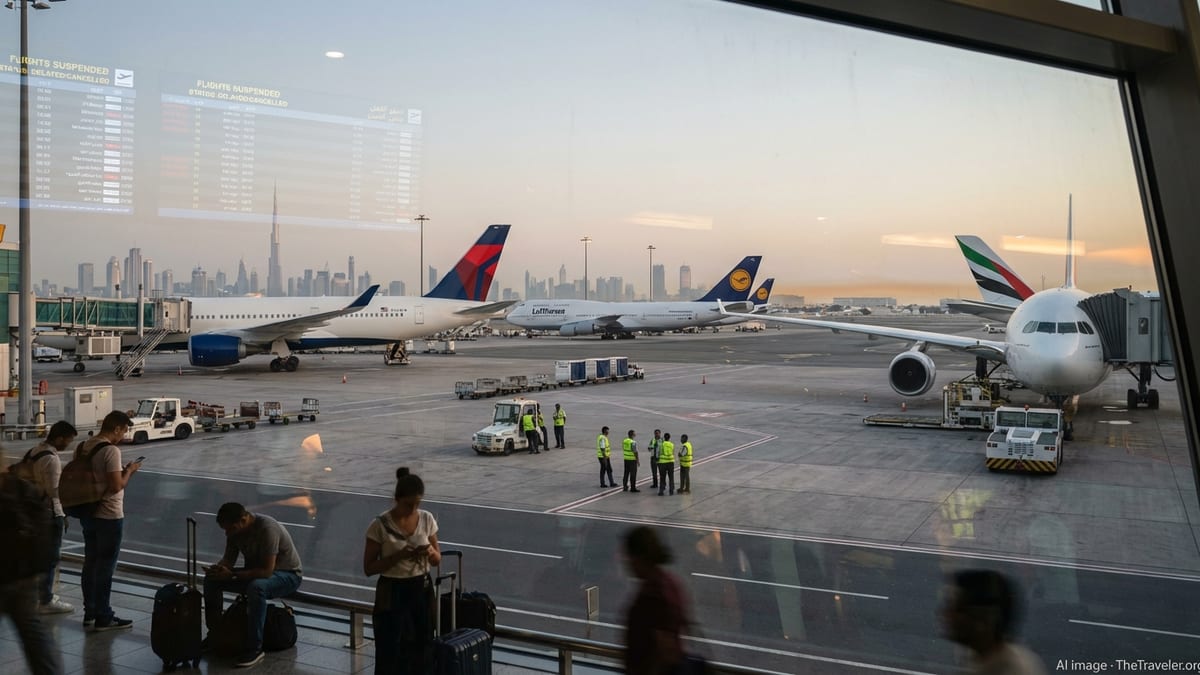
New report shows sharp deterioration in 2025 performance
A consumer advocacy review of federal statistics reports that nearly one in four flights touching U.S. airports in 2025 arrived late, was canceled or diverted, the weakest nationwide on-time arrival record since 2014. The findings are drawn from the latest installment of an annual report known as “The Plane Truth,” which analyzes U.S. Department of Transportation data on airline reliability.
The report indicates that the share of flights arriving on time fell even as total traffic continued to rebound, reversing improvements seen after the worst of the pandemic disruption. While the official full-year 2024 on-time arrival rate stood at just over 78 percent, already slightly below 2023, the new analysis suggests 2025 performance slipped further, with a noticeably larger share of flights running late or never taking off at all.
Published coverage of the data notes that more than 118,000 flights were canceled in the United States during 2025, adding up to millions of disrupted trips. Lengthy delays on the ground also worsened, with hundreds of domestic flights reportedly sitting on the tarmac for more than three hours, the highest number since federal limits on extended tarmac delays took effect in 2010.
The deterioration comes despite years of regulatory focus on consumer protections and punctuality. Transportation statistics show that airlines and airports have generally maintained strong safety records while struggling to keep operations running on schedule as demand resurged and new strains hit the system.
Tarmac waits climb to highest level since federal rules began
Long tarmac delays, in which passengers remain on board aircraft that are not moving or returning to the gate, represent one of the most contentious pain points for travelers. According to the latest analysis of federal numbers, U.S. carriers recorded more than 700 domestic tarmac delays lasting over three hours in 2025, along with several dozen international delays that exceeded four hours.
These figures mark the worst year for extended on-ground waits since the tarmac delay rules were introduced more than a decade ago. Those rules were designed to curb extreme situations in which travelers were stranded on aircraft for many hours without the option to disembark, and they allow for significant penalties when airlines fail to return to the gate within prescribed time limits.
Previous enforcement actions have highlighted the issue. Publicly available information shows that in recent years one major U.S. carrier faced a civil penalty of more than 4 million dollars for dozens of instances where passengers were kept on planes during prolonged tarmac delays. Regulators framed that action as a warning that extended on-board waits would draw heightened scrutiny.
Despite those signals, the new 2025 figures suggest operational pressures, congested airports and severe weather events combined to push more flights over the three-hour domestic and four-hour international thresholds. For passengers, the result is often hours spent on crowded aircraft with limited information, while crew and dispatchers seek scarce gate space or await clearance from air traffic control.
Causes range from staffing shortages to crowded skies
Analysts who track federal aviation statistics point to a mix of factors behind the latest spike in delays and tarmac waits. Air traffic control staffing remains a central concern, with busy facilities around major hubs still rebuilding after pandemic-era retirements and training slowdowns. When key control centers are short-handed, capacity restrictions ripple across the national airspace system, forcing airlines to hold flights on the ground.
Weather continues to be one of the leading causes of delay, particularly in congested corridors along the East Coast and in storm-prone regions of the Midwest and South. Even routine low clouds, rain and reduced visibility can slow traffic flows at major hubs, and when storms trigger ground stops, departure queues can quickly build, leading to longer waits on taxiways as aircraft line up for scarce departure slots.
Industry watchers also point to the tightly wound nature of many airline schedules. As carriers have sought to maximize aircraft utilization, even minor disruptions can cascade throughout the day, turning a short delay early in the morning into a far longer wait for passengers on later flights using the same aircraft. When those knock-on delays intersect with rush-hour congestion or weather-related constraints, the odds of a lengthy tarmac wait increase.
Publicly available data from the Bureau of Transportation Statistics shows that flight problems, including delays and cancellations, remain the single largest category of air travel complaints submitted to federal officials. Consumer groups argue that the new 2025 numbers underscore the need for more resilience in airline schedules and continued investment in both staffing and technology at air traffic facilities.
Regional and carrier differences shape traveler experience
The national averages mask significant variation between airports and airlines. Some large hubs have managed to maintain relatively strong on-time performance despite the broader deterioration, while others have become known for heavy congestion and chronic delays. Recent rankings based on federal arrival data show that a handful of airports in the Mountain West and upper Midwest have kept more than four in five flights arriving on time, even as systemwide reliability slipped.
By contrast, several busy coastal airports have seen on-time performance sag into the low 70 percent range or worse, with average delay times stretching beyond an hour when flights do run late. At certain hubs, local weather patterns and constrained runway configurations combine with dense schedules to create frequent bottlenecks at peak times, increasing the likelihood of both late arrivals and extended tarmac waits.
Carrier strategies also influence outcomes. Some airlines have invested heavily in operational buffers, spare aircraft and enhanced crew scheduling systems, which can help absorb shocks when storms or equipment issues arise. Others operate closer to the edge, with tighter turn times and fewer backups available when something goes wrong. According to compiled on-time performance statistics covering recent years, the gap between the most and least punctual major airlines can reach more than 10 percentage points.
For individual travelers, those differences can translate into vastly different experiences on similar routes. A flight between the same two cities may be significantly more or less likely to arrive on time depending on the chosen airline, the connecting hub and even the time of day, factors that increasingly matter for passengers trying to minimize the risk of disruption.
What rising delays mean for summer travelers
The new findings arrive just as the busy summer travel season ramps up, raising concerns that 2026 could bring more of the same for passengers. Transportation forecasts project record or near-record numbers of travelers passing through U.S. airports this year, heightening the strain on an already stretched system.
Consumer advocates note that the recent deterioration in on-time performance is occurring against a backdrop of higher fares and ancillary fees. With many airlines charging more for checked baggage, seat selection and itinerary changes, the frustration of being stuck on a delayed aircraft or stranded after a cancellation can feel particularly acute.
Published guidance from aviation and consumer agencies encourages travelers to build extra time into itineraries, especially when making tight connections, and to pay close attention to an airline’s historical on-time record when choosing flights. Morning departures tend to face fewer knock-on delays, and nonstop routes can reduce the risk of missing onward connections in a congested hub.
As airlines and regulators weigh additional steps to improve reliability, the 2025 data has become a reference point for just how fragile the current system can be. For travelers planning trips in 2026, the warning is clear: even as demand soars, the chances of encountering a serious delay or lengthy tarmac wait are higher than they have been in many years.