


More news on this day
Thousands of travelers across Asia and Türkiye are facing long queues, missed connections and overnight airport stays after operational data for June 5 indicated 4,743 flights delayed and 251 cancelled across major hubs including Singapore, Tokyo, Hong Kong, Kuala Lumpur, Mumbai and Istanbul.
Get the latest news straight to your inbox!
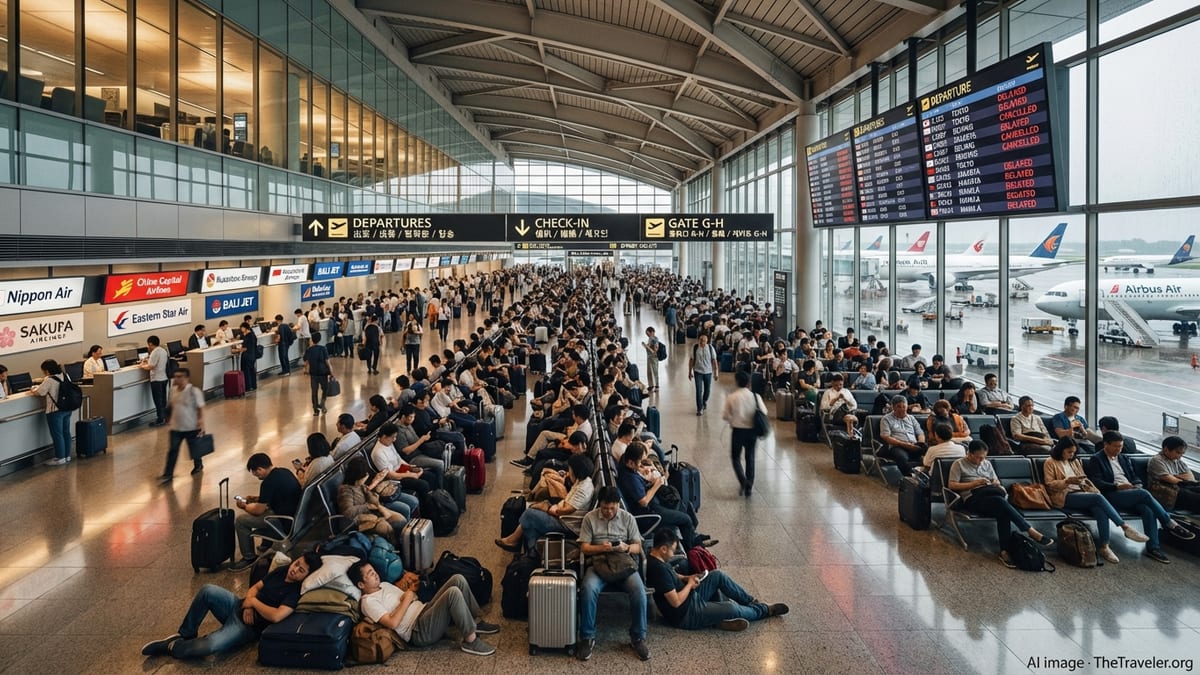
Major Hubs From Singapore To Istanbul Struggle To Cope
The latest disruption wave is centered on some of Asia’s busiest international gateways, with ripple effects stretching from Southeast Asia to the eastern Mediterranean. Flight-tracking and airport operations data show dense clusters of delays around key departure banks at Singapore Changi, Tokyo’s Haneda and Narita airports, Hong Kong International, Kuala Lumpur International, Mumbai, Delhi and Istanbul, creating bottlenecks that are proving difficult to unwind within a single operating day.
Publicly available dashboards tracking departures and arrivals at Singapore Changi indicate an elevated level of late-running services across regional routes to Japan, China and Malaysia, even where outright cancellations remain limited. Similar patterns are visible at Kuala Lumpur, where a mix of delayed and cancelled services on short-haul flights is complicating connections for travelers heading onward to India, the Middle East and Australia.
In Istanbul, a key bridge between Asia and Europe, the accumulation of late arrivals from Asian partners is feeding into missed onward connections toward European and North African destinations. With many long-haul services operating near capacity in early summer, rebooking options for stranded passengers are increasingly constrained, leaving some travelers to wait many hours for the next available seat.
Operational maps suggest that the combination of congested airspace, tight turnaround schedules and ongoing crew availability challenges is leaving airlines with little room to recover once severe delays set in during morning and early afternoon peaks.
Typhoon Jangmi And Seasonal Weather Add To The Turmoil
Weather-related disruption is a major factor behind the current chaos. In Japan, Typhoon Jangmi has already prompted schedule changes and selected cancellations on routes serving Okinawa and other southern regions in recent days, with knock-on effects for domestic and international links. Regional coverage from Japan and Southeast Asia describes how carriers have retimed services between Singapore and Japanese cities as winds and heavy rain affected specific airports.
In Hong Kong, recent coverage from local broadcasters outlined multiple cancellations on routes to Japan as the tropical system brushed the region, with low visibility and strong gusts forcing operators to suspend flights to and from key Japanese airports on certain days. Those cancellations have compressed capacity on the remaining services, increasing load factors and making it harder for airlines to accommodate displaced passengers even as weather gradually improves.
Seasonal thunderstorms across the Bay of Bengal, the South China Sea and the Arabian Peninsula are also complicating flight plans. Convective weather patterns typically intensify in late spring and early summer, prompting rerouting, longer flight times and air traffic flow restrictions that can cascade into ground delays far from the most severely affected storm cells.
While most airports across the affected region remain open and operational, the combination of localized weather shocks and already dense schedules is pushing the network close to its limit, magnifying the impact of every additional delay or cancellation.
AirAsia, Cathay Pacific, ANA, Pegasus And Others Face Network Strain
The disruption is being keenly felt at airlines with extensive regional networks. Low cost giant AirAsia, which relies on fast aircraft turnarounds at busy bases such as Kuala Lumpur and other Malaysian cities, is encountering a series of short-haul delays that quickly snowball when early sectors run late. Flight-status boards at Kuala Lumpur show how a mix of late arrivals and occasional cancellations on routes to secondary destinations can ripple through the rest of the day’s schedule.
In Hong Kong, Cathay Pacific and its regional partners are contending with intermittent cancellations and extended ground times as weather challenges and high demand intersect. Recent published guidance for passengers traveling on Cathay has highlighted the importance of monitoring flight-status tools closely on days of elevated disruption, with the airline adjusting departure times or consolidating services on selected routes when required.
Japanese carrier All Nippon Airways is also affected, particularly on services linking Tokyo with regional hubs in Southeast Asia. Data from live flight-status platforms indicate altered timings on several international flights in recent days as operators navigate both Typhoon Jangmi’s after-effects and broader congestion in Northeast Asian air corridors.
Further west, Turkish low cost carrier Pegasus Airlines is among those facing pressure at Istanbul, where late inbound flights from Asian partners can push subsequent departures off schedule. Network carriers across the region are having to balance tight aircraft utilization with the need to maintain buffers for recovery, a trade-off that becomes far more difficult as passenger loads rise into the summer peak.
Thousands Of Passengers Stranded Or Re-Routed
For travelers on the ground, the numbers translate into hours spent in crowded terminals and at transfer desks. With 4,743 delayed flights logged across the region, many passengers are experiencing missed connections, overnight stays in transit cities and unexpected diversions to alternative routings through secondary hubs.
Travel industry reports describe scenes of packed departure halls from Singapore and Kuala Lumpur to Mumbai and Istanbul, where travelers are queuing for rebooking, baggage retrieval or accommodation vouchers. Those on multi-leg itineraries involving tight connections are particularly exposed, as even modest outbound delays can render onward flights unworkable, triggering complex re-routing across alliances and partner airlines.
Families and business travelers heading to long-planned events are among those worst affected, with limited spare capacity on alternative flights, especially in premium cabins. In some cases, passengers are opting to accept seats several days later, or to backtrack through different hubs entirely, just to reach their final destinations.
At the same time, social media posts and traveler forums are documenting a patchwork of experiences, with some passengers reporting smooth automatic rebooking and others facing long waits for updated itineraries, underscoring how uneven the disruption can be even within the same airport.
What Travelers Can Expect In The Coming Days
Operational experts and aviation analysts cited across regional coverage suggest that clearing such a large backlog of delayed and cancelled flights is likely to take more than a single operational day, especially where aircraft and crew have fallen out of position. As a result, passengers booked on flights over the next several days through Singapore, Hong Kong, Tokyo, Kuala Lumpur, Mumbai, Delhi or Istanbul may continue to see altered departure times and occasional last-minute cancellations.
Travel advisories from airlines and airports across the region are generally encouraging passengers to arrive earlier than usual for international departures, monitor flight-status information before leaving for the airport and remain flexible about re-routing options. With so many carriers involved, from full-service airlines like Cathay Pacific and ANA to low cost operators such as AirAsia and Pegasus, the specific policies on rebooking, refunds and accommodation vary widely, making it essential for passengers to review the latest conditions with their ticketing provider.
Some industry commentary warns that early summer may bring further volatility as weather systems evolve and demand continues to recover across Asia and the Middle East. Even if today’s disruption gradually eases, the underlying pressures of congested airspace, stretched infrastructure and finely tuned schedules remain in place, leaving the region’s aviation network vulnerable to future shocks.
For now, travelers passing through the affected hubs are advised to brace for longer journeys, stay informed through official airline and airport channels and build extra time into their plans, as Asia’s interconnected flight network works to absorb one of its most extensive days of disruption so far this year.