


More news on this day
Severe storm systems sweeping across the US East Coast in recent days have triggered a sharp spike in flight cancellations and delays, disrupting thousands of travelers at major hubs from Boston to Miami as airlines struggle to keep schedules intact during one of the busiest travel periods of the year.
Get the latest news straight to your inbox!
Thunderstorms and Turbulent Skies Trigger Widespread Disruptions
Convective summer storms building along the Eastern Seaboard have created repeated ground stops and traffic management programs at key airports, particularly in the congested Northeast corridor. Strong cells moving through New York, Philadelphia, Washington and Boston have reduced arrival and departure rates, forcing airlines to cancel flights preemptively and stack up delays on those that remain scheduled.
Publicly available flight-tracking data in recent days has shown hundreds of cancellations and several thousand delays clustered at New York area airports, Philadelphia International, Boston Logan and major southeastern gateways such as Charlotte and Atlanta. Thunderstorms developing in the afternoon and evening have been especially disruptive, as they coincide with peak banked departures and arrivals.
Meteorologists note that this pattern is typical of late summer, but the intensity and persistence of storm activity this season have magnified its impact on air travel. When storm cells stall over already crowded airspace, controllers must slow traffic across a broad region, often rippling far beyond the immediate storm zone.
As a result, flights that appear unaffected by local weather can still face long delays because aircraft and crews are stuck behind earlier disruptions. The domino effect has left many travelers confronting last-minute schedule changes, missed connections and unplanned overnight stays.
Major Hubs on the East Coast Bear the Brunt
Some of the nation’s busiest airports have been particularly hard hit, with New York’s LaGuardia and John F. Kennedy International, Newark Liberty International, Boston Logan, Philadelphia and Washington-area airports frequently appearing near the top of national delay and cancellation tallies. Published coverage and airline operational updates indicate that on several recent storm days, more than a quarter of scheduled departures at some of these airports were delayed, with significant percentages canceled outright.
At times, the Federal Aviation Administration has implemented ground delay programs that require flights bound for the Northeast to remain at their origin airports until airspace capacity opens. These restrictions help maintain safety in crowded skies but also compress schedules, leaving airlines limited room to recover once storms pass.
The challenges are compounded at hub airports where each canceled or delayed arrival can disrupt dozens of onward connections. Even a short-lived thunderstorm over a hub can quickly cascade through an airline’s network, affecting flights in regions with clear skies hours later.
Medium-size airports across the Mid-Atlantic and New England have not been spared. When weather forces diversions or limits arrivals at major hubs, flights may be rerouted to secondary airports or canceled entirely, further complicating options for travelers trying to rebook.
Airlines Adjust Schedules and Issue Weather Waivers
In response to the volatile conditions, major US carriers have been publishing weather waivers that allow customers traveling through affected East Coast airports to change itineraries without standard change fees. These waivers typically cover travel over one to several days when forecasters expect the most intense storms, giving passengers the option to move flights to earlier or later windows with a lower risk of disruption.
Airlines have also been trimming schedules in advance of forecast storms, canceling selected flights the night before to reduce day-of chaos and preserve space on remaining flights for rebooked passengers. Publicly available information from recent weather events suggests that this proactive approach, while inconvenient for some, can prevent even more severe operational snarls when storms materialize.
Operational planning has focused heavily on keeping crews and aircraft properly positioned. When storms lead to lengthy ground holds, flight crews can “time out” under federal duty limits, removing them from service and forcing airlines to substitute new crews or cancel flights altogether. Strategically canceling earlier frequencies and consolidating passengers onto fewer, more reliable departures has become a common tactic during multi-day storm patterns.
Despite these efforts, recovery has often stretched beyond the immediate weather window. Aircraft and crew imbalances created on one stormy afternoon have, in several instances, led to lingering cancellations and extended delays into the following day as carriers work through backlogs.
Travelers Face Crowded Terminals and Limited Alternatives
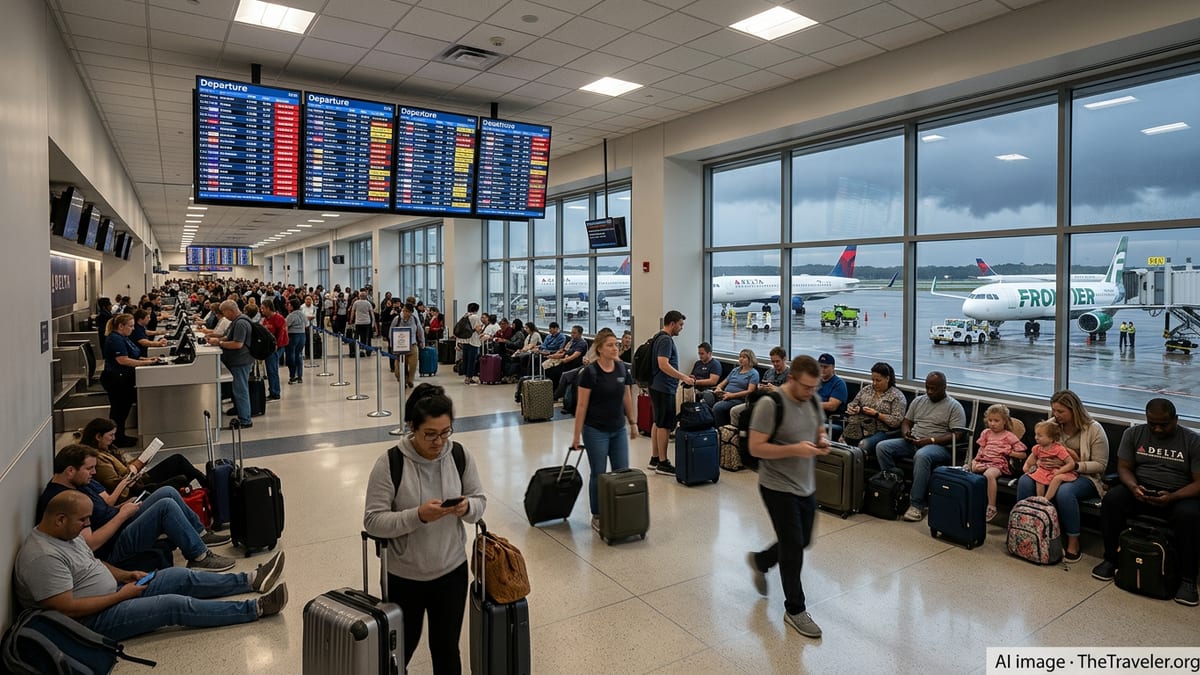
For passengers, the surge in East Coast flight disruptions has translated into long lines at customer service desks, crowded airport terminals and scarce last-minute seat availability on alternate flights. Same-day rebooking has been particularly difficult at peak travel times, with many flights already sold close to capacity before storms enter the forecast.
Reports from recent storm days indicate that some travelers have turned to alternative airports within driving distance in hopes of securing a seat, while others have sought ground transportation options for shorter regional trips. Rail and intercity bus services along the Northeast Corridor have seen added demand when air travel falters, though capacity there can also quickly tighten.
Airlines have encouraged customers to monitor flight status closely, check in via mobile apps and consider adjusting plans ahead of anticipated storms. Travelers who can depart early in the day, before thunderstorms typically fire up, often have better odds of avoiding major disruption, though early departures are not immune when overnight weather or residual congestion lingers.
Flexible tickets and travel insurance products that cover weather-related interruptions have also drawn renewed attention from frequent travelers, particularly those facing tight connection windows or important events at their destinations.
Peak Summer Travel Collides With Vulnerable Infrastructure
The timing of the latest storm-related disruptions has heightened their impact. Airlines are operating near peak capacity during the summer travel season, with strong demand for both leisure and business trips. High load factors mean there are fewer spare seats to accommodate rebooked passengers when cancellations spike, lengthening recovery times after each storm system.
Industry analysts point out that staffing remains tight in several operational areas, including pilots, flight attendants and ground personnel, even as flight schedules approach or exceed pre-pandemic levels. When storms disrupt carefully calibrated rotations, the lack of extra crews reduces the room for error and increases the likelihood that minor delays can snowball into cancellations.
Air traffic control facilities along the East Coast are also managing heavy workloads as they reroute flights around storm cells and temporarily shut off busy arrival routes. Published analyses of past storm events show that this stretch of airspace is among the most complex in the world, with dense traffic flows converging on multiple large metropolitan areas.
With several weeks of the summer travel season still to run and forecasters calling for continued bouts of unsettled weather, further spikes in cancellations and delays remain a distinct possibility. Travelers planning East Coast itineraries in the coming days are being advised by publicly available guidance to build in extra time, remain flexible where possible and prepare for rapidly changing conditions as storms develop.