


More news on this day
The United States has issued a targeted “Do Not Travel” warning for a remote, flood-ravaged corridor in northern Nepal, singling out the Rasuwagadhi–Timure–Syafrubesi area and the nearby Nepal–China border crossing after catastrophic late-August flooding severed roads, disrupted communications, and left scores of travelers unaccounted for.
Get the latest news straight to your inbox!
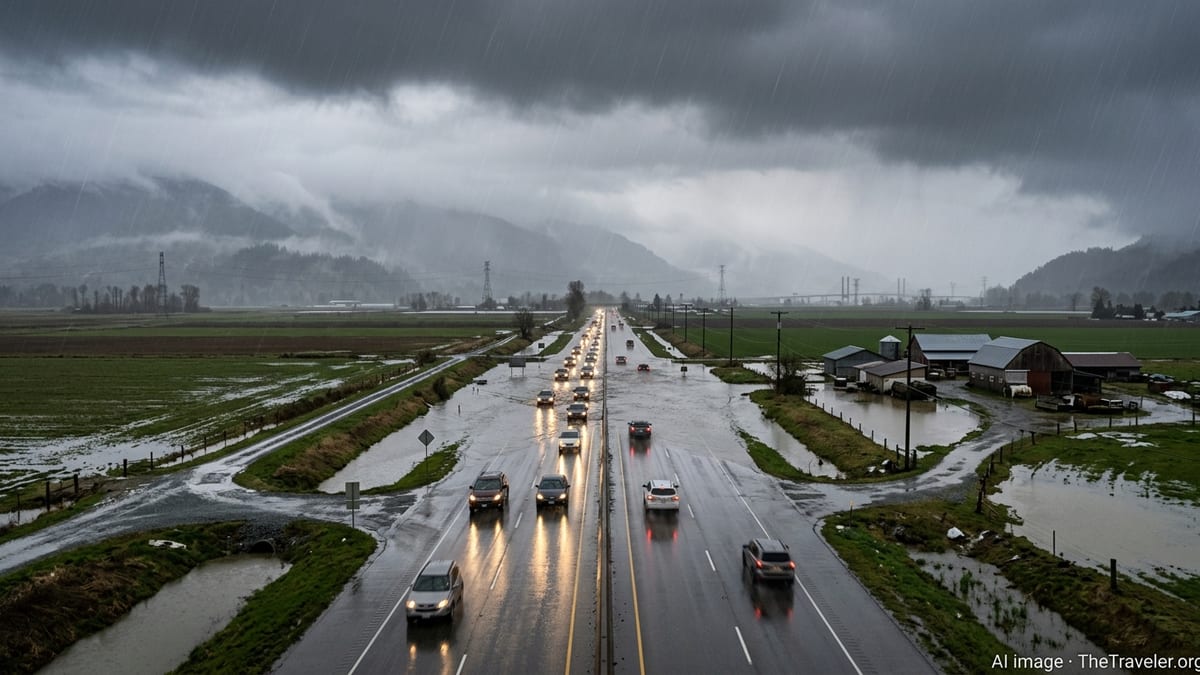
Targeted Alert Elevates Risk in Northern Rasuwa
Publicly available information from the U.S. government shows Nepal remains under a nationwide Level 2 advisory, which urges travelers to exercise increased caution due to unrest and natural disaster risks. That countrywide posture, however, now sits alongside a much stricter message for the high Himalayan corridor north of Kathmandu that bore the brunt of recent glacial floodwaters.
According to travel advisory summaries circulated by U.S. channels and reported in Nepali media, a specific Level 4 “Do Not Travel” directive now applies to the Rasuwagadhi–Timure–Syafrubesi stretch of Rasuwa district, including the cross-border checkpoint with China. The focused warning cites extensive flood damage, ongoing search and recovery work, and the heightened likelihood of further flooding and landslides in the steep river valleys as reasons for advising against all travel to the area.
While the updated guidance does not change the overall advisory level for the rest of Nepal, it signals a sharp escalation in risk for one of the country’s key overland gateways toward Tibet and the Langtang region. Travelers are urged to avoid attempting to transit the corridor until local and international agencies signal that road access is restored and flood danger has eased.
Advisories also encourage U.S. citizens in Nepal to enroll in the Smart Traveler Enrollment Program, enabling them to receive security and emergency alerts as conditions evolve in affected districts.
Flood Disaster Cuts Off Cross-Border Corridor
The travel warning follows a catastrophic flood that surged into Nepal from the Tibetan side in late August, after what scientific assessments describe as a glacial collapse high in the Himalaya. The surge roared down the Bhote Koshi and Trishuli river systems, devastating communities on both sides of the Nepal–China border and forcing the closure of key roads that funnel trade, local traffic, and trekking groups toward Langtang and the Kailash route.
Published coverage from international and local outlets indicates that the disaster killed at least 160 people in the border region, with thousands more listed as missing across Nepal and Tibet. Entire settlements along the riverbanks were inundated or swept away, while bridges, hydropower installations, and stretches of highway were left mangled or buried in debris.
Nepal’s government has warned repeatedly that the event remains an evolving emergency. Notices highlighted by global media describe at least 800 confirmed fatalities and more than 3,000 missing across the broader flood zone, with downstream districts told to remain on high alert as water levels on the Bhote Koshi and Trishuli rise and fall. Emergency messages sent to mobile phones in affected districts have urged residents to move to higher ground and stay away from riverbanks.
In this context, the Rasuwagadhi–Timure–Syafrubesi road corridor has become a focal point of concern, with both the physical damage and the continuing risk of secondary landslides and surges prompting stronger language from foreign governments about the prudence of travel.
Road Closures and Disruptions for Trekkers and Pilgrims
Travel updates from the U.S. Embassy in Nepal and regional tourism advisories describe significant transport disruption across northern and central Nepal following the flood. Messages shared on official social channels urge U.S. citizens in Rasuwa, Nuwakot, Dhading, Gorkha, Chitwan, and Tanahun districts to avoid riverbanks and low-lying areas, seek higher ground when water levels rise, and heed local instructions on movement restrictions.
Authorities have curtailed traffic along several of Nepal’s most important road links from Kathmandu, including parts of the Prithvi Highway, the Galchhi–Nuwakot–Rasuwa–Syafrubesi corridor, and the Mugling–Narayangadh road, as crews work to clear debris and assess damage. For travelers, that has translated into cancellations, diversions, and significant uncertainty around overland routes toward Langtang, Manaslu, and the Kailash pilgrimage corridor.
Regional travel advisories from other governments echo these concerns. Updated guidance from Australia’s Smartraveller service, for example, now advises travelers to reconsider their need to visit areas within 50 kilometers of the Trishuli River in several districts, including Rasuwa, Nuwakot, Dhading, Nawalpur, and Gorkha, due to severe flooding, landslides, and extensive infrastructure damage.
Tourism operators and community updates stress that many of Nepal’s marquee trekking routes remain open and physically unaffected, but emphasize that the northern corridor through Rasuwa stands apart because of its direct exposure to the flood path and continuing instability along the river system.
What the “Do Not Travel” Designation Means for Visitors
U.S. government sources describe a Level 4 “Do Not Travel” notice as the highest advisory tier, reserved for locations where life-threatening risks are considered widespread or ongoing. General guidance for such areas urges travelers to avoid visiting entirely and cautions that the U.S. government may have limited or no ability to provide emergency assistance if individuals ignore the advice and encounter danger.
In this case, the “Do Not Travel” language is confined to the narrow Rasuwagadhi–Timure–Syafrubesi corridor rather than the entirety of Nepal. Even so, advisory summaries stress that search and recovery operations are still under way along the river, that communications remain unreliable, and that ground transportation in the valley is highly disrupted. Those factors, taken together, underpin the decision to warn against all travel to the area for the time being.
Travel advisories also recommend that anyone already in flood-affected districts identify evacuation routes to higher ground, avoid walking or driving through standing or moving floodwater, and maintain regular contact with family, hotels, and tour operators whenever communication networks allow. Travelers are urged to use text messaging, email, or internet-based messaging apps if voice calls fail to connect.
Health and safety guidance for Nepal more broadly continues to emphasize comprehensive travel insurance with coverage for medical evacuation, along with contingency planning for limited medical facilities outside Kathmandu and potential delays caused by seasonal monsoon weather.
Planning Travel to Nepal While the Corridor Remains Closed
Despite the severe impacts along the Rasuwagadhi corridor, much of Nepal’s tourism infrastructure, including airports and major trekking hubs, remains open. The U.S. countrywide advisory still encourages visitors to exercise increased caution rather than to avoid the nation as a whole, and other national advisories similarly distinguish between the hardest-hit river valleys and areas where daily life and tourism are continuing.
Prospective visitors are encouraged to monitor official travel advisories closely, confirm itineraries with airlines and local tour operators, and stay abreast of local media reporting on road and weather conditions. Travelers with existing plans that rely on the Rasuwa land border or access to Langtang via Syafrubesi are being advised by tour companies and online travel communities to discuss rerouting options or postponements while authorities stabilize the region.
Several foreign travel advisories highlight the importance of registering trips with consular services, such as the Smart Traveler Enrollment Program for U.S. nationals, to receive country-specific alerts during emergencies. For Nepal, this includes notices on monsoon-related flooding, landslides, political demonstrations, and any updates to the status of the “Do Not Travel” warning for the northern corridor.
For now, the message to international travelers is highly specific: Nepal remains accessible, but the flood-ravaged Rasuwa corridor north of Kathmandu is deemed too dangerous for tourism or routine travel until road access is restored, search operations wind down, and the risk of renewed flooding abates.
U.S. Department of State Travel Advisories
U.S. Embassy Nepal security alerts feed
Smartraveller: Nepal travel advice