


More news on this day
The United States has issued a fresh warning to Americans about travel connected to Iran as regional tensions flare again, reinforcing long-standing guidance that US citizens should not travel to Iran and underscoring the risk of rapid flight disruptions across the Middle East.
Get the latest news straight to your inbox!
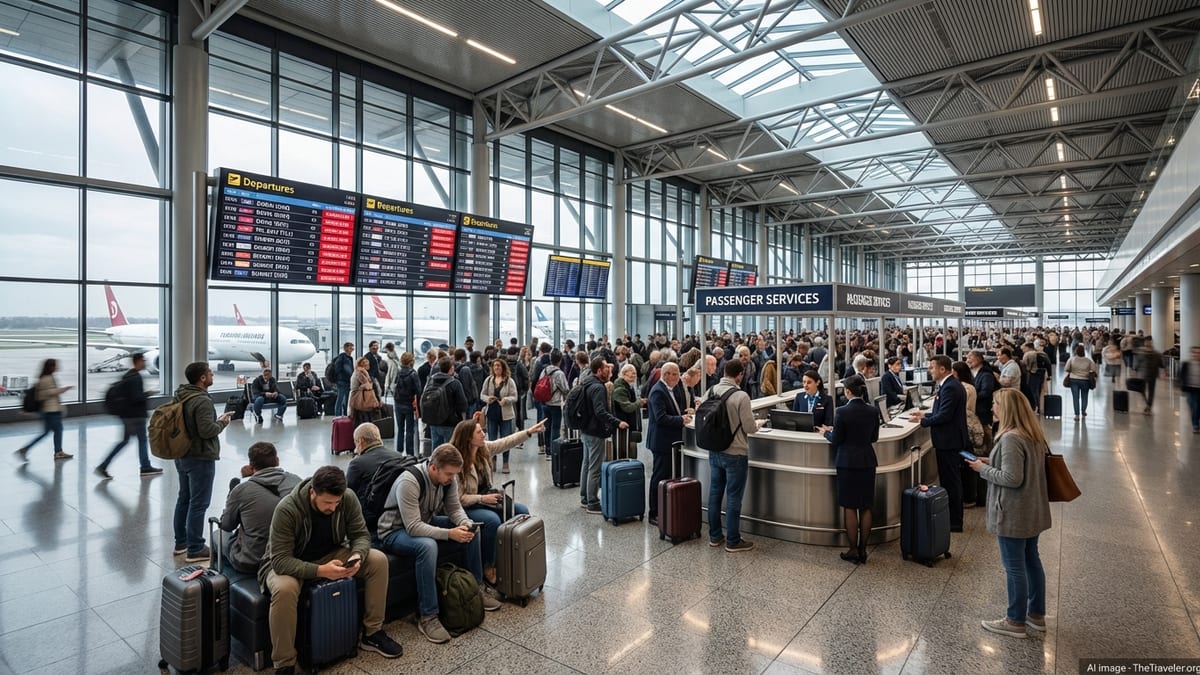
What the new warning means for travelers
Recent updates from US consular channels have highlighted a heightened security environment tied to the wider Middle East, with published coverage describing a renewed region-wide alert that notes the potential for fast-moving escalation. While Iran has remained a Level 4 “Do Not Travel” destination in US guidance, the latest messaging puts extra emphasis on practical travel impacts that can unfold with little notice, including flight cancellations, periodic airspace closures, and disrupted airport operations.
For would-be visitors, the key point is that the Iran advisory is not limited to a single city or border region. The standing guidance continues to frame Iran as a destination where the risk profile includes arbitrary detention and wrongful detention, kidnapping, and civil unrest, and where US government capacity to help is severely constrained.
Travelers transiting the region are also affected. Even if an itinerary does not include Iran, renewed tensions have repeatedly led to shifting aviation routings and sporadic operational changes at nearby hubs, making connections less predictable and potentially increasing the chance of last-minute rebooking, longer routings, and extended delays.
Iran remains Level 4, with detention and dual-nationality risks central
The State Department’s Iran travel advisory continues to carry a Level 4 status and urges Americans not to travel to Iran for any reason. The advisory language also urges US citizens already in Iran to leave immediately, reflecting a risk environment that travel planners should treat as fundamentally incompatible with routine tourism.
One of the most consequential elements for many families is the advisory’s repeated emphasis on wrongful detention risk, including for dual US-Iranian nationals or travelers with a claim to Iranian citizenship. Publicly available guidance indicates Iran may not recognize US nationality for dual citizens, which can limit outside access and complicate efforts to obtain consular assistance during a detention.
The advisory also reiterates that there is no US embassy or consulate in Iran, which has direct consequences for routine problems travelers normally solve through consular channels such as replacing a passport, arranging emergency documentation, or receiving in-person support after an arrest or hospitalization.
Consular help is limited and complicated by protecting-power arrangements
Because the United States does not maintain diplomatic or consular relations with Iran, Switzerland serves as the protecting power for US interests. In practical terms, this arrangement is narrower than what many travelers expect from a US embassy, particularly during periods of instability.
Publicly available information from Swiss officials shows that the Swiss Embassy in Tehran has faced temporary closures and phased reopenings amid the security situation. In addition, Switzerland’s Foreign Interests Section has described constraints on routine services for US citizens, while continuing to frame its role around emergency assistance when conditions permit.
This matters for travelers making “family visit” plans, heritage trips, academic travel, or media-related itineraries: even when some emergency channels exist, they may not function like a full-service consular post, and access can change quickly depending on the security environment.
Airspace uncertainty and flight disruptions are a real-world travel risk
Beyond on-the-ground security concerns, aviation disruptions have become a defining feature of the current environment. Regional flare-ups have repeatedly translated into airline schedule changes, temporary suspensions, and more conservative routing decisions, especially for flights that would normally cross or approach sensitive airspace.
Industry reporting and travel-risk updates have described carriers suspending or extending pauses on services to certain Middle East destinations, including Tehran, while airlines gradually restore some routes elsewhere. For travelers, the takeaway is not only the possibility of canceled flights, but also the risk of disrupted connections, reroutes, and reduced seat availability when multiple airlines adjust schedules at the same time.
Even when airports remain open, intermittent airspace restrictions can ripple across a network. Travelers using major connecting hubs in the Gulf or Eastern Mediterranean should plan for longer travel times, consider flexible fares where possible, and closely monitor airline notices leading up to departure and during transit.
What Americans should do now if they have Iran-related travel plans
For Americans holding tickets to Iran, the most straightforward interpretation of the advisory landscape is to postpone and avoid travel. The US government’s standing guidance is that Americans should not go to Iran, and recent alerts tied to broader regional tensions add another layer of uncertainty to aviation and on-the-ground conditions.
For those who are in the region for other destinations, the latest advisories point to practical precautions: monitor airline operations, watch for airspace changes, and be ready for rapid itinerary adjustments. It is also prudent to check country-specific travel advisories for any planned stopover, since regional spillover can affect multiple locations beyond Iran.
For families with loved ones already in Iran, publicly available information emphasizes that consular pathways are limited and may depend on protecting-power channels and the security situation. In that context, travelers and relatives often focus on keeping documents current, maintaining reliable communication plans, and following official alert mechanisms for updates that could affect the ability to depart.