


More news on this day
As millions of Americans prepare for Independence Day getaways, the United States government is underscoring heightened travel risks in Kuwait, Oman and Venezuela, spotlighting terrorism, crime and instability as key concerns for those heading abroad around the July 4 holiday.
Get the latest news straight to your inbox!
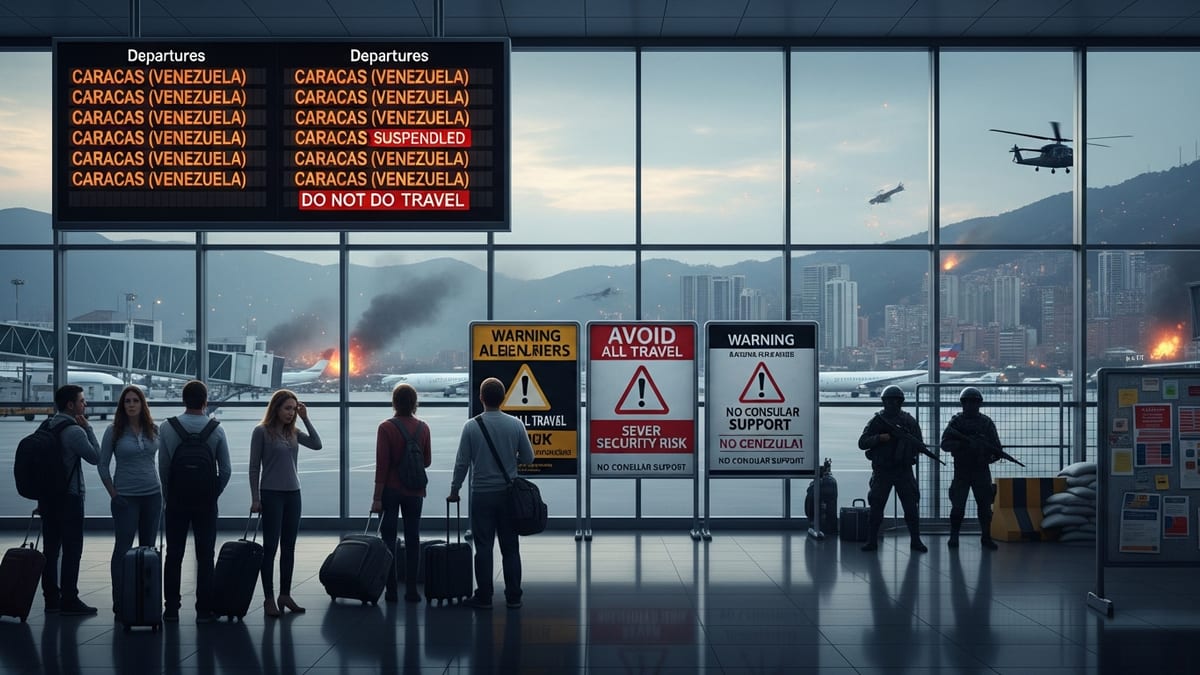
Heightened July 4 Focus on Existing High-Risk Advisories
Publicly available information from the U.S. Department of State shows that Kuwait, Oman and Venezuela are currently rated Level 3 on the government’s four-tier travel advisory scale, meaning travelers are urged to reconsider travel due to significant safety and security concerns. The latest advisories, updated in recent months, are drawing fresh attention as Americans plan international trips over the busy Independence Day period.
The Level 3 assessment for Kuwait cites elevated risks tied to the regional security environment, including the potential for terrorism and the impact of ongoing tensions in the wider Middle East. The advisory highlights the possibility that locations frequented by foreigners may be targeted, and it urges U.S. citizens to maintain a high level of situational awareness.
Oman is also assessed at Level 3, with terrorism and broader regional instability listed among the leading risk factors. While Oman is often perceived as comparatively calm, the advisory notes that regional dynamics can shift quickly, prompting calls for travelers to monitor local developments closely, especially around high-profile American holidays.
In South America, the State Department’s Level 3 advisory for Venezuela reflects a different set of dangers, focused on widespread crime, the risk of kidnapping, infrastructure breakdown and limited access to medical care. Travelers are warned that basic services can be unreliable and that emergency assistance options may be constrained, making advance planning particularly important.
Terrorism and Regional Tensions Shape Kuwait and Oman Risk Picture
Recent updates to the Middle East and Gulf travel advisories emphasize what U.S. government sources describe as a complex and volatile regional security environment. For Kuwait and Oman, terrorism risk remains a central concern, with reports indicating that extremist actors continue to view Western interests as potential targets.
Security alerts issued in early June referenced the wider Gulf region, underlining the possibility of drone and missile activity affecting air travel and critical infrastructure. Kuwait has experienced periodic disruptions linked to regional flare-ups, including alerts about potential impacts on flights and airport operations. Travelers heading through key hubs around July 4 are advised in public guidance to remain flexible with itineraries and to track airline communications.
Oman’s advisory similarly reflects its geographical proximity to flashpoints such as the Strait of Hormuz and the broader Gulf of Oman, where maritime security advisories remain active. Commercial and passenger routes transiting nearby waters have been subject to warnings about the risk of hostile actions against vessels, reinforcing calls for travelers to remain alert to routing changes and possible schedule adjustments.
Reports from international media and security monitoring organizations suggest that, while large-scale attacks remain rare, the combination of symbolic U.S. dates, regional tensions and evolving tactics by non-state actors keeps threat levels elevated enough to warrant caution for Americans traveling through the Gulf in early July.
Venezuela’s Security Crisis and Infrastructure Strain
In Venezuela, the Level 3 travel advisory is driven less by terrorism and more by deep-rooted political and economic turmoil that continues to erode public security and basic services. Official country information points to pervasive violent crime, including armed robbery, carjacking and kidnapping, affecting both residents and visitors.
Power outages, fuel shortages and limited access to cash and essential goods are recurring challenges across many parts of the country. Hospitals and clinics may lack medicines, equipment and staffing, and emergency medical evacuation can be difficult to arrange quickly. For travelers contemplating a July 4 visit, these structural weaknesses translate into heightened risk if an incident or health emergency occurs.
Travel coverage from international outlets also notes ongoing civil unrest and periodic clashes in urban areas. Roadblocks, spontaneous protests and security operations can disrupt movement with little warning, complicating airport transfers and overland travel. These conditions increase the importance of having robust contingency plans, including backup routes, additional time between connections and clear communication arrangements with contacts outside the country.
Air connectivity between the United States and Venezuela remains limited, with regulatory filings and policy documents indicating a cautious approach to restoring direct routes. This can add further complexity for travelers, who may rely on multi-leg itineraries through third countries and face additional exposure to delays or fast-changing entry requirements along the way.
Government Urges Extra Vigilance for July 4 Holiday Travel
With Independence Day marking one of the busiest U.S. travel periods of the year, multiple federal agencies have announced enhanced safety and security measures across airports, rail networks, highways and national parks. Recent coverage highlights efforts by transportation and security agencies to prepare for record passenger numbers, while also stressing the need for travelers to inform themselves about overseas risks before departure.
Guidance directed at U.S. citizens emphasizes the value of regularly checking the latest country-specific advisories, understanding the meaning of Level 3 “reconsider travel” designations and reviewing detailed safety and security sections for each destination. Officials encourage travelers to be prepared for sudden changes, including the possibility of new alerts, flight disruptions or local restrictions that could emerge with little notice.
Standard tips include sharing itineraries and contact details with family or trusted friends, keeping copies of key documents and making note of local emergency numbers and consular contact points. Travelers are also urged in public materials to stay informed through reputable international and local news outlets, particularly when visiting destinations already flagged for elevated risk.
For those heading to Kuwait, Oman or Venezuela specifically, the July 4 period is being framed as an especially important time to re-evaluate the necessity of travel, verify insurance coverage for high-risk destinations and consider alternative plans if conditions deteriorate.
Practical Steps for Americans Considering High-Risk Destinations
Travel analysts note that a Level 3 advisory does not constitute an outright ban, but it signals that the U.S. government sees substantial risks that may not be fully mitigated by personal precautions. As a result, individuals planning trips to Kuwait, Oman or Venezuela around July 4 are being encouraged by widely available guidance to undertake detailed risk assessments before committing to nonessential travel.
Enrollment in the State Department’s Smart Traveler Enrollment Program allows Americans to receive security alerts and makes it easier for consular staff to contact them in an emergency, according to program information. Travelers are also advised to confirm that their medical and evacuation insurance explicitly covers travel to countries with elevated advisory levels, as some policies exclude or limit coverage in such destinations.
Experts highlighted in recent travel-safety coverage recommend mapping out safe transportation options in advance, researching neighborhoods, booking reputable accommodations and avoiding travel after dark where possible. In higher-risk environments, additional precautions such as using trusted local drivers, minimizing displays of wealth and maintaining a low profile can help reduce exposure.
Ultimately, the sharpened focus on Kuwait, Oman and Venezuela ahead of July 4 reflects a broader message from public guidance: American travelers retain wide latitude to explore the world, but those heading into countries flagged with serious safety concerns may need to prepare more carefully, remain highly adaptable and be ready to change plans quickly if conditions worsen.