


More news on this day
Emirates and Etihad Airways have issued urgent guidance for passengers planning to travel through Dubai and Abu Dhabi, as the United Arab Emirates maintains open but tightly managed skies across the Middle East while a number of foreign airlines extend flight suspensions to the UAE through October 2026 amid ongoing regional security concerns.
Get the latest news straight to your inbox!
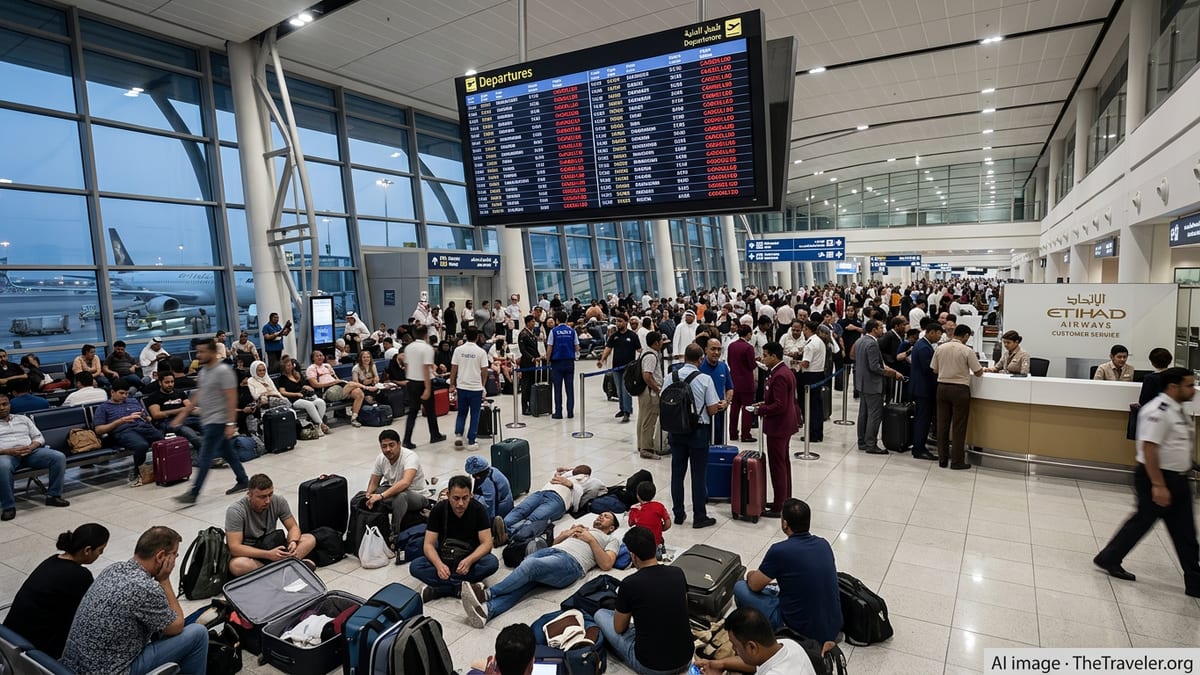
UAE Skies Stay Open Under Tight Controls
Publicly available aviation data and regional reporting indicate that the Emirates Flight Information Region is open, with the UAE operating managed corridors and controlled entry and exit points in coordination with neighboring airspace. Capacity remains constrained, but traffic flows through Dubai International Airport and Abu Dhabi International Airport have gradually resumed following earlier closures and rolling disruptions linked to the 2026 conflict involving Iran and the wider region.
Guidance from industry and regulatory briefings shows that the UAE has focused on civil–military coordination and real-time risk assessments to keep airspace available for commercial operations where possible. Flight paths have been adjusted to avoid higher-risk zones, especially to the north and northwest of the Gulf, while additional surveillance and routing requirements have been introduced for overflights.
Despite the restoration of domestic airspace, analysts note that traffic through the UAE’s hubs is still operating below pre-crisis levels. Capacity increases are being implemented cautiously, with operators emphasizing that schedules remain subject to rapid change if the regional security picture deteriorates or new restrictions are imposed by neighboring states.
Emirates And Etihad Issue Fresh Travel Advisories
Emirates and Etihad Airways have updated customer advisories in recent days, urging travelers to check flight status frequently, allow additional time for connections, and review rebooking options if they are transiting through affected corridors. Travel alerts published on airline channels outline flexible change policies for passengers whose journeys involve disrupted routes or airports still subject to partial closures.
Reports from airline communications describe a range of measures, including voluntary rebooking without additional fees on alternative dates, rerouting through secondary gateways where capacity allows, and the suspension of certain point-to-point services where demand has been hit hardest by security concerns. Travelers connecting between Europe and Asia through Dubai or Abu Dhabi are being encouraged to monitor notifications closely and to ensure contact details are up to date in booking profiles.
Operational updates also highlight that while core trunk routes remain active, some frequencies have been reduced and aircraft types swapped to better match demand and available airspace. Aviation analysts say this approach is designed to preserve network connectivity while avoiding over-committing capacity in a volatile operating environment.
Foreign Airlines Extend UAE Flight Suspensions
In contrast to the UAE’s decision to keep its airspace open, several European and other international carriers continue to suspend services to Dubai and Abu Dhabi, citing ongoing security risks and the complexity of rerouting around conflict-affected areas. According to published schedules and travel advisories, selected airlines have pushed back the resumption of flights to the UAE into the northern winter season, with some tentatively extending suspensions through October 2026.
Updated timetables from major European groups show that routes to key Middle Eastern destinations, including Dubai and Abu Dhabi, have been removed from booking systems for much of the summer and early autumn, even as other long haul destinations in North America, Asia, and Africa receive additional capacity. Industry reports describe a cautious strategy in which carriers avoid committing aircraft and crews to markets where airspace access, insurance conditions, and passenger demand remain highly uncertain.
These extended suspensions are compounded by broader overflight restrictions across parts of the Middle East, which have lengthened journey times and increased fuel costs for flights between Europe and Asia. Some airlines that previously relied heavily on Gulf hubs for connecting traffic have opted to route passengers via alternative gateways in Southern Europe, Central Asia, or Africa until the security outlook becomes clearer.
Knock-On Effects For Global Passengers
The divergence between local UAE carriers, which are maintaining scaled but active operations, and foreign airlines that remain on pause has created a patchwork of options for travelers. For some passengers, itineraries that once involved a single stop in Dubai or Abu Dhabi now require multi-stop routings via secondary hubs, leading to longer travel times and higher fares.
Travel industry analyses suggest that premium and time-sensitive travelers are gravitating toward airlines that can still offer relatively direct connections through the Gulf, even if schedules are thinned out and flights are fuller than usual. At the same time, price-sensitive passengers may be pushed toward more complex routings on carriers that are avoiding the region, as capacity constraints through the UAE contribute to upward pressure on ticket prices.
Air cargo flows have also been affected, with freight operators and logistics companies reconfiguring networks to account for restricted overflight corridors and varying airline policies on the use of Gulf hubs. Market commentary indicates that this has implications for time-critical shipments between Europe, Asia, and Africa, particularly sectors such as pharmaceuticals, e-commerce, and high-value manufacturing.
What Travelers Through Dubai And Abu Dhabi Should Do Now
Advisories from airlines, airports, and foreign ministries consistently stress the importance of preparation for anyone planning to transit the UAE over the coming months. Passengers are being urged to verify visas and entry requirements well before departure, given the possibility of unplanned stopovers if connections are disrupted or rerouted at short notice.
Travel experts recommend that customers monitor airline apps and email alerts daily in the days before departure, build generous buffers into itineraries that involve separate tickets, and avoid tight connections through other Middle Eastern hubs that might be more directly affected by airspace closures. Those with travel insurance are encouraged to review policy wording carefully, as coverage related to geopolitical events, airspace closures, or war risks can vary significantly between providers.
With some foreign carriers keeping their services to Dubai and Abu Dhabi suspended until at least October 2026, travelers may find that Emirates and Etihad offer the most direct remaining options into and out of the UAE. However, the overall situation remains fluid, and industry observers emphasize that schedules, routing, and risk assessments are subject to change with limited notice as developments unfold across the wider Middle East.