


If you are an Australian planning an overseas trip in 2026, there is a good chance your comparison shortlist includes 1Cover and Cover-More. Both brands are long-established, both are widely recommended by travel agents and comparison sites, and both promise to bail you out if your Bali scooter ride goes wrong or your European connection is cancelled. Yet their strengths are slightly different, and choosing between them can meaningfully change what happens when you actually need to claim.
Get the latest updates straight to your inbox!
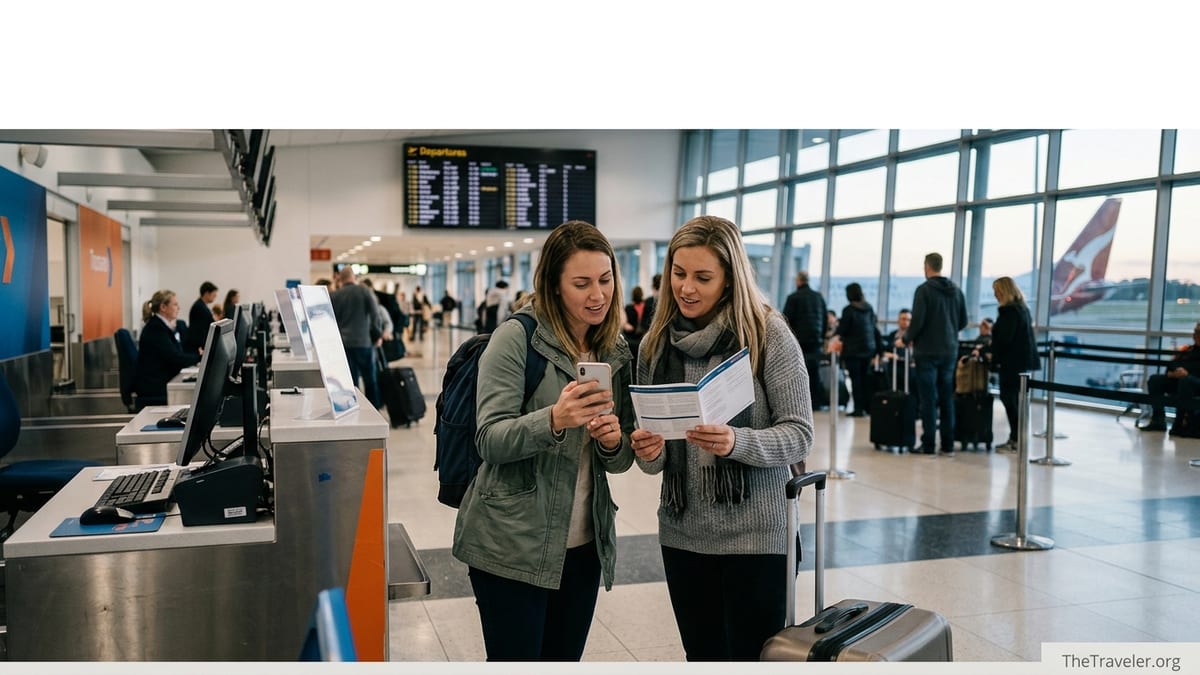
1Cover and Cover-More in a nutshell
Both 1Cover and Cover-More are Australian-born travel insurance specialists with global reach. 1Cover focuses on selling direct to travellers, mostly online, which lets it avoid paying travel agent commissions and often keep premiums relatively sharp for comparable cover. Cover-More is a larger international group headquartered in Sydney that underwrites or powers policies sold by airlines, banks and travel agents, as well as its own branded policies.
In practice, that means you might buy 1Cover by going straight to its website a few days before flying, whereas a Cover-More policy might be offered automatically at checkout when booking flights with an Australian carrier, or embedded in a credit card or bank package. For many Australian travellers, their first exposure to Cover-More is via a bank-branded policy that is, under the hood, administered and backed by Cover-More.
Both providers offer the familiar mix of comprehensive and medical-only plans, optional extras for cruising, snow trips or adventure activities, and 24/7 emergency assistance. They both target mainstream leisure travellers: couples heading to Europe for six weeks, families flying to Fiji in school holidays, or solo travellers spending a month in Southeast Asia. The real differences start to emerge when you look at pricing, benefit structures and how flexible each brand is for different travel patterns.
It is also important to understand that benefits and limits change over time. As of mid-2026, both 1Cover and Cover-More advertise cover for common risks such as overseas medical treatment, medical evacuation, trip cancellation, lost luggage and personal liability, with COVID-19 treated as just one of many potential medical conditions, subject to each policy’s wording.
Key similarities: what both insurers generally cover
For a typical Australian heading overseas, 1Cover and Cover-More look quite similar at first glance. Both offer unlimited or very high overseas medical assistance on their main international comprehensive products. This usually includes hospital treatment, ambulance transport, and medical evacuation if you need to be moved to a better-equipped facility or repatriated home, as long as the assistance team approves the arrangements in advance.
Both also bundle in financial protection for trip cancellation or curtailment for specific insured reasons. A concrete example would be a Brisbane couple booked to fly to Japan in September. If one partner breaks a leg in July and is medically certified as unfit to travel, either insurer’s comprehensive plan may reimburse non-refundable flights and pre-paid accommodation, subject to proof and limits. Similarly, if a non-travelling close relative in Australia becomes critically ill close to departure, both brands may cover cancellation so you can stay home.
Luggage and personal effects cover is another shared feature. If a Sydney traveller lands in Rome to find their checked bag missing for several days, both 1Cover and Cover-More comprehensive policies typically allow claims for emergency clothing and toiletries, then compensation if the bag is lost or permanently damaged. Limits and sub-limits apply, especially for high-value items like cameras or laptops, so in real life a traveller with a $4,000 camera might need to add specified valuables cover or accept that only part of the cost would be reimbursed.
Finally, both providers include 24/7 travel assistance services that can coordinate local medical care, help replace lost passports, or liaise with airlines during major disruptions. For example, if you are hospitalised with appendicitis in Bangkok, either insurer’s assistance team can usually help you find an English-speaking doctor, arrange guarantees of payment to the hospital, and communicate with your family back in Australia.
Where 1Cover tends to stand out
1Cover has built its reputation on value-focused direct policies for Australians and New Zealanders. Because it does not pay travel agent commissions, its marketing emphasises that it can pass savings back to customers through competitive premiums. In practical terms, travellers comparing quotes on the same afternoon often find that 1Cover’s comprehensive plan comes in slightly cheaper than an equivalent level of cover from a big-brand agent-sold policy, especially for straightforward single trips.
Its coverage mix is tailored to the way many Australians actually travel. On its current product pages, 1Cover highlights unlimited overseas medical assistance, flexible cancellation options, up to around the mid-five-figure range of cover for luggage and personal effects, and the ability to add extras for ski trips, cruises and rental vehicle excess. A Melbourne family flying to Queenstown for a week of skiing, for instance, can start with an international comprehensive policy and add snow sports cover so that lift passes, hired skis and on-slope injuries are considered.
1Cover also offers some features that appeal to specific niches. There is an “Already Overseas” option designed for Australian residents who forgot to buy insurance before leaving or whose previous policy has expired while they are still abroad. That can be a lifesaver for backpackers who extend their stay in Europe and suddenly realise their old cover has run out, although waiting periods and conditions usually apply before full medical benefits kick back in.
Another real-world plus is the simplicity of its range. For most travellers, the decision is between comprehensive, medical-only and a frequent-traveller (annual multi-trip) option, with clear upgrade packs for cruises and snow. This can make 1Cover feel relatively straightforward if you prefer to buy direct online within a few minutes, without negotiating with a travel agent or deciphering many branded plan names.
Where Cover-More tends to stand out
Cover-More’s edge is breadth and integration. As a global provider with partnerships across airlines, banks and retail brands, it offers a wider variety of plan structures and distribution channels. In Australia, its policies are often positioned as a more “premium” option for travellers who want broader flexibility, such as higher age limits, more granular choices around cancellation cover, or the ability to add specialised cruise or adventure packs.
For example, a 76-year-old retiree from Perth planning a 30-day river cruise in Europe might find that Cover-More’s comprehensive plan with cruise add-on accepts travellers up to a higher age bracket than some budget competitors, provided medical screening criteria are met. Reviews and third-party write-ups point out that Cover-More’s top-tier comprehensive product allows coverage up to an advanced age, which can be a deciding factor for multi-generational family trips where grandparents are joining.
Cover-More also builds strong travel assistance into its branding. Its assistance services are designed to act like a travel hotline while you are on the road, coordinating emergency medical care, last-minute flight changes, and even logistics like arranging hotel extensions if you are unexpectedly quarantined. A concrete scenario might be a small business owner from Adelaide who tests positive for COVID-19 mid-trip in the United States. With a Cover-More policy that treats COVID-19 as a covered illness, the assistance team can help find an appropriate clinic, liaise with airlines to delay the return flight, and explain what expenses are likely claimable.
Another practical difference is how you may end up buying Cover-More. It is frequently offered at the “point of sale” when booking flights or packaged holidays, or embedded into products from banks and credit unions. A Queensland traveller booking flights to London through a bank-linked online portal might see a Cover-More-branded premium plan suggested as an add-on. For those who prefer everything bundled with their flights or who value the backing of a recognised financial institution or airline brand, this integration can be reassuring.
COVID-19, medical cover and real-world claims
Since 2020, COVID-19 coverage has become one of the first things travellers check. Both 1Cover and Cover-More now market their policies as including some level of COVID-related benefits, especially for medical treatment and certain trip disruptions. The detail matters, though. Usually, COVID-19 is treated like any other illness: if you or a covered travel companion are diagnosed and a doctor certifies you as unfit to travel, medical treatment overseas and related trip interruption costs may be claimable, within defined sub-limits.
Take a real-world style scenario. A Sydney couple flies to Hawaii with a comprehensive policy from either insurer. Two days before their scheduled return, one partner tests positive for COVID-19, is required to isolate and cannot board the original flight. With suitable cover, both 1Cover and Cover-More may help reimburse the extra accommodation during quarantine, daily living expenses up to a set amount, and the additional cost of rebooking flights home, as long as all expenses are reasonable and documented. Where policies differ is in exact caps, waiting periods, and whether government-imposed lockdowns or border closures are covered at all, which is often not the case.
Both brands are cautious about events classified as “known” or foreseeable at the time you buy the policy. If a government has already issued a formal “Do Not Travel” warning for a destination on the date you purchase insurance, or a widespread disruption is public knowledge, insurers often limit cover for that issue. For example, if major airlines have already cancelled most flights to a country due to an escalating crisis, buying a new policy might not allow you to claim for cancellation related to that same crisis.
Travellers sometimes share mixed claim experiences online. There are anecdotes of smooth 1Cover reimbursements for broken bones in Bali, and of Cover-More stepping in quickly during medical emergencies in Europe or North America. There are also stories of denied claims where travellers misunderstood exclusions around pre-existing conditions or failed to declare them. The key lesson, whichever brand you choose, is to read the product disclosure statement closely, declare all relevant medical history, and keep thorough documentation of expenses and medical reports during any incident.
Pricing, value and who each brand suits best
Because both 1Cover and Cover-More adjust pricing in real time based on age, destination, trip length and optional extras, no single comparison tells the full story. However, real-world quote checks by travel money sites and consumers often show 1Cover positioned competitively on price for typical single-trip policies for travellers under 70 heading to popular destinations such as Southeast Asia, New Zealand or Europe.
For example, an Australian couple in their mid-30s planning a two-week holiday in Thailand might run quick quotes on the same afternoon and find 1Cover’s comprehensive policy shaving a noticeable amount off the premium compared with a Cover-More comprehensive plan with similar major limits. For budget-conscious travellers with no complex medical history who mainly want solid medical cover, basic cancellation and standard luggage protection, 1Cover can represent strong value.
Cover-More, in contrast, may appeal more to travellers who prioritise extended flexibility, higher or more configurable cancellation limits, and nuanced add-ons. A self-employed consultant from Melbourne taking multiple domestic and international trips each year might find that an annual multi-trip policy through Cover-More, possibly packaged via a bank or employer, delivers better overall value than buying several separate single-trip policies, especially if some trips are work-related and require higher upfront trip costs.
Age and medical factors are another differentiator. If you are in your late 70s, have some stable pre-existing conditions, and are joining family on a European cruise, you may find Cover-More’s willingness to insure higher age brackets on certain products after assessment worth a slightly higher premium. On the flip side, a healthy 28-year-old backpacker spending six months between Vietnam and Eastern Europe might favour 1Cover’s combination of cost-effectiveness and strong emergency medical cover.
Practical buying tips and common pitfalls
When deciding between 1Cover and Cover-More, start with your actual itinerary and risk profile rather than brand loyalty alone. Ask yourself: How far from home will I be? How expensive and inflexible are my bookings? Do I have any pre-existing health conditions? Am I doing riskier activities like skiing, diving or hiring motorbikes? The further you are from home and the more complex your plans, the more it can make sense to pay for a more comprehensive plan with higher limits and strong assistance services.
Always obtain quotes from both providers for the same trip details on the same day. A solo traveller from Brisbane heading to Japan for ten days in winter might discover 1Cover’s comprehensive policy with ski add-on is more affordable, while a Perth couple booking a cruise-heavy itinerary through a travel agent might find Cover-More’s cruise pack bundled at a competitive rate. Pricing shifts with promotions, age and exchange rates, so assumptions based on an old trip can mislead you.
Avoid two common pitfalls. First, not declaring pre-existing medical conditions fully. Whether you choose 1Cover or Cover-More, failing to disclose something significant like a recent heart procedure or ongoing lung condition can invalidate claims later, even if the incident abroad feels unrelated. Second, misunderstanding how cancellation works. Insurers typically cover specific unforeseen events, not a simple change of mind or broad fear of travel. If you do not want to risk losing non-refundable deposits to general uncertainty, you may need to favour flexible airline fares and hotel bookings instead of expecting insurance to cover every scenario.
Finally, consider how you prefer to interact if something goes wrong. 1Cover customers tend to deal directly with the insurer’s own claims and assistance teams via phone or online portals. Cover-More customers may sometimes go through an intermediary such as a bank or travel agent initially, particularly if the policy was sold under that partner’s brand, before their case is handled by Cover-More’s systems. Some travellers like dealing directly and keeping paperwork simple; others appreciate being able to walk into a branch or call a familiar bank number for first-line support.
The Takeaway
For many Australian travellers, both 1Cover and Cover-More are capable, reputable options. If you are a cost-conscious holidaymaker with a relatively straightforward medical history, comfortable buying insurance direct online and mainly needing strong medical and basic trip protection, 1Cover often offers a clean, good-value proposition. Its direct model, simple plan range and options like “Already Overseas” cover make it attractive for backpackers, families and independent travellers.
If you are older, have more complex itineraries, prefer buying through a trusted bank or travel agent, or want expanded flexibility and assistance recognised worldwide, Cover-More’s extensive network and higher-end comprehensive products may justify the extra cost. It can be especially appealing for cruise-heavy journeys, frequent flyers on corporate-style itineraries, and older travellers who value robust emergency support.
Whichever you choose, the crucial steps are the same: buy as soon as you start paying deposits, read the product disclosure statement carefully, declare all relevant health conditions, and keep meticulous records if anything goes wrong. The real test of a policy comes not at purchase but at 3am in a foreign hospital or when your dream trip is suddenly interrupted. Selecting the insurer whose strengths most closely match your travel style can make that stressful moment far more manageable.
FAQ
Q1. Is 1Cover or Cover-More usually cheaper for Australians?
In many simple scenarios, such as a two-week holiday to Bali or Thailand for travellers under 70, 1Cover often quotes slightly lower premiums for comprehensive cover, but real prices shift with age, destination, trip length and promotions, so it is essential to get live quotes from both for your exact dates.
Q2. Which insurer is better for older travellers or those with pre-existing conditions?
Cover-More often positions its comprehensive products as suitable for older travellers, with higher age limits on some policies and assessment pathways for pre-existing conditions, while 1Cover may work well for healthy travellers or those with simpler medical histories, so older or medically complex travellers may find Cover-More more accommodating after full disclosure and underwriting.
Q3. Do both 1Cover and Cover-More cover COVID-19?
Both brands now advertise some level of COVID-19 benefits, particularly for overseas medical treatment and certain trip disruptions if you are diagnosed and deemed unfit to travel, but coverage terms, limits and exclusions vary by policy and can change over time, so you should always check the latest wording for your chosen plan.
Q4. Which is better for frequent travellers: 1Cover or Cover-More?
Both offer annual multi-trip options, but frequent leisure travellers who mostly take short holidays might find 1Cover’s frequent traveller policy straightforward and good value, while business travellers or those booking through banks or corporate channels may prefer Cover-More’s multi-trip solutions that integrate with other services and offer configurable trip duration caps.
Q5. Is it safer to buy Cover-More through a bank or travel agent than direct from 1Cover?
Safety depends more on the underlying insurer and policy wording than on who sells it, so a Cover-More policy bought through a bank has broadly the same back-end insurer as one bought direct, while a 1Cover policy bought from its website is also a specialised travel insurance product, meaning that your main due diligence should focus on benefits, exclusions and your own disclosure rather than the sales channel.
Q6. Which insurer is better for cruises?
Both provide cruise-specific options, but Cover-More often partners closely with cruise lines and travel agents, offering dedicated cruise packs on its comprehensive plans, while 1Cover offers a cruise add-on to its policies, so the best choice depends on which brand your cruise provider works with and which add-on gives you the clearest, most generous cover for medical care at sea, missed ports and on-board incidents.
Q7. How do claim experiences compare between 1Cover and Cover-More?
Traveller reports describe both smooth and frustrating experiences with each brand, often depending on how well the traveller understood the policy, declared pre-existing conditions and documented their claim, so whichever insurer you choose, reading the product disclosure statement carefully and keeping thorough records is usually more important than the name on the policy.
Q8. Can I buy 1Cover or Cover-More after I have already started my trip?
1Cover offers a specific “Already Overseas” product for Australian residents who forgot to buy cover or whose previous policy has expired, while Cover-More typically expects you to buy before departure or through your booking channel, so if you are already abroad and uninsured, 1Cover may be one of the more practical options, subject to any waiting periods and conditions.
Q9. Which is better for adventure sports like skiing or diving?
Both insurers allow you to add snow or adventure packs for higher-risk activities, with 1Cover offering ski options on its policies and Cover-More providing similar add-ons on certain plans, so you should compare which brand clearly lists the specific activities you plan to do, such as off-piste skiing or certain types of scuba diving, and then choose the policy that expressly includes them.
Q10. How far in advance should I buy 1Cover or Cover-More travel insurance?
It is generally wise to buy as soon as you start paying non-refundable deposits for flights or accommodation so that cancellation benefits are in place, whether you choose 1Cover or Cover-More, because waiting until just before departure can leave you unprotected if an insured event like illness or family emergency forces you to cancel weeks earlier.