


More news on this day
The United States has renewed its travel advisory for the Middle East, warning Americans that escalating armed conflict, civil unrest, terrorism and rapidly shifting security conditions are increasing risks across key destinations in the region.
Get the latest news straight to your inbox!
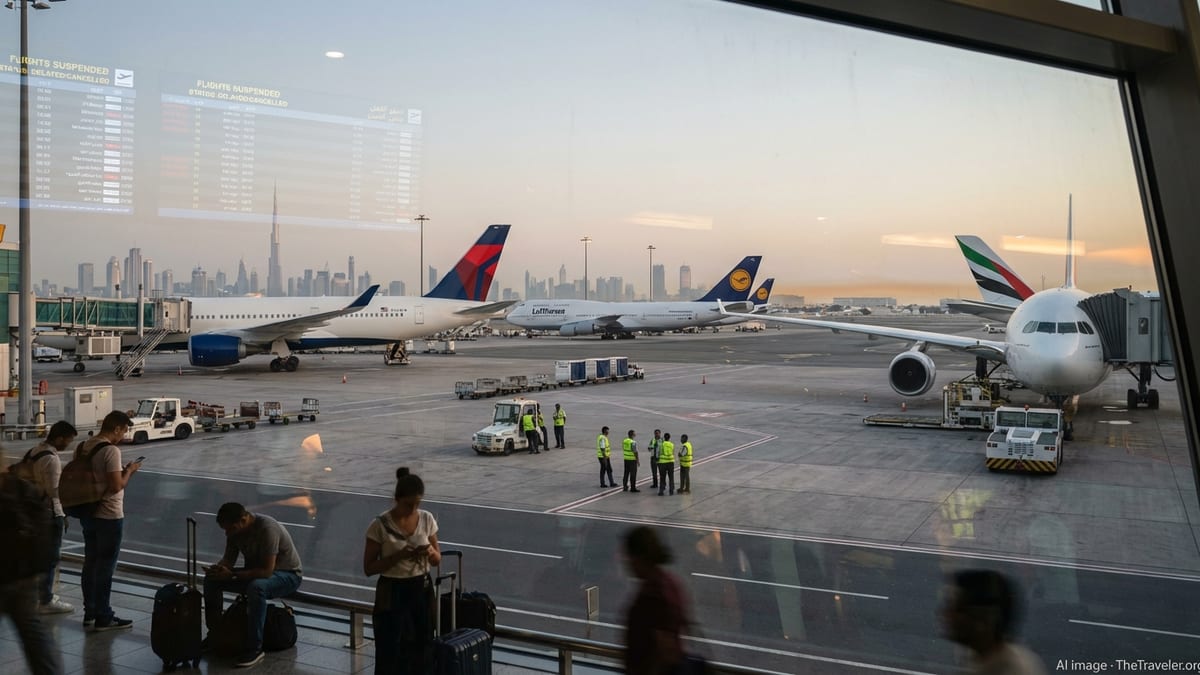
Advisory Renewed As Regional Security Crisis Deepens
Recent updates to official United States travel guidance place large parts of the Middle East under the two highest risk categories, reflecting what public information describes as a volatile and complex security environment. A series of revisions in late spring and early summer 2026 maintains Level 4 “do not travel” warnings for several states and territories, while keeping many Gulf and Levant destinations at Level 3, advising travelers to reconsider nonessential trips.
Publicly available State Department materials highlight continued concerns about ongoing armed conflict linked to the 2026 Iran war and related regional confrontations, as well as the potential for sudden escalations. Analysis by think tanks and humanitarian organizations describes an arc of instability stretching from the eastern Mediterranean through the Gulf, with airspace disruptions, missile and drone activity, and localized clashes affecting both residents and visitors.
The renewed advisory is accompanied by a standing Worldwide Caution, most recently updated in March 2026, which urges Americans to exercise increased vigilance globally, with particular attention to the Middle East. That notice underscores the possibility that groups aligned with regional actors could target locations associated with the United States, heightening concerns about soft targets such as hotels, transport hubs and public gathering places.
Regional experts note that while many Middle Eastern cities remain far from front lines, the interconnected nature of current conflicts means that risks can shift quickly across borders. As a result, the United States is emphasizing careful pre‑travel planning, close monitoring of destination‑specific alerts and contingency preparations for rapid changes in security conditions.
Conflict Zones, Civil Unrest and Elevated Terrorism Threats
The renewed advisory singles out several countries and territories where the combination of active conflict, civil unrest and terrorism creates particularly acute dangers. Iran, Iraq, Syria, Yemen, Lebanon and Gaza remain under Level 4 guidance, reflecting ongoing hostilities, the presence of armed non‑state groups and the potential for targeted or indiscriminate attacks. Travel coverage from major outlets describes periodic missile and drone strikes, clashes between security forces and militias, and sporadic urban fighting.
In these locations, publicly available information points to risks that go beyond battlefield violence. Reports describe landmines and unexploded ordnance in rural areas, checkpoints operated by a mix of official and irregular forces, and a heightened possibility of kidnapping or wrongful detention. Human rights organizations and security analysts also warn that foreigners may face limited access to medical care or evacuation options if injured, particularly where infrastructure has been damaged by conflict.
Elsewhere in the region, including parts of the Gulf and the eastern Mediterranean, the primary concerns involve spillover from nearby fighting and the threat of terrorism. Updated advisories for countries such as the United Arab Emirates, Saudi Arabia, Qatar, Bahrain, Kuwait and Jordan reference the risk of missile or drone attacks, as well as plots against locations frequented by Western travelers. Airspace disruptions and temporary flight suspensions have been reported around key hubs during periods of heightened tension.
A May 2026 global terrorism assessment from a prominent Washington research institute notes that groups such as Lebanese Hezbollah and Yemen’s Houthi movement retain significant capabilities despite recent battlefield losses. The same analysis suggests that the current regional war has increased incentives for attacks on U.S. and allied interests, particularly in the Middle East, even as direct threats to the U.S. homeland remain more limited.
Impact on Commercial Air Travel and Tourism Flows
The renewed United States advisory is already influencing airline operations and travel demand across the Middle East. Major carriers and airport authorities have periodically rerouted flights, adjusted schedules or suspended specific routes in response to changing risk assessments, insurance restrictions and airspace closures. Aviation analysts point to a pattern in which even short‑lived escalations can trigger lasting shifts in passenger confidence.
Industry bulletins and travel trade publications describe a series of “unrest” or “flexibility” waivers issued by global airlines in recent months, allowing customers booked to or through certain Middle Eastern gateways to rebook, divert or cancel without standard penalties. These measures are framed as responses to evolving security conditions, as well as to the logistical challenges posed by potential missile alerts, diversions and temporary airport shutdowns.
Hotel and hospitality operators across the region are also adapting to the deteriorating outlook. An executive digest circulated to travel and tourism stakeholders in late May 2026 notes that elevated government advisories from Western countries have depressed demand for conferences, incentive travel and high‑end leisure trips, particularly in markets that had positioned themselves as safe regional stopovers. Analysts caution that a sustained period of Level 3 and Level 4 advisories could reshape tourist flows toward destinations perceived as more insulated from the conflict.
Despite these headwinds, some Middle Eastern tourism boards continue to promote selective segments such as domestic travel, shorter‑haul regional visits and tightly managed tour packages. However, industry observers indicate that insurance limitations, employer travel bans and corporate duty‑of‑care obligations are likely to constrain international visitor numbers for as long as elevated advisories remain in place.
Guidance for Americans Considering Travel to the Region
Public information from the United States government urges citizens to carefully review destination‑specific advisories, security alerts and country information pages before committing to travel in the Middle East. The guidance highlights the importance of understanding not only the overall advisory level but also regional variations within countries, such as border areas or conflict‑adjacent zones subject to stricter recommendations.
Travel risk specialists advise that anyone who proceeds with essential travel should maintain a low profile, avoid public demonstrations, follow local media and be prepared to adjust routes or schedules on short notice. They recommend pre‑arranging secure airport transfers where feasible, mapping out alternative exit options and keeping family or employers informed of itineraries, check‑in times and local contact details.
Insurance considerations have become a central part of trip planning. Briefings from travel and risk‑management firms warn that many standard policies exclude coverage in areas subject to the highest‑level travel advisories, meaning travelers may need specialized products or may find that coverage is unavailable altogether. Companies with staff in affected countries are reviewing crisis‑response plans, evacuation arrangements and remote‑work contingencies in light of the updated guidance.
For those already in the region, the advisory encourages enrollment in available traveler enrollment programs and regular monitoring of security updates for their location. Analysts emphasize that individuals should consider personal risk tolerance, health needs and the potential for rapid deterioration in local conditions when deciding whether to remain, relocate within the region or depart.
Outlook: Prolonged Period of Heightened Risk
Security experts and regional analysts generally expect the elevated risk profile across the Middle East to persist in the near term, with the trajectory tied closely to the course of the 2026 Iran war and associated proxy confrontations. Scenario planning by humanitarian and policy organizations outlines possibilities ranging from a fragile de‑escalation to wider regional involvement, each with distinct implications for civilian safety and mobility.
Even in the event of a negotiated pause in large‑scale hostilities, the presence of heavily armed non‑state actors, unresolved political grievances and damaged infrastructure suggests that threats from terrorism, sporadic clashes and unrest would remain. Past regional crises have shown that rebuilding confidence among travelers and investors can lag far behind military or diplomatic developments.
For now, the renewed United States travel advisory serves as a formal acknowledgment that the Middle East’s security environment has entered a new and uncertain phase. As governments, airlines and travelers adapt to this reality, the region’s role in global tourism and long‑haul connectivity is likely to be reshaped by a combination of risk perceptions, regulatory decisions and the evolving dynamics of conflict on the ground.