


More news on this day
Airbus is deepening its bet on autonomous rotorcraft, unveiling a new uncrewed version of its successful H145 helicopter and advancing production of naval-grade unmanned helicopters as militaries and civil operators seek crewless options for complex missions.
Get the latest news straight to your inbox!
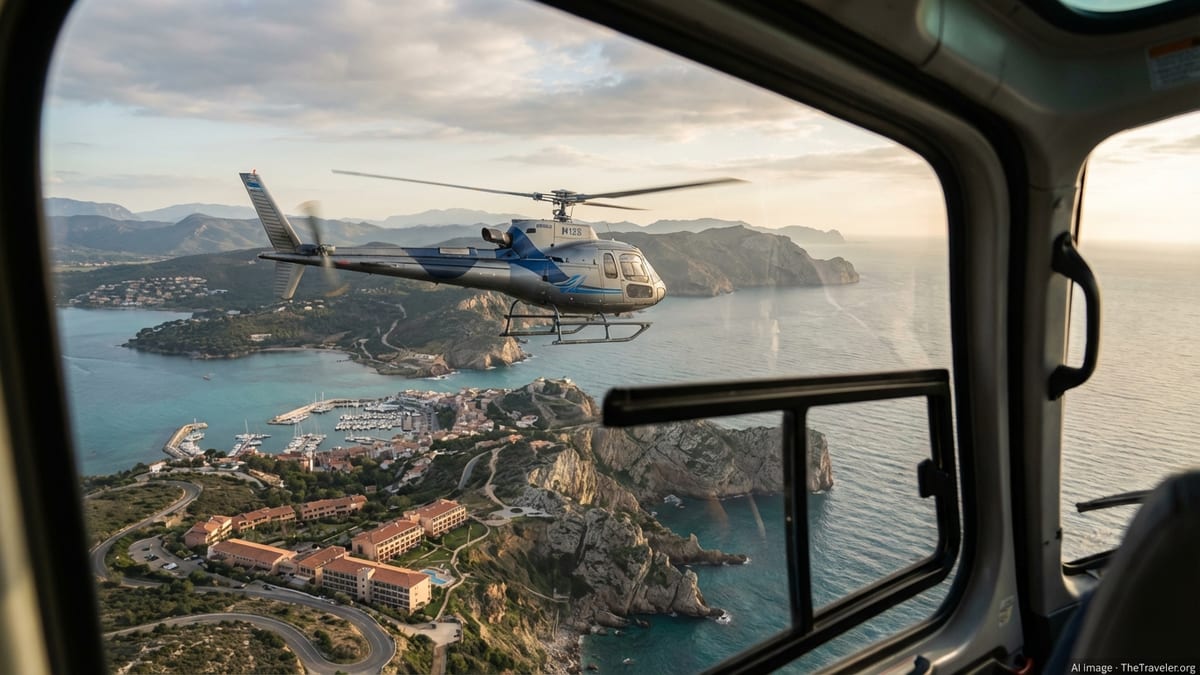
New U145 Unveiled as Cockpit-Free Workhorse
At the ILA Berlin 2026 air show, Airbus Helicopters introduced the U145, an uncrewed variant derived from its widely used H145 light twin. Publicly available information describes the U145 as a helicopter optimized from the outset for autonomous operations, with its cockpit removed to free up volume and weight for sensors, cargo and mission systems.
Reports on the launch indicate that Airbus is positioning the U145 as a multi-mission platform capable of long-endurance flights without the constraints of pilot fatigue or crew safety limits. The airframe leverages the H145 family’s large installed base and established logistics network, an approach that reduces technical and certification risk compared with designing a clean-sheet rotorcraft.
According to coverage of the announcement, a full-scale mock-up at ILA Berlin highlights the most visible change: a redesigned nose section with an integrated loading door in place of traditional cockpit glazing and controls. The concept reflects a broader industry trend toward repurposing proven crewed aircraft types as uncrewed workhorses for intelligence, surveillance, logistics and potentially armed roles.
Airbus has outlined a development path that targets a first flight for the U145 in the second half of 2026, with service entry expected early in the next decade, underscoring how quickly the uncrewed helicopter segment is maturing.
VSR700 Orders Cement Naval Uncrewed Ambitions
In parallel with the U145 reveal, Airbus is reinforcing its position in the naval unmanned helicopter market through the VSR700 program. Official French defence announcements and industry coverage from early 2026 indicate that France’s procurement agency has placed a production contract for six VSR700 uncrewed aerial systems for the French Navy, following earlier framework agreements signed in 2025.
The VSR700, based on the Cabri G2 light helicopter airframe, is designed as a 700 to 750 kilogram-class unmanned system capable of operating from frigates and other surface combatants. Publicly released specifications describe an endurance of several hours with a maritime radar, electro-optical sensor turret and datalinks, giving surface ships an organic surveillance and targeting asset far beyond the line of sight.
Demonstrations in recent years have shown the VSR700 conducting deck landings at sea, teaming with crewed helicopters and even being displayed with guided rocket armament at major air shows. These activities, reported across defence media, signal that Airbus and its naval partners are preparing the platform for both intelligence missions and, potentially, precision strike roles.
Production of the first batch of French VSR700 systems, set to support entry into operational service toward the end of the decade, effectively anchors Airbus in a segment where only a handful of competitors worldwide field shipborne unmanned helicopters at similar scale.
Autonomous Flight Tech Migrates From Labs to Flight Lines
The emergence of the U145 and the maturing of the VSR700 build on a broader Airbus push into autonomous flight technologies. Company materials on its research activities describe an approach centered on a suite of systems branded under the Vertex concept, pairing advanced flight control automation, real-time obstacle detection and route planning with simplified human-machine interfaces.
In late 2023, Airbus flight-test demonstrators performed fully automated helicopter flights that were programmed and monitored via a tablet interface, according to published test summaries. Those trials showcased automated takeoff, navigation, rerouting around simulated hazards and landing, while a safety pilot remained on board primarily to supervise the system.
Industry analysis suggests that the same building blocks now underpin the new generation of crewless rotorcraft, allowing platforms like the U145 to execute missions with minimal or no human intervention in the cockpit. Instead, operators are expected to supervise one or more aircraft from ground stations, focusing on mission management rather than stick-and-rudder flying.
For civil and parapublic users, such as emergency responders and utility operators, the promise of these systems lies less in futuristic autonomy and more in predictable, repeatable mission profiles that reduce workload and, in high-risk environments, remove people from harm’s way.
From Defense to Civil Markets: A Growing Use-Case Portfolio
While defence applications currently dominate the crewless helicopter narrative, reports point to growing interest in civil and government missions. Naval surveillance, coastal patrols and over-the-horizon reconnaissance are natural fits for systems like the VSR700, but similar capabilities appeal to border agencies, environmental monitors and offshore energy operators.
The U145’s cargo-optimized layout, for example, is being discussed in industry circles as a potential solution for resupplying remote sites, transporting high-value components between offshore platforms, or delivering medical supplies to isolated communities. In such cases, an uncrewed helicopter can operate in poor weather or hazardous conditions where dispatching a crewed aircraft would pose additional risk.
Airbus has also been active in advanced air mobility research through its CityAirbus NextGen electric vertical take-off and landing prototype. Although that program focuses on passenger-carrying aircraft, analyses of the company’s portfolio note that lessons in electric propulsion, noise reduction and digital traffic integration are likely to inform future generations of both crewed and uncrewed rotorcraft.
Taken together, this activity points to a future in which autonomous systems are not confined to niche military roles but instead support a continuum of tasks, from search and rescue to infrastructure inspection and emergency logistics, in both urban and remote environments.
Implications for Airspace, Safety and the Wider Helicopter Market
The rapid expansion of crewless helicopters raises practical questions for airspace integration and safety oversight. Aviation regulators in Europe and other regions are still developing frameworks for routine operations of large unmanned aircraft in controlled airspace, particularly for rotorcraft that may share low-level corridors with traditional helicopters and emerging electric air taxis.
Analysts note that Airbus, by building its uncrewed offerings on the backbone of proven platforms such as the H145 and by linking them to its broader autonomous flight research, is likely aiming to ease regulatory acceptance. Demonstrating high levels of system reliability and robust detect-and-avoid capabilities will be central to gaining approvals for beyond-visual-line-of-sight missions near populated areas or busy transport hubs.
For the wider helicopter industry, the U145 and VSR700 highlight a strategic shift toward mixed fleets where the same basic airframe may exist in both crewed and uncrewed forms. Operators could, in theory, assign crewed helicopters to tasks that require human presence or complex decision-making on scene, while deploying uncrewed variants for persistent surveillance, dull patrols or dangerous missions.
As Airbus adds mass and variety to its crewless helicopter force, competitors are likely to accelerate their own efforts to convert legacy types or launch clean-sheet unmanned rotorcraft. The result, over the coming decade, is expected to be a more crowded and technologically advanced low-altitude airspace where autonomy, not just horsepower, becomes the key differentiator among modern helicopters.