


More news on this day
The United States has issued updated travel warnings for five Gulf nations, tightening guidance for Americans considering trips to Bahrain, Kuwait, Qatar, Saudi Arabia, and the United Arab Emirates amid heightened regional tensions, aviation safety concerns, and the risk of cross-border attacks linked to the ongoing US–Iran conflict.
Get the latest news straight to your inbox!
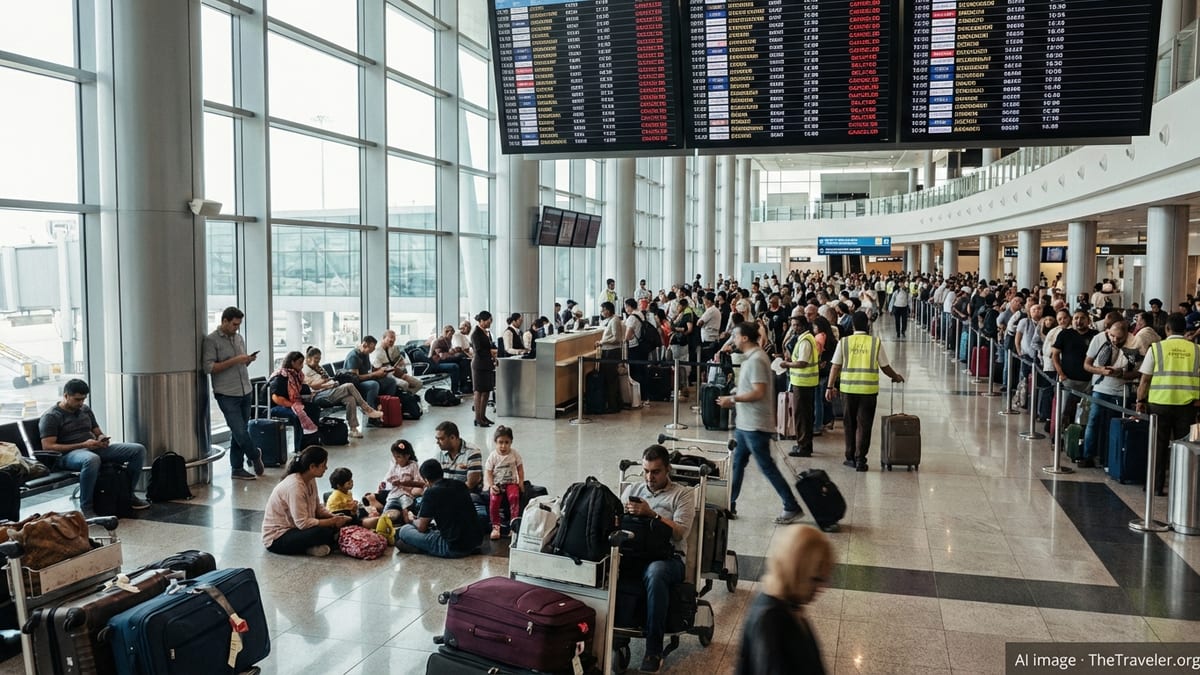
Heightened Risk Environment Across the Gulf
Recent updates to US travel advisories highlight a more precarious security landscape in the Gulf, with Washington pointing to the threat of drone and missile strikes, terrorism, and spillover from hostilities with Iran. Publicly available government material links the sharper warnings to the escalation that followed the onset of US–Iran hostilities on February 28, 2026, which has periodically disrupted air traffic and raised concerns about attacks on energy and transport infrastructure in the wider region.
The five countries named in the revised guidance are Bahrain, Kuwait, Qatar, Saudi Arabia, and the United Arab Emirates. While the exact advisory level may differ by destination or region within each country, the overall message to US travelers is to exercise increased caution, carefully review security information before departure, and be prepared to adjust plans at short notice if conditions deteriorate.
The US four-tier advisory system runs from Level 1 “Exercise Normal Precautions” to Level 4 “Do Not Travel.” According to published material describing the new guidance, the language for the five Gulf states emphasizes the possibility of rapid changes in the security environment, even in locations that are otherwise open to tourism and business travel.
The move aligns with a broader Middle East alert urging Americans in the region to consider whether travel is essential and to ensure they can depart quickly if commercial options become limited. Travel industry coverage notes that the US has repeatedly refreshed its regional messaging in recent weeks as military activity and diplomatic efforts have alternated, keeping risk assessments under constant review.
Bahrain and Kuwait: Frontline Concerns and Civil Aviation Warnings
Bahrain and Kuwait feature prominently in the latest US advisories, which draw attention to their proximity to potential missile and drone trajectories and to critical shipping lanes in the Gulf. Updated Bahrain guidance notes an ongoing threat of attacks linked to regional tensions, as well as significant disruption to commercial flights following the start of hostilities between the United States and Iran earlier this year. Travelers are urged to remain alert to the possibility of sudden changes in airport operations and to monitor local news and airline updates closely.
For Kuwait, a fresh advisory issued within the past week underscores similar concerns, citing the continuing risk of drone and missile strikes since late February. Official travel pages explain that US government employees require special authorization to travel within the country, a signal that security managers view the risk as elevated. Historical contamination from unexploded ordnance dating back to the 1990–91 Gulf War is also mentioned as a localized, but persistent, hazard in some areas.
Across both Bahrain and Kuwait, US documents and international aviation notices highlight a shared warning for civil aviation operating within or near the Persian Gulf and the Gulf of Oman. Carriers are advised to account for possible military activity, miscalculation, or misidentification in the region’s congested air corridors. This technical language has practical consequences for passengers, who may face reroutings, extended flight times, or last-minute schedule changes if airlines adjust operations in response to new risk assessments.
Saudi Arabia and the UAE: Targeted Restrictions and Infrastructure Risks
Saudi Arabia and the United Arab Emirates, two of the region’s largest air hubs and energy exporters, are also subject to more pointed US warnings. The Saudi advisory reiterates longstanding cautions about the border area with Yemen, which remains off-limits to tourist travel because of the threat of terrorism, cross-border fire, and unmanned aerial attacks. Public guidance notes that some provinces and districts within the kingdom carry higher risk profiles, and that US government personnel face movement restrictions in specific localities, including parts of the Eastern Province.
In the UAE, the current language stresses the dual concern of terrorism and the threat of armed conflict spilling over from the wider region. Country information pages warn that attacks could target transportation hubs, commercial centers, and places of worship, including locations associated with Jewish and Israeli communities. The advisory also references US assessments of risks to civil aviation operating in or near Emirati airspace, reflecting a broader nervousness about potential misfires or miscalculations given the density of military and commercial activity in the Gulf.
Public travel guidance for both Saudi Arabia and the UAE urges visitors to identify evacuation routes in advance, enroll in consular alert systems, and verify that travel insurance includes coverage for medical emergencies and crisis-related evacuation. While tourism and business travel continue on a substantial scale, the State Department language signals that those who choose to visit should do so with detailed contingency plans and a higher tolerance for disruption.
Qatar and Regional Airspace: International Aviation Bodies React
Qatar, host to one of the region’s busiest long-haul hubs, is included among the five Gulf nations highlighted in the new US messaging, largely because of its role in regional air traffic and its proximity to areas of potential military activity. Qatari airspace has been a focus of recent bulletins from the European Union Aviation Safety Agency, which has extended conflict-zone advisories covering the UAE, Bahrain, Qatar, Kuwait, and parts of the Gulf of Oman through late August, citing the continuing risk posed by operations linked to the US–Iran conflict.
These European notices, while aimed at airlines rather than individual travelers, complement the US government’s own warnings about risks to civil aviation in and around the Gulf. Taken together, they signal that carriers are expected to exercise caution when planning routings and altitudes, especially on overwater segments transiting near potential flashpoints. Travel reporting from the region notes that some airlines have adjusted schedules or flight paths in response, occasionally lengthening journey times between Europe, Asia, and Australasia.
For passengers using Doha, Dubai, Abu Dhabi, or other Gulf hubs as transit points, the practical adage remains to check booking emails, carrier apps, and airport websites frequently, particularly in the days immediately before departure. Although most flights continue to operate, the backdrop of shifting security assessments means that changes can occur with limited notice if military activity escalates or risk thresholds are revised.
What US Travelers Are Urged to Do Now
The revised Gulf advisories are framed within a broader worldwide caution that encourages Americans overseas to maintain a higher level of situational awareness. Official guidance highlights several recurring themes: staying informed via embassy alerts and reputable news sources, keeping travel documents and emergency funds accessible, and having a self-reliant plan to leave a country if commercial options narrow or consular assistance becomes constrained.
Publicly available information stresses that the advisories do not ban travel outright to Bahrain, Kuwait, Qatar, Saudi Arabia, or the UAE, but they do ask travelers to reconsider nonessential trips and to weigh carefully whether current conditions match their personal risk tolerance. For those who proceed, government material recommends registering itineraries with the Smart Traveler Enrollment Program so that embassies can share security updates and contact US citizens more easily in a crisis.
Travel analysts observing the latest round of warnings note that the Gulf remains a critical transit and energy corridor, ensuring that governments, airlines, and travelers alike will continue to track risk indicators closely. As long as diplomatic efforts and military activity continue in parallel, the travel environment for the five Gulf nations singled out in the new US advisories is likely to remain fluid, with official guidance subject to further updates in line with developments on the ground.
Bahrain Travel Advisory | US Department of State
Kuwait Travel Advisory | US Department of State
Saudi Arabia Travel Advisory | US Department of State
United Arab Emirates Travel Advisory | US Department of State