


More news on this day
Travelers on key routes between North America, Europe and Asia are facing a fresh wave of uncertainty as Air India moves to suspend most of its long-haul operations until July 2026, just as governments including the United States, Australia, Singapore, Canada, the United Kingdom, Italy, Austria and France recalibrate travel guidance in response to a deepening Middle East crisis and a global jet fuel price shock.
Get the latest news straight to your inbox!
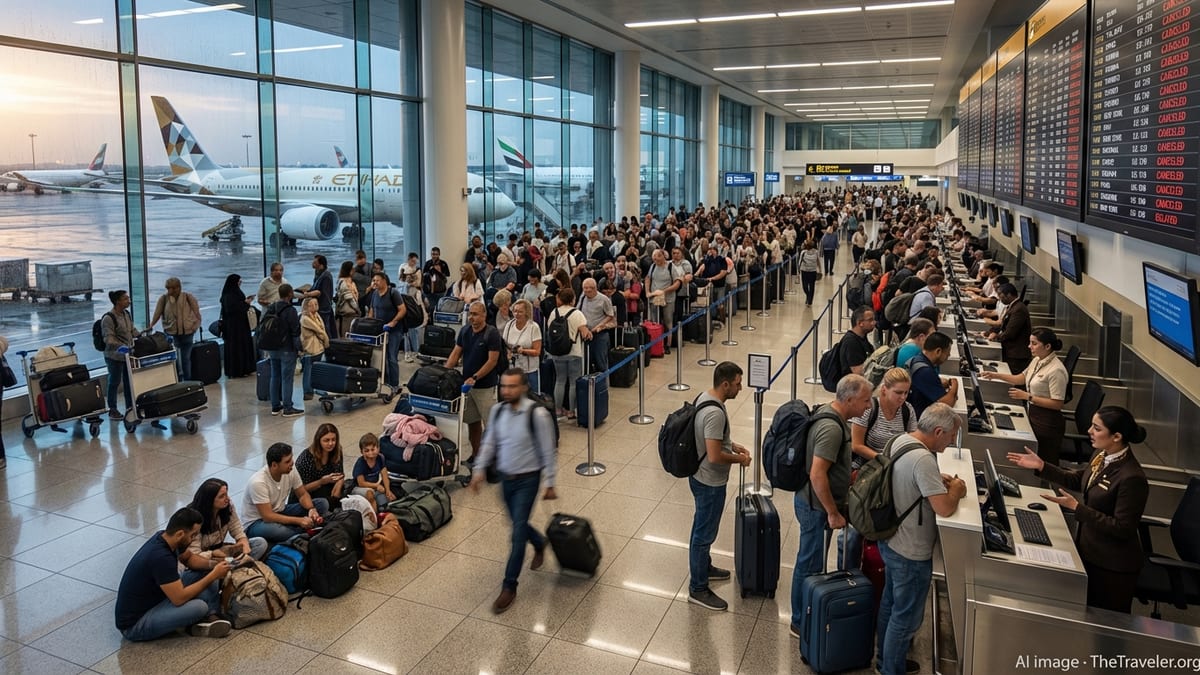
Air India’s Long-Haul Retrenchment Until July 2026
Publicly available scheduling data and specialist aviation coverage indicate that Air India has embarked on one of the most far-reaching restructurings of its international network in years, with a sharp pullback on long-haul flying through July 2026. Reports describe reductions and cancellations affecting flagship routes linking India to North America, Europe, Africa and parts of East Asia, in many cases removing nonstop options that had become staples of the carrier’s growth story in recent seasons.
Industry analysis suggests that the decision is driven by a combination of surging aviation turbine fuel prices and the operational strain created by airspace closures and detours around the conflict-affected Middle East. Some accounts describe the airline trimming dozens of daily services, with particular pressure on flights that must now operate longer routings to avoid restricted skies, adding hours of flying time and thousands of dollars in extra fuel per sector.
Information from Air India’s own recent communications shows the carrier introducing higher fuel surcharges and reworking its long-haul deployment plans for the Northern Summer 2026 season. While selected high-demand routes are still scheduled to see upgraded aircraft and cabin products from July 2026, these enhancements appear to sit alongside a broader strategy of temporarily reducing exposure to the most fuel-intensive and geopolitically exposed segments of the network.
For passengers, the practical effect is a thinning of direct connectivity between India and major hubs in North America and Europe through at least mid-2026. Travelers who previously relied on Air India’s nonstops are increasingly being rebooked onto multistop itineraries or nudged toward rival carriers that are themselves navigating the same fuel and airspace challenges.
Middle East Crisis Pushes Jet Fuel Costs to New Highs
The backdrop to Air India’s retrenchment is a rapidly escalating energy and airspace crisis centered on the Middle East. Research briefs and policy analyses describe how conflict in and around the Strait of Hormuz has severely constrained one of the world’s most critical oil and shipping corridors, disrupting up to a fifth of global oil supply and triggering the sharpest spike in jet fuel prices since the 1970s energy shocks.
Travel and aviation consultancies now estimate that jet fuel prices in some markets have roughly doubled compared with pre-crisis levels. On long-haul widebody flights, where fuel already accounts for a substantial share of operating costs, the additional burden from extended routings that avoid closed or risk-designated airspace is particularly pronounced. Analysts cited in industry bulletins suggest that each extra hour of flight time on a widebody can add thousands of dollars to operating costs, eroding margins on routes that were previously only modestly profitable.
The Middle East also plays an outsized role as a connective hub between Asia, Europe, Africa and Australasia. Before the current crisis, airports such as Dubai, Doha and Abu Dhabi handled a significant portion of East–West connecting traffic. With airlines forced to reroute or, in some cases, temporarily suspend services that traverse the region, capacity has tightened on surviving corridors, contributing to higher fares and more frequent disruptions even on flights that do not touch the region directly.
These dynamics are not limited to Air India. European carriers have announced thousands of cancellations and capacity cuts into late 2026, explicitly citing doubled fuel bills and constrained airspace. North American and Asia-Pacific airlines are likewise reshaping schedules, trimming marginal routes and introducing new fuel surcharges as they attempt to pass some of the cost burden on to travelers.
US and Partner Governments Update Travel Advisories
Governments across the developed world are now formalizing their response in the form of updated travel advisories and guidance for citizens. The United States continues to maintain a global caution notice, with its travel advisory portal highlighting elevated security and infrastructure risks across parts of the Middle East and flagging the possibility of sudden flight disruptions, extended detours and higher costs on routes that rely on affected airspace.
Canada’s official travel information service has issued dedicated updates on the impact of the Middle East conflict on global travel, warning of broader disruptions to air connectivity and underscoring that even itineraries that bypass the region can be affected by knock-on operational changes. The advisory material notes that travelers may encounter longer journeys, schedule changes and higher fares as airlines respond to the evolving situation.
In Europe, the United Kingdom’s aviation regulator has released passenger-focused guidance on Middle East flight disruptions, pointing travelers toward foreign office advice and emphasizing the importance of monitoring flight status closely when traveling on routes that might be exposed to the crisis. France and Italy, alongside other European Union members, have also refreshed security and travel notices for destinations in the wider region, reflecting both geopolitical tensions and infrastructure constraints.
Australia and Singapore, both heavily dependent on long-haul air links for tourism and business travel, are similarly updating their public travel pages with material that explains how the Middle East situation may alter flight times, routings and transit options. Consumer-focused travel media in these countries have begun publishing detailed explainers to help residents understand why once-routine flights to Europe now involve longer sectors, additional refueling stops or higher prices.
Knock-On Effects for US-Bound and Transatlantic Travelers
The combination of Air India’s long-haul cuts and wider network adjustments by carriers in Europe, North America and Asia is already reshaping the experience of travelers bound to and from the United States. India–US itineraries that once relied on Air India nonstops or one-stop connections via Middle Eastern hubs increasingly involve routings through secondary European or East Asian gateways, lengthening overall journey times and, in some cases, adding overnight layovers.
Capacity constraints are also emerging on select transatlantic and transpacific corridors as airlines reassign aircraft to routes that avoid conflict areas or generate higher yields. Industry data referenced in recent airline and airport briefings point to tighter seat availability across peak summer 2026 travel dates, particularly for premium cabins and nonstops linking major financial centers.
For US travelers heading to Europe, South Asia or Australia, this translates into a more complex booking environment. Online travel agencies and meta-search platforms are showing a growing spread in prices between itineraries that skirt the Middle East and those that still plan to transit near the region, where insurance requirements, airline risk assessments and potential last-minute rerouting can all influence fares.
Travel risk and air passenger rights specialists recommend that passengers study fare conditions closely, prioritize flexible tickets where budgets allow, and build in additional buffer time for connections. With some airlines revising schedules multiple times in a season, the likelihood of last-minute time changes, aircraft swaps or rebookings remains higher than in the immediate post-pandemic years.
How Travelers Are Adapting to the New Reality
Across markets, publicly available surveys and booking trend analyses suggest that travelers are adjusting their behavior in response to the new landscape. In Singapore, consumer travel outlook reports point to a tilt toward destinations that are perceived as closer, more practical and less exposed to geopolitical risk and fuel-price volatility. Similar shifts are emerging in Australia and parts of Europe, where long-haul holiday plans are being reconsidered in favor of regional trips.
Data cited by airline and tourism industry groups indicate a rise in demand for itineraries that avoid traditional Middle Eastern transit points, even when these alternatives are longer or more expensive. Some travelers are opting for routings via East Asia or southern Europe, trading time and cost for what they perceive as lower exposure to cancellations or last-minute detours.
At the same time, travel companies and tour operators are updating their own alert systems and booking policies. Several major adventure and group travel brands now maintain prominent alerts about the Middle East crisis and associated aviation impacts, underscoring the possibility of itinerary changes and encouraging customers to purchase robust travel insurance that covers schedule disruptions and route changes.
For Air India customers specifically, the suspension of most long-haul flying until July 2026 adds another variable to already complex planning. Passengers who had been banking on the carrier’s expanding widebody fleet and new cabin products must now weigh alternatives, monitor schedule updates closely and, in many cases, brace for rebookings on partner airlines or entirely different routings as the fuel and Middle East crises continue to reshape global air travel.